One Health: connecting everything
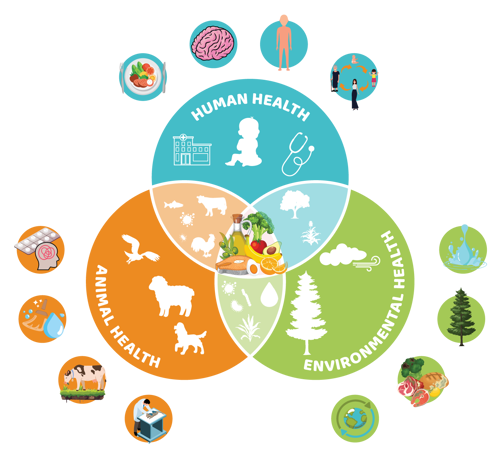
The One Health approach is based on a simple yet powerful idea: the health of people, animals and the planet is interconnected. None of these aspects operates in isolation. What happens at one point in the system – in the way food is produced, chosen, prepared or consumed – has repercussions on the others. Connecting everything means understanding these relationships and recognising that day-to-day decisions are part of wider systems.
The journey of food, from farm to fork, is a good example of this interdependence. Soil and water conditions influence plant growth; animal welfare determines the safety and quality of food of animal origin; the choices made at the point of purchase and during meals affect both individual health and the environment and production systems. Each stage is linked to the next, creating a chain in which preventing problems is always more effective than rectifying them at the end.
Individual food choices thus take on a collective dimension. When many people make similar choices – whether preferring certain foods, wasting or making the most of them, valuing sustainable practices or ignoring them – the impact accumulates and shapes food systems. Small actions, repeated over time and by many people, can help to protect natural resources, improve animal welfare and promote human health – or, conversely, exacerbate existing imbalances.
Thinking about the future of food also means taking an active role as a citizen. Food literacy enables us to better understand where food comes from, how it is produced, and the consequences of different choices. This awareness helps us make more informed and responsible decisions, not only for our own benefit, but also for our communities and for future generations. Within the One Health framework, paying attention to food is a practical form of civic engagement, where health, sustainability and responsibility go hand in hand.
Connecting everything ultimately means recognising that looking after human health involves looking after animals and the planet, and that protecting the environment and promoting sustainable food systems is also an investment in long-term health and wellbeing. This integrated approach forms the basis of One Health and is the guiding principle behind the entire FoodWiseLab.
When you make a food choice, think of it as part of a wider system. Ask yourself how that choice might affect not only your health, but also the animals involved and the environment from which the food comes.
FOODWISELab Challenge

Choose a small action that you can change over the course of a week, such as reducing waste, choosing a more sustainable food option or planning your meals better. At the end, write three sentences: one about the impact of this change on you, another about the impact on the environment or on animals, and a final one about how this action can contribute to a healthier food future.