
How your body processes food: from digestion to nutrient absorption
In order for your body to regulate how much energy it releases, when you are hungry and when you feel full, it is essential that food is broken down into small molecules that can enter the bloodstream. This process involves enzymes, bile, muscle movements and a vast surface area for absorption in the gut. It is this process that enables hormones and the brain to receive reliable information about what you have eaten.
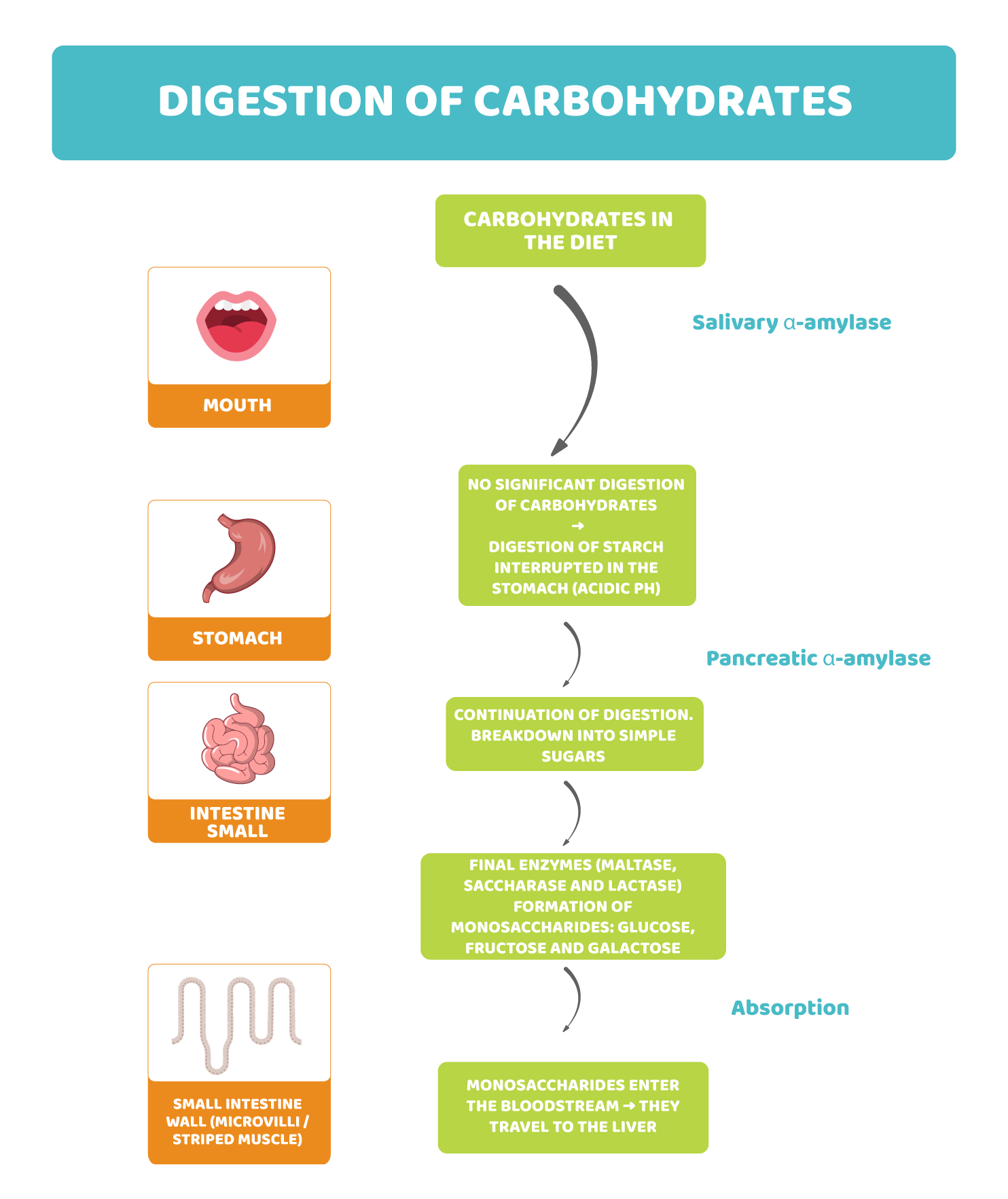
The carbohydrates you eat (bread, rice, pasta, fruit) are long chains of sugars. In order for them to be absorbed:
- Digestion begins right in the mouth, where salivary amylase starts to break down the starch;
- In the small intestine, pancreatic amylase breaks these chains down into simple sugars;
- In the microvilli, terminal enzymes (such as maltase, sucrase and lactase) break them down into small molecules such as glucose, fructose and galactose.
These molecules enter the bloodstream directly, travel to the liver and help regulate energy release and the hormonal response following a meal.
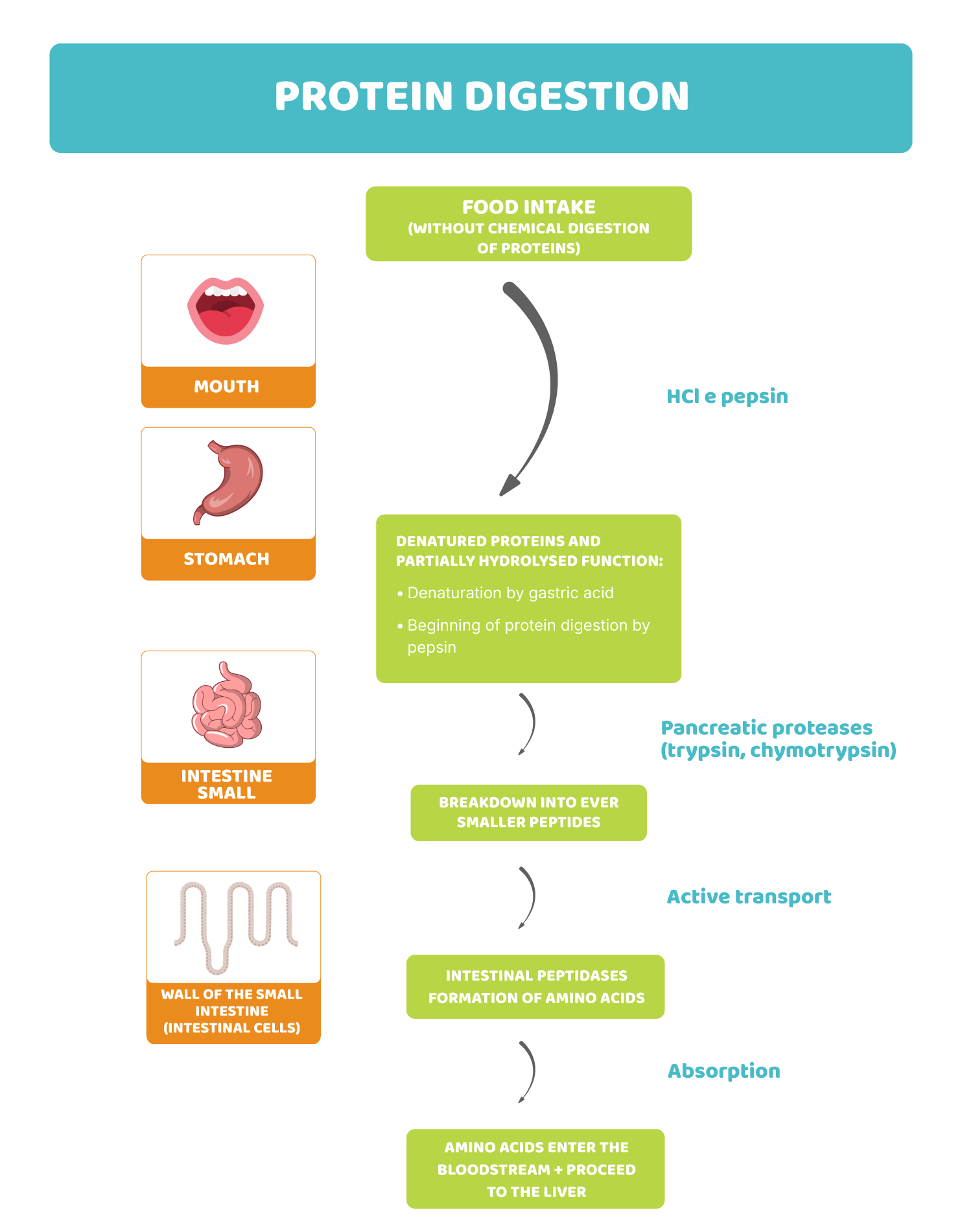
Proteins in food (meat, fish, pulses, eggs) are large molecules that need to be broken down piece by piece.
- In the stomach, gastric acid denatures proteins and activates pepsin, which begins the digestion process;
- In the small intestine, pancreatic enzymes (such as trypsin and chymotrypsin) break these chains down into increasingly smaller peptides;
- In the cells of the intestine, peptidases break them down mainly into amino acids.
These amino acids enter the blood, pass through the liver, and play a part in essential processes, ranging from tissue formation to the regulation of satiety hormones.
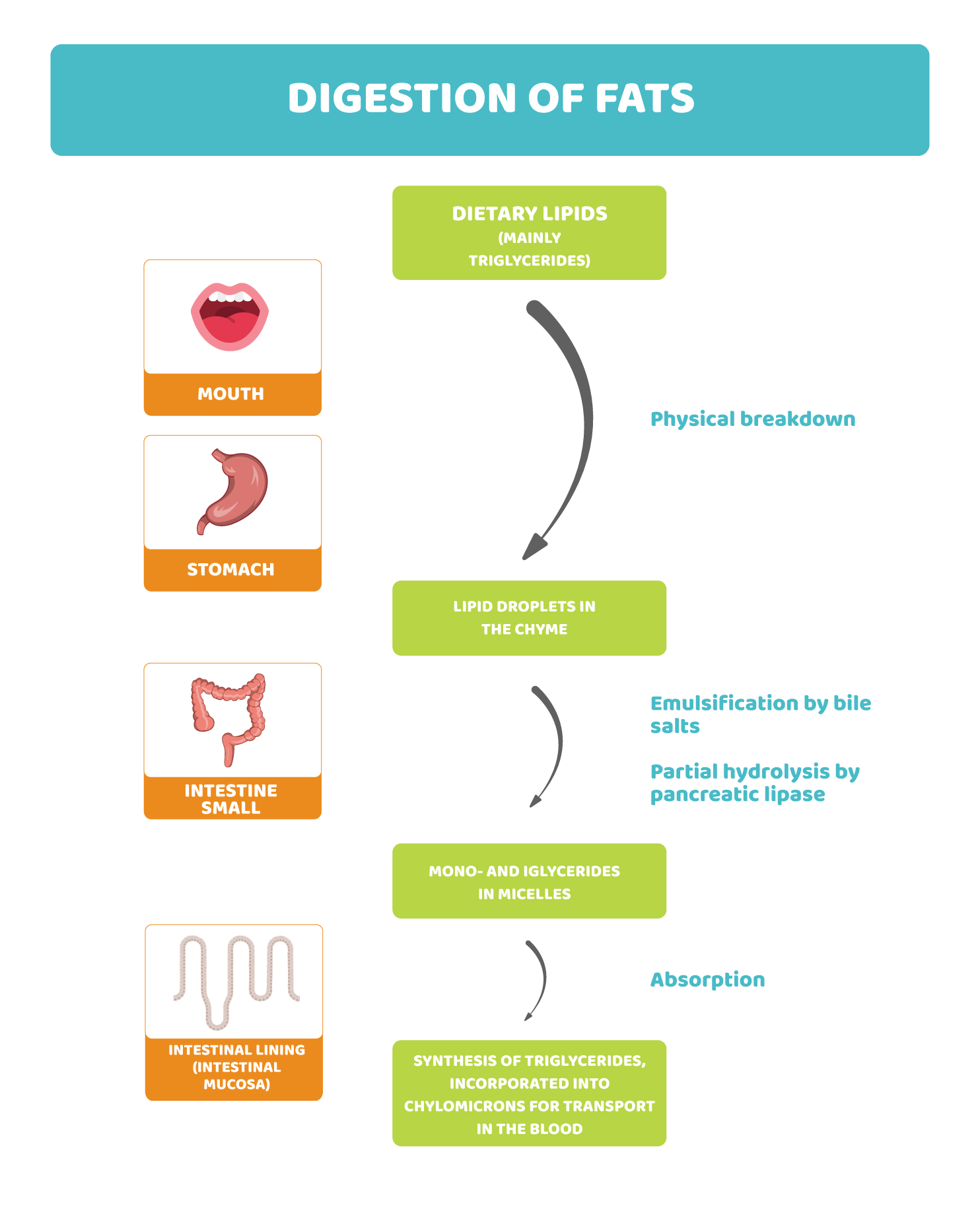
Fats are the most complex macronutrient to absorb.
- Bile, produced in the liver, emulsifies fats by breaking them down into small droplets.
- Pancreatic lipase breaks down triglycerides into fatty acids and monoglycerides.
- These form micelles, which facilitate their entry into the cells of the intestine.
Once absorbed, the lipids are repackaged into chylomicrons within the intestinal cells, transported first via the lymph and only then entering the bloodstream – a slower process that influences the feeling of fullness and the sustained energy levels following high-fat meals.
When simple sugars, amino acids and fatty acids enter the bloodstream:
- the liver carries out the initial sorting and decides what to store, process or release;
- the pancreas releases hormones such as insulin (which helps to store glucose) or glucagon;
- the gut sends signals of satiety to the brain via hormones such as glucagon-like peptide-1 (GLP-1), peptide YY (PYY) and cholecystokinin (CCK);
- ghrelin levels fall after a meal, reducing hunger;
- Leptin, produced in fat cells, informs the brain about energy reserves.
Meanwhile, the microbiota in the large intestine ferments fibre and produces short-chain fatty acids, which also play a part in energy regulation and influence digestive comfort and appetite stability.
Why does this matter to you?
When you understand how food is broken down and absorbed, you gain a better understanding of:
- because some meals give you a quick burst of energy and others provide sustained energy,
- because feeling full doesn’t just depend on how much you eat, but on how you digest it,
- because eating a varied diet and including fibre helps to regulate bowel function, energy levels and appetite,
- and because feelings of hunger or the urge to eat can be influenced by digestion and hormones, and not just by ‘willpower’.
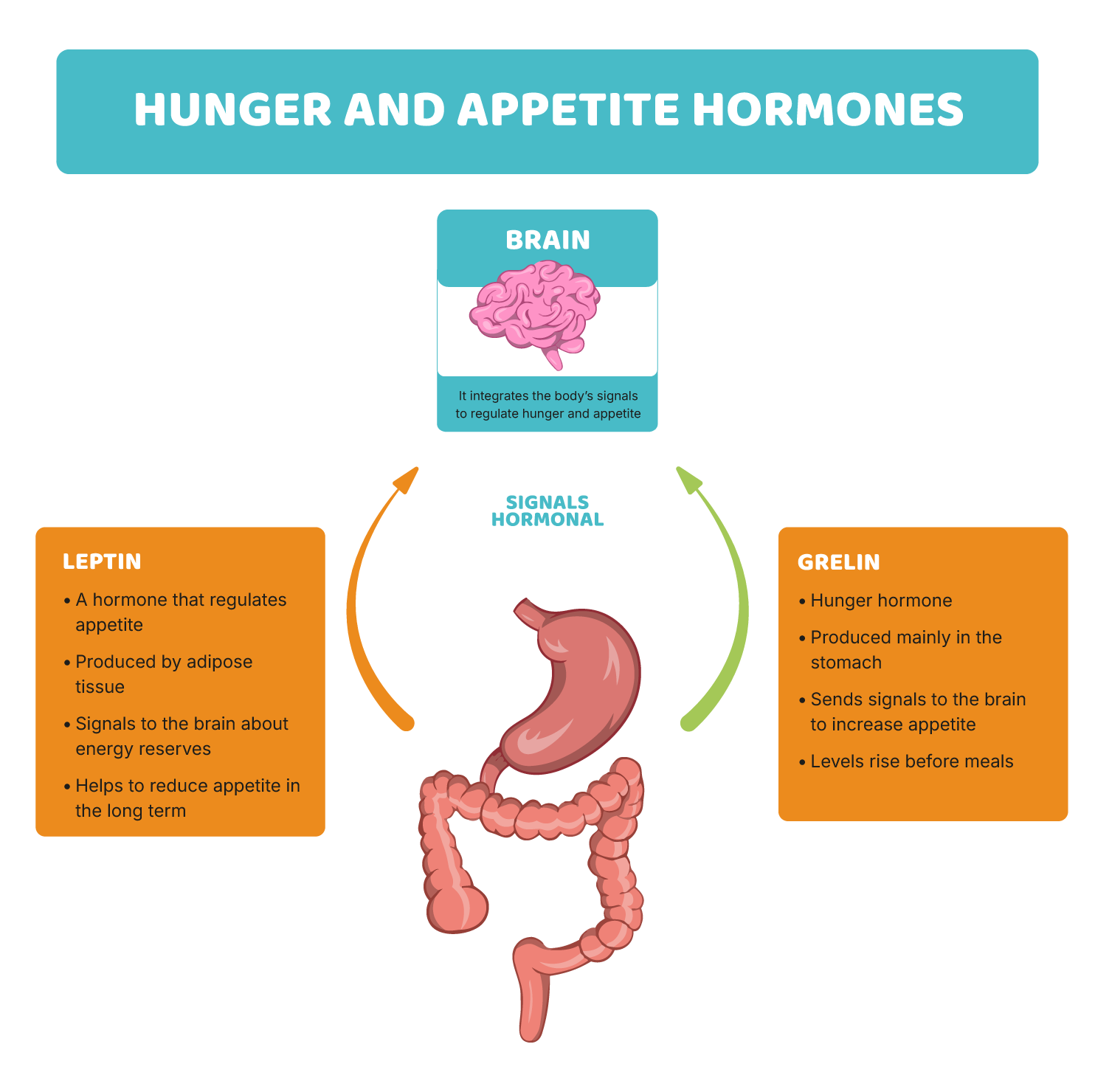
Hunger isn’t always down to a lack of food.
Not getting enough sleep, skipping meals, eating too quickly or choosing foods low in fibre and protein can ‘throw off’ the body’s hormonal signals.
Regular meals, consisting of minimally processed foods, fibre, protein and water, help the brain to better interpret signals of hunger and fullness — and to make more balanced decisions throughout the day.
FOODWISELAB challenge

Understanding how food is digested and how nutrients are absorbed by the body, whilst recognising the importance of good eating habits for efficient and healthy digestion.
Digestion and Nutrient Absorption