
Cooking techniques to maximise flavour, nutrients and sustainability
At the age of 15–17, you’re no longer just ‘following recipes’. You’re able to understand what happens inside food when it’s cooked, how cooking techniques affect its nutritional value, texture and flavour, and how your choices impact the environment. In this subsection, we link practical skills with science and sustainability.
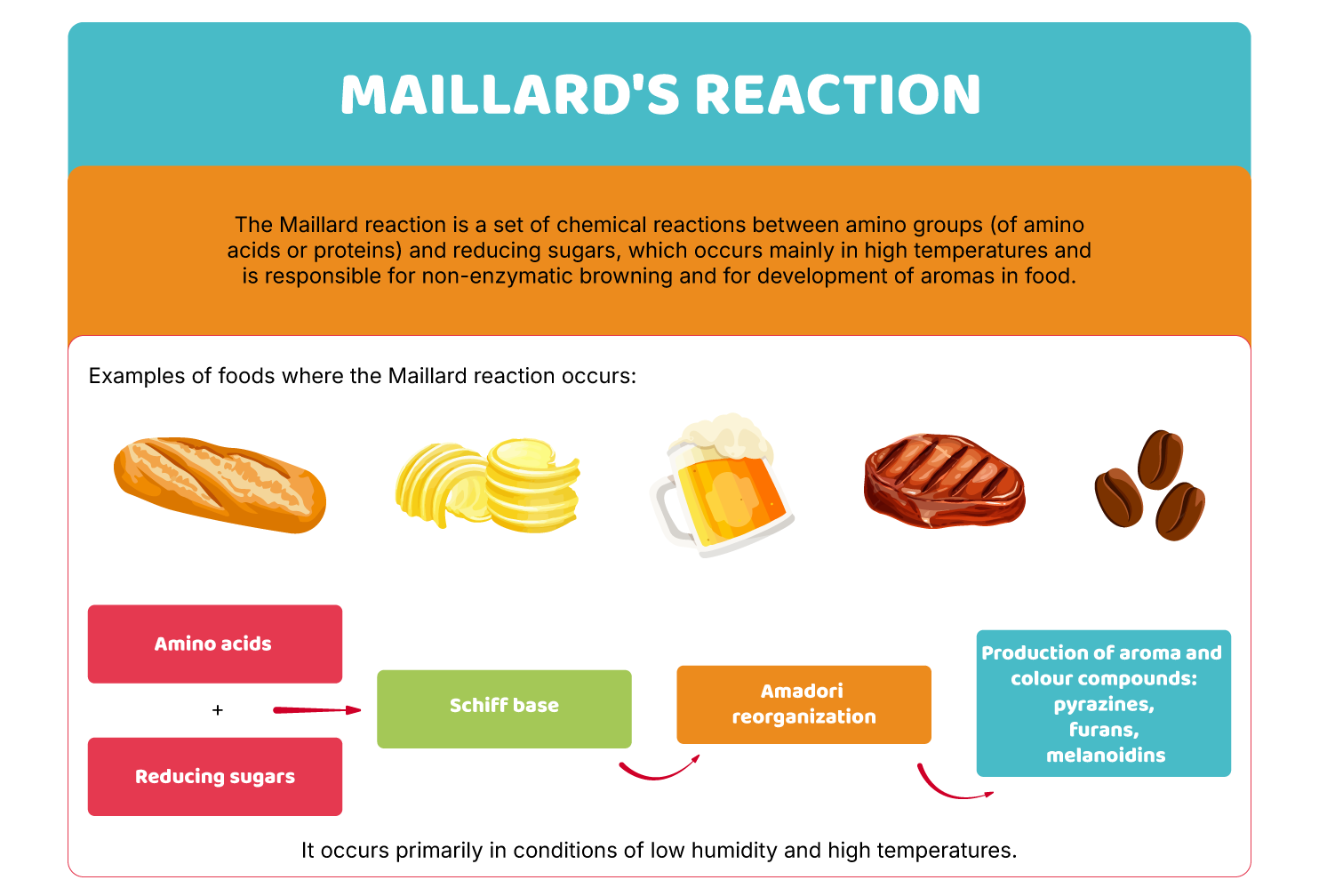
Cooking profoundly alters the structure of food:
- Proteins denature and coagulate, making meat, fish and eggs firmer and safer to eat.
- The starch in cereals and tubers gelatinises, absorbs water and makes food easier to digest.
- The fibre in vegetables softens food, making it easier to chew and digest.
- The Maillard reactions between proteins and sugars produce a golden colour and complex flavours (as in bread, grilled meat or roasted vegetables).
At the same time, some water-soluble vitamins (such as vitamin C and some B-complex vitamins) can be lost at high temperatures or when there is too much water, whilst other beneficial compounds, such as lycopene in tomatoes, can become more bioavailable when cooked with fat.
Understanding these processes allows you to choose the right technique for each food and objective: texture, flavour, safety or nutritional value.
All techniques have their pros and cons. The important thing is to know which one to choose in each situation.
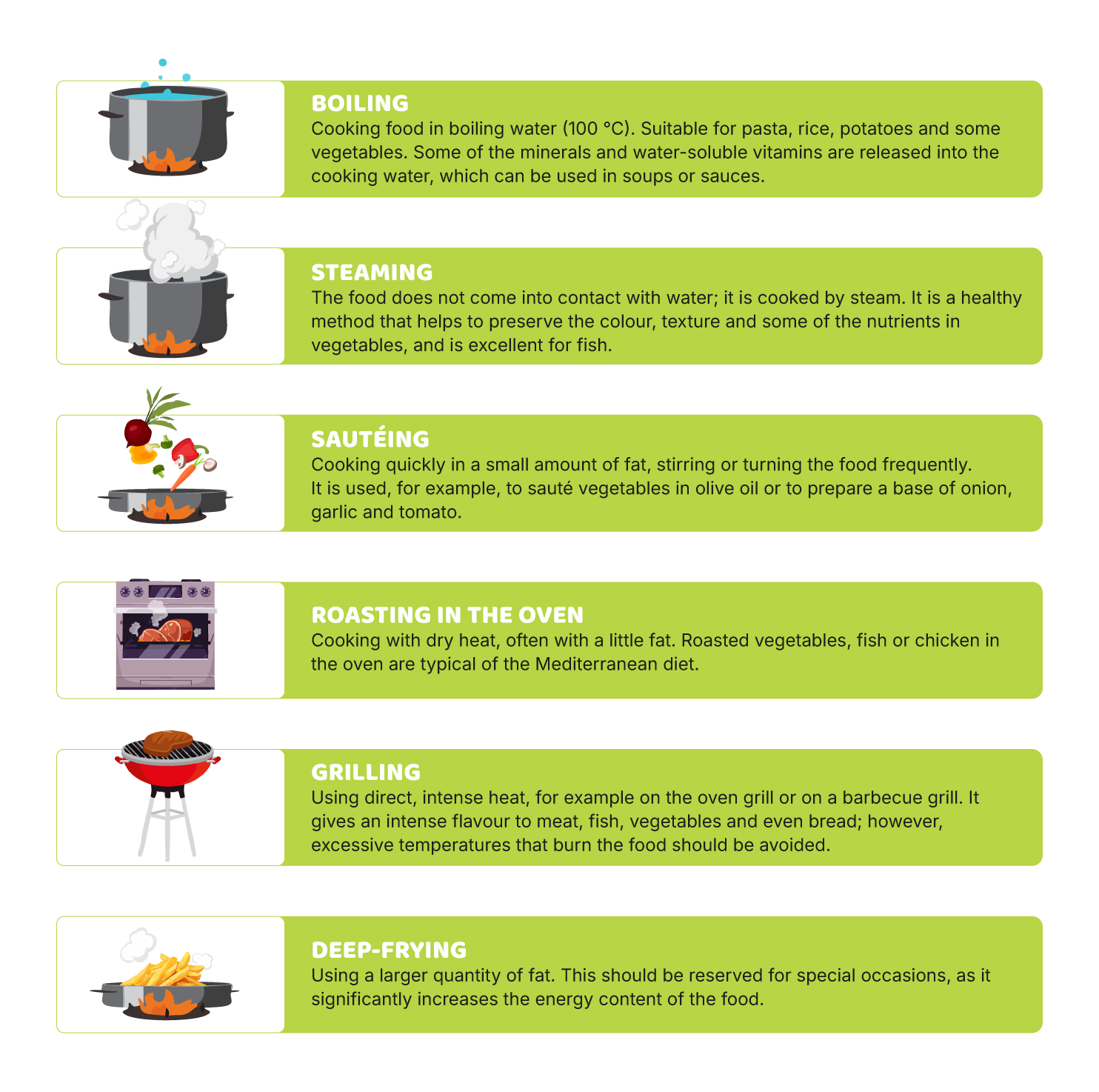
- Boil in water
Ideal for pasta, rice, potatoes and some firm vegetables. If you use the cooking water in soups or sauces, you’ll recover some of the minerals that have leached into the liquid. Cooking for too long in large volumes of water increases the loss of water-soluble vitamins. - Steaming
One of the best ways to preserve nutrients: there is no direct contact with water, so it better preserves vitamin C, colour and texture. Excellent for vegetables and fish, and generally low in calories. - Sautéing
A quick cooking technique that uses little fat and relatively high heat. It intensifies the flavour through the Maillard reactions and helps to keep vegetables slightly firm. Using olive oil is beneficial due to its stability and heart-protective properties. - Oven roasting
It brings out the flavour and gives the food a slightly crispy texture on the outside and a tender texture on the inside. It works very well with vegetables, white meat, fish and sweet potatoes. If you control the temperature and cooking time, you can preserve the nutrients well and achieve a great flavour. - Grilling
This produces an intense flavour, typical of many traditional dishes. However, very high temperatures and direct contact with the flame can produce undesirable compounds (such as PAHs). Marinating, ensuring the food does not burn, moving it slightly away from the heat source and grilling pieces that are not too thick are important strategies. - Stewing
Combines moist heat, moderate temperatures and longer cooking times. It is particularly useful for pulses and tougher cuts of meat, resulting in very flavourful dishes with tenderised fibres and good nutrient retention if the sauce is eaten. - Frying (occasional use)
This significantly increases the fat content of the food. It can be used on an occasional basis; if frying is really necessary, olive oil is more stable than many refined oils, but it is still important to avoid repeated reuse and excessive temperatures.
In the Mediterranean diet, olive oil is the fat of choice, and the science backs up this choice:
- it is relatively stable at normal cooking temperatures
- contains natural antioxidants
- has a lipid profile associated with cardiovascular protection
- improves the absorption of vitamins A, D, E and K.
Using it for stir-frying, roasting and finishing dishes allows you to combine good cooking technique with health benefits.
Here are some examples of how you can maximise your nutrient intake:
- Cooking vegetables quickly or steaming them helps to preserve vitamin C.
- Using the cooking water in soups, sauces or rice dishes preserves many minerals.
- Cooking tomatoes in olive oil increases the bioavailability of lycopene.
- Soaking and cooking pulses thoroughly reduces antinutrients and improves digestibility.
- Lightly toasting nuts brings out their flavour without destroying their nutrients, provided they are not burnt.
The choice of cooking method also affects digestion: vegetables that are too raw can be difficult to chew; if they are cooked lightly, they become easier to digest without losing all their texture. Undercooked pulses can cause discomfort; when properly soaked and cooked, they are excellent sources of protein and fibre.
Cooking with sustainability in mind
At this stage, you can also start thinking about energy, waste and seasonality:
- Energy efficiency
Using lids reduces cooking time; cooking several meals in the same oven makes better use of the heat; and using a pressure cooker for pulses saves time and energy. Planning appropriate portion sizes reduces the need to reheat the same food several times. - Food sustainability
Opting for seasonal produce, using leftovers in new meals (soups, stir-fries, omelettes, pasta dishes, bowls), and choosing cooking methods that reduce waste (such as stews and roasts with a variety of ingredients) all contribute to a more sustainable diet.

Combining technique, science and sensory perception
As you gain more experience, you can start to take a more ‘scientific’ approach to what you see in the frying pan or in the oven:
- The golden colour and toasty aromas result from the Maillard reactions
- A sauce that thickens with starch does so through gelatinisation and gelation
- The fact that meat becomes more tender after marinating is due to the action of acids and enzymes on the proteins
- Pancake or choux pastry rising in the oven is due to the action of steam as a raising agent
At the same time, you’ll be able to fine-tune flavour, texture and presentation with greater care: using reduced sauces to concentrate flavour, balancing acidity and sweetness, deciding whether you want a dish to be crispier or creamier, and thinking about how you’ll plate it up to make it look appetising.
Practical example: the same food, different techniques
Taking broccoli as an example:
- Overcooked: mushy texture, dull colour, significant loss of vitamin C, less intense flavour.
- Steamed: bright green, firm texture, good nutrient retention, moderate energy consumption.
- Sautéed in olive oil: intense flavour, pleasant texture, good retention of compounds such as vitamin K and phytochemicals; a technique in line with the Mediterranean diet.
The choice of technique affects the dish, health and the environmental impact.

“Low temperature, the right timing and the right technique = more flavour, more nutrients and less waste.”
FOODWISELab challenge

To understand how different cooking techniques influence the flavour, texture, nutritional value and sustainability of food, whilst developing confidence and critical thinking in the kitchen.