
Living Soils and Earth Systems: the invisible foundation of our food supply
Soil is much more than just ‘earth’. It is a living, complex system, teeming with organisms that work together to make life as we know it possible. Between the ages of 12 and 14, you learnt that soil is an ecosystem that is essential for food production, water regulation and nutrient recycling. Now, you’ll explore a crucial aspect in greater depth: how soil health determines food security, the stability of ecosystems and the sustainability of the planet, and how our food choices can either regenerate or degrade this resource.
Soil as a living and finite system
Although it may seem infinite, fertile soil is a scarce resource, and it is deteriorating rapidly. It takes an extremely long time to form: it can take centuries to form just a few centimetres of fertile soil. However, intensive farming practices can destroy it in just a few years.
Healthy soil depends on:
- Organic matter (plant debris, humus)
- Micro-organisms (bacteria, fungi, protozoa)
- Macrofauna (earthworms, insects)
- Physical structure (aggregates, pores, texture)
- Balance of nutrient cycles
- Continuous vegetation cover
When these elements work together, the soil becomes resilient.
What threats do soils face today?
The current challenges go far beyond surface erosion.
1. Desertification and accelerated erosion
- Caused by deforestation, extensive monoculture, overgrazing and poor agricultural practices.
- They increase with extreme weather events.
2. Loss of organic matter
- Less humus means fewer nutrients and a lower capacity to retain water.
- It makes crops more dependent on synthetic fertilisers.
3. Soil compaction
- Heavy agricultural machinery reduces the number of pores, making it difficult for water to seep through and for the roots to breathe.
4. Excessive use of fertilisers and pesticides
- They disrupt the soil microbiota.
- They contaminate groundwater.
- They disrupt nitrogen and phosphorus cycles.
5. Climate change
- Longer droughts make the soil more fragile.
- Heavy rain increases erosion.
- Rising temperatures accelerate the breakdown of organic matter.
The table explains these impacts:
| Type of weather condition | Effects on food production | Effects on people and the local environment |
|---|---|---|
| Drought (lack of rain) |
Plants fail to produce |
Hunger and thirst |
|
Floods |
Soil and nutrients washed away |
Contaminated water supply |
|
Severe storms and hurricanes |
Damage to crops and agricultural facilities |
Food shortages |
|
Temperaturas anormais (muito altas ou baixas) |
Pollination affected → lower yields |
Changes in the food supply |
|
Extreme weather events (snow, ice, thunderstorms, cyclones, gales) |
Damaged crops |
Reduced food supply |
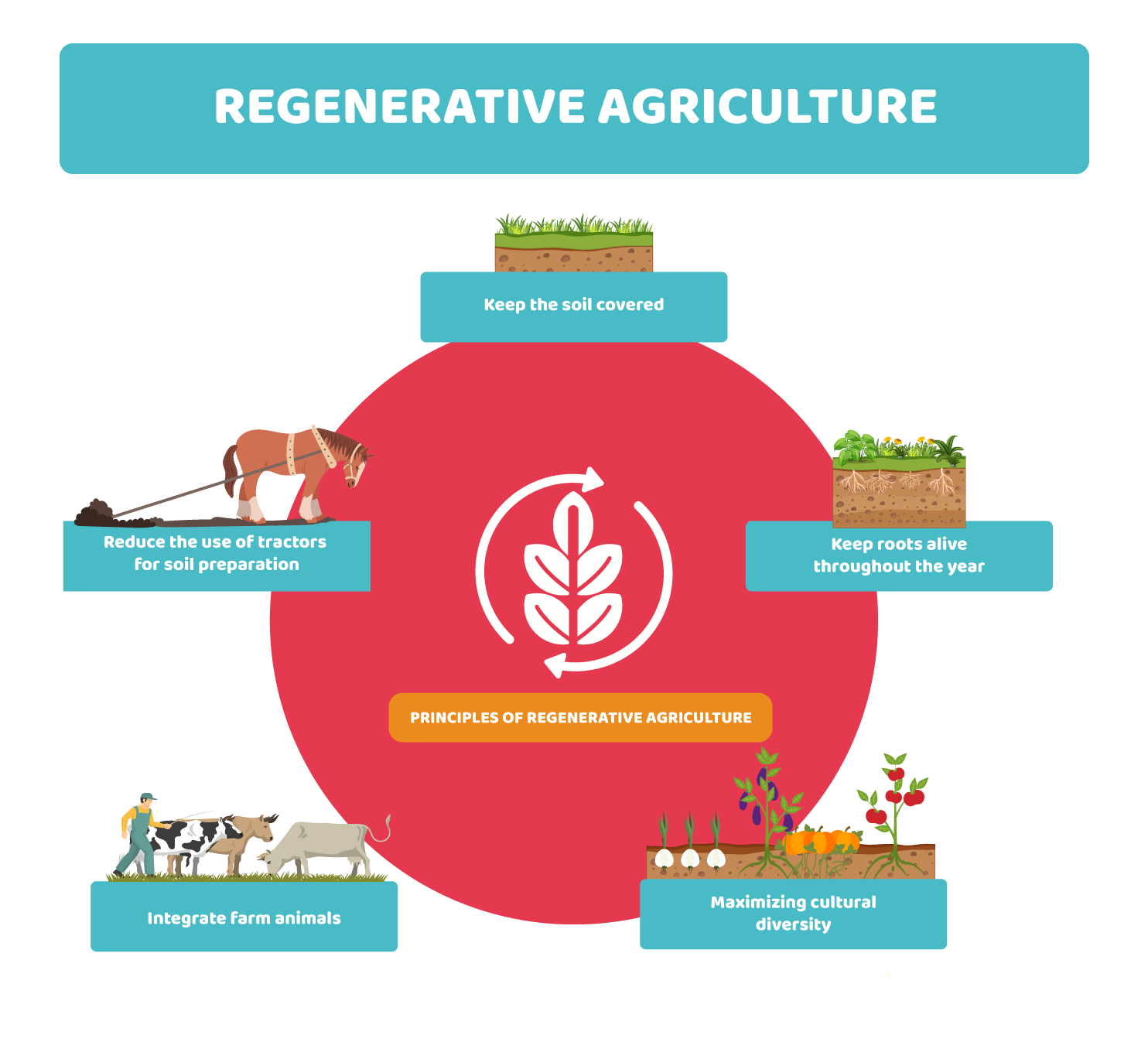
Regenerative agriculture, unlike conventional agriculture which can deplete the soil, seeks to restore life to the ecosystem. More than just a set of techniques, it represents a philosophy of production based on biodiversity and respect for the natural functioning of ecosystems. Key regenerative practices include crop rotation, the use of cover crops, no-till farming, the integration of trees through agroforestry systems, minimising the use of chemicals, replenishing organic matter through compost or manure, and rotational grazing. Together, these practices increase soil fertility, reduce erosion, promote carbon sequestration and improve water retention capacity, making agricultural systems more resilient and sustainable.
Soils, carbon and climate: the invisible link
Soil is one of the largest terrestrial carbon reservoirs, storing more carbon than plant biomass and the atmosphere combined. When well looked after, it acts as a veritable ‘carbon sink’; but when it degrades, it releases CO₂ into the atmosphere, contributing to the worsening of climate change. Healthy soils are able to store carbon, regulate the climate and maintain stable ecosystems, whilst degraded soils release carbon, exacerbate the greenhouse effect and make food production more vulnerable and unpredictable.
Whenever you choose food from regenerative farming systems, you are supporting practices that restore the soil, increase carbon sequestration and make agriculture more resilient to climate change.
How different practices affect the soil
| Agricultural practice | Impact on the soil | Impact on the climate | Impact on food |
|---|---|---|---|
|
Monocultura |
low biodiversity, more erosion |
↑ Emissions |
Less resilience |
|
Regenerative agriculture |
↑ organic matter, ↑ soil life |
↓ Emissions, carbon sequestration |
more stable feeds |
|
Excessive use of fertilizers |
Chemical imbalance |
↑ nitrogen oxides |
chemical dependency |
|
Permanent vegetation cover |
Protects the soil |
↓ Erosion, ↓ Carbon release |
Increased productivity |
|
Agroforestry |
Great biodiversity |
Carbon sequestration |
Varied and sustainable food |
And what’s that got to do with you?
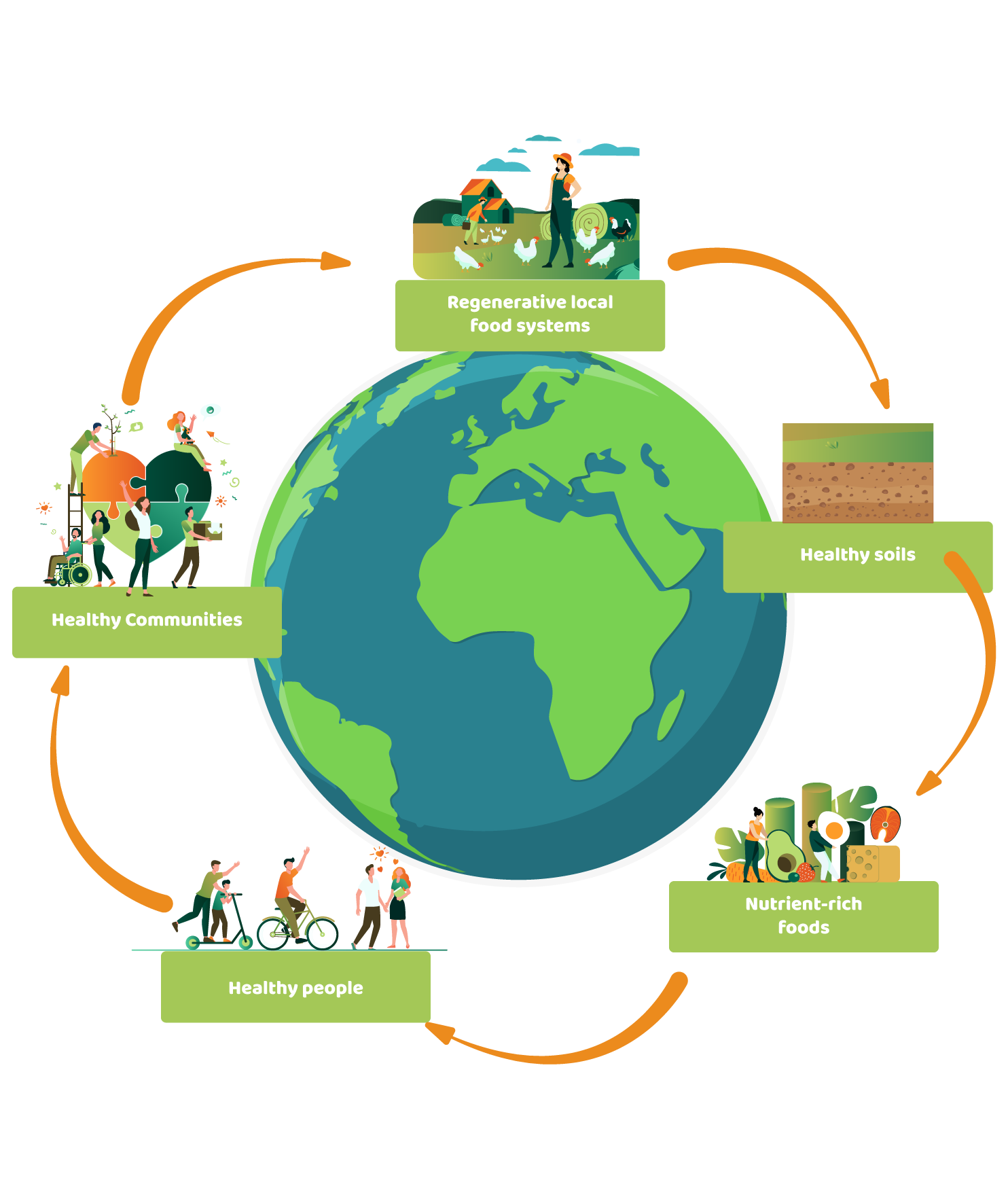
Every time you choose certain foods, you are implicitly supporting certain production systems.
Your power as a consumer is not merely symbolic: every choice directly influences the way the land is used, regenerated or degraded, and this determines future food security.
Choices that help the soil
- Eating more pulses promotes crop rotation and natural nitrogen fixation.
- Choosing seasonal produce reduces the need for intensive farming.
- Supporting local agriculture reduces pressure on the world’s soils.
- Reducing consumption of ultra-processed foods helps to avoid dependence on monocultures used to produce staple ingredients, such as sugar and oils.
- Following dietary patterns such as the Mediterranean diet encourages more balanced and soil-friendly farming practices.
Choices that harm the soil
- Eating diets rich in intensively farmed meat increases the pressure on land and the demand for resources.
- Choosing foods that rely on monocultures, such as many snacks or products containing tropical oils, contributes to the loss of biodiversity and soil degradation.
- Choosing food that travels through long supply chains increases the environmental footprint and intensifies the use of energy and resources.
Your plate sends a message: it tells us how you want the land to be used.

When choosing fresh produce, ask yourself:
“Does this food help to regenerate or degrade the soil?”
Look for:
- seasonal fruit and vegetables
- legumes- local products
- food products labelled as sustainably produced
- reduced reliance on ultra-processed foods
Small choices can have a big impact
FOODWISElab challenge

To understand how food choices influence soil health, recognising the importance of origin, seasonality and production systems for a more sustainable diet.