
Preparing safely, scientifically and independently
As you become more independent, cooking is no longer just about following instructions; it starts to require informed choices: selecting the right utensils, organising your workspace, keeping track of cooking times and assessing food safety. These skills extend far beyond the kitchen; they develop responsibility, decision-making ability and time management.
Cooking is essential for your health, independence and wellbeing. At this stage, you have the maturity to understand not only how to prepare food, but also why certain practices are vital for preventing contamination, preserving nutrients and ensuring safe meals. You are also able to use small kitchen appliances with greater confidence. Mixers, hand blenders, choppers or food processors help you work with greater precision, especially when trying out new recipes or cooking for more people. Knowing when a knife is sufficient and when a food processor is more efficient makes your work safer and more productive.
The kitchen is one of the places where microorganisms can multiply most rapidly, but most risks can be avoided with a few simple precautions. Food safety begins before you even switch on the hob: choose fresh food, check use-by dates, avoid damaged packaging and transport chilled food properly. During food preparation, however, simple oversights – such as using the same chopping board for raw meat and salad – can compromise the safety of the meal.
Washing your hands frequently, keeping your mobile phone out of the way whilst cooking, tying your hair back, using clean utensils and ensuring that surfaces are sanitised are essential precautions. Preparing your workspace is also part of food safety: wipe down the worktop, remove any unnecessary items, separate ingredients and organise what you’re going to use. A simple, tidy workspace makes it easier to keep raw and cooked foods separate and reduces the risk of cross-contamination.
Cross-contamination – where microorganisms are transferred from one food to another via hands, utensils or surfaces – is a common cause of food poisoning. Washing knives and chopping boards between tasks, not reusing the plate used for raw meat for cooked meat, and storing raw food on the lower shelves of the fridge are key measures for preventing it.
Mise en place remains the foundation of culinary organisation, but it has now taken on new dimensions. As well as preparing ingredients and utensils before cooking, it is important to choose the right chopping board, plan cooking times, anticipate risks and establish a safe workflow. This preparation reduces the need for improvisation, minimises waste and prevents accidental contamination.
Gaining independence also means using equipment responsibly: reading the instructions before using it for the first time, checking that cables and plugs are dry, handling sharp knives with care, choosing pots and pans suitable for the quantities you’re cooking, and keeping handles turned inwards to avoid burns. The right cookware makes cooking more efficient: large pots for bigger dishes, small saucepans for individual portions, and non-stick frying pans for cooking with less fat and more evenly.
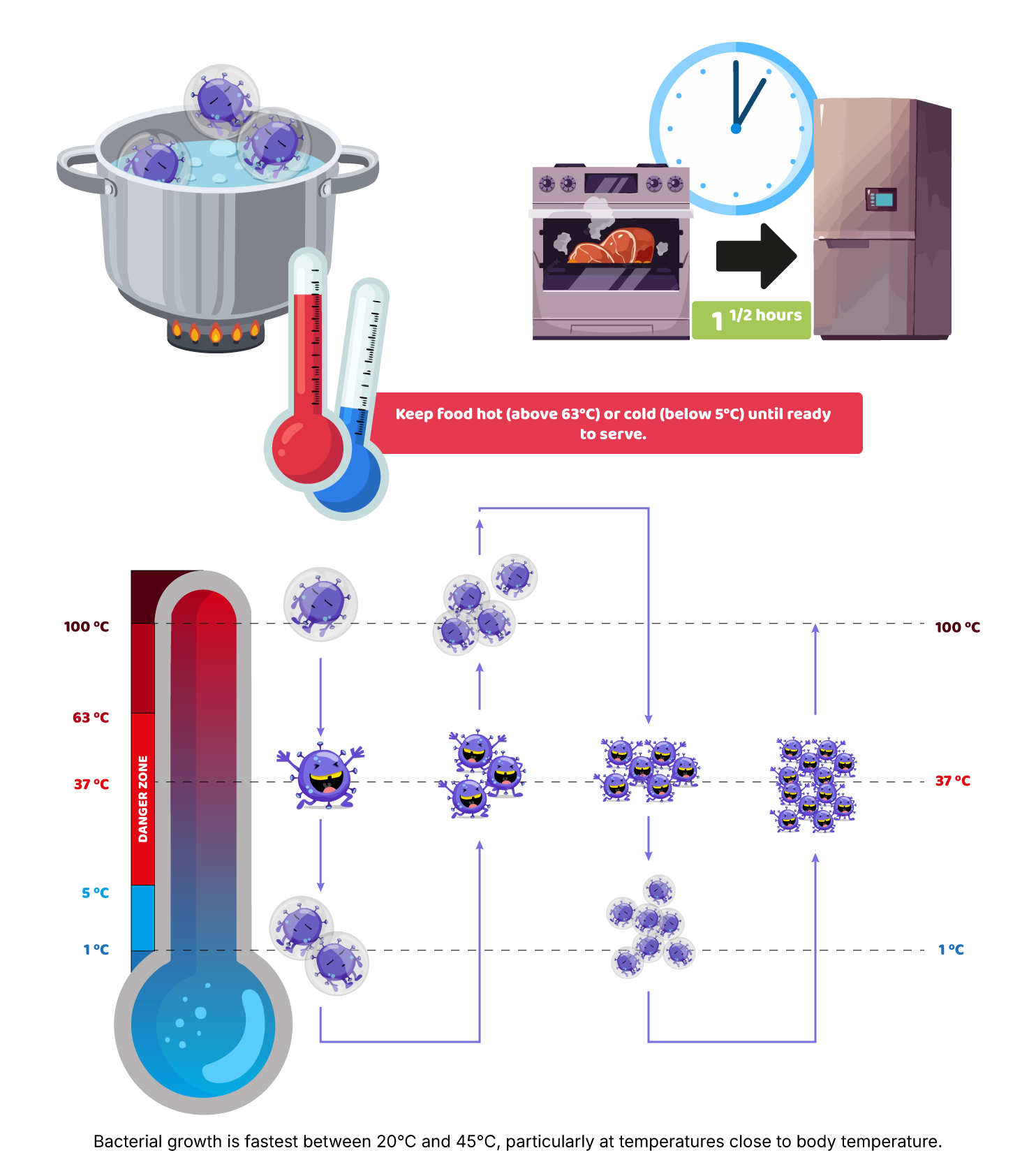
Heat destroys pathogenic microorganisms, but only when the correct internal temperatures are reached. Poultry should reach around 74 °C, minced meat 70 °C and fish should reach 63 °C. Eggs should have firm whites and yolks, and leftovers should be reheated until they are piping hot, around 70 °C. These figures are more reliable than judging food by colour or texture alone.
It is also important to avoid the ‘danger zone’, between 5 °C and 60 °C, the range in which bacteria multiply most rapidly. Cooling meals down after cooking is a critical stage: do not place hot pans directly into the fridge, but do not leave the food at room temperature for too long either. The safest method is to divide the meal into small portions, allow the steam to escape and chill it quickly.
Proper food storage is an essential part of being self-sufficient in the kitchen. The fridge should be kept below 5 °C, and the freezer at –18 °C. Leftovers should be stored in sealed, clearly labelled containers and refrigerated within one hour of being prepared. Avoiding leaving ready-to-eat food out of the fridge for long periods reduces the risk of food poisoning and also helps to prevent food waste.
Recognising signs of spoilage, such as changes in colour, a slimy texture, a strong smell or swollen packaging, shows maturity and a concern for your safety. Even food that looks fine may not be safe if it has been left out of the fridge for too long.
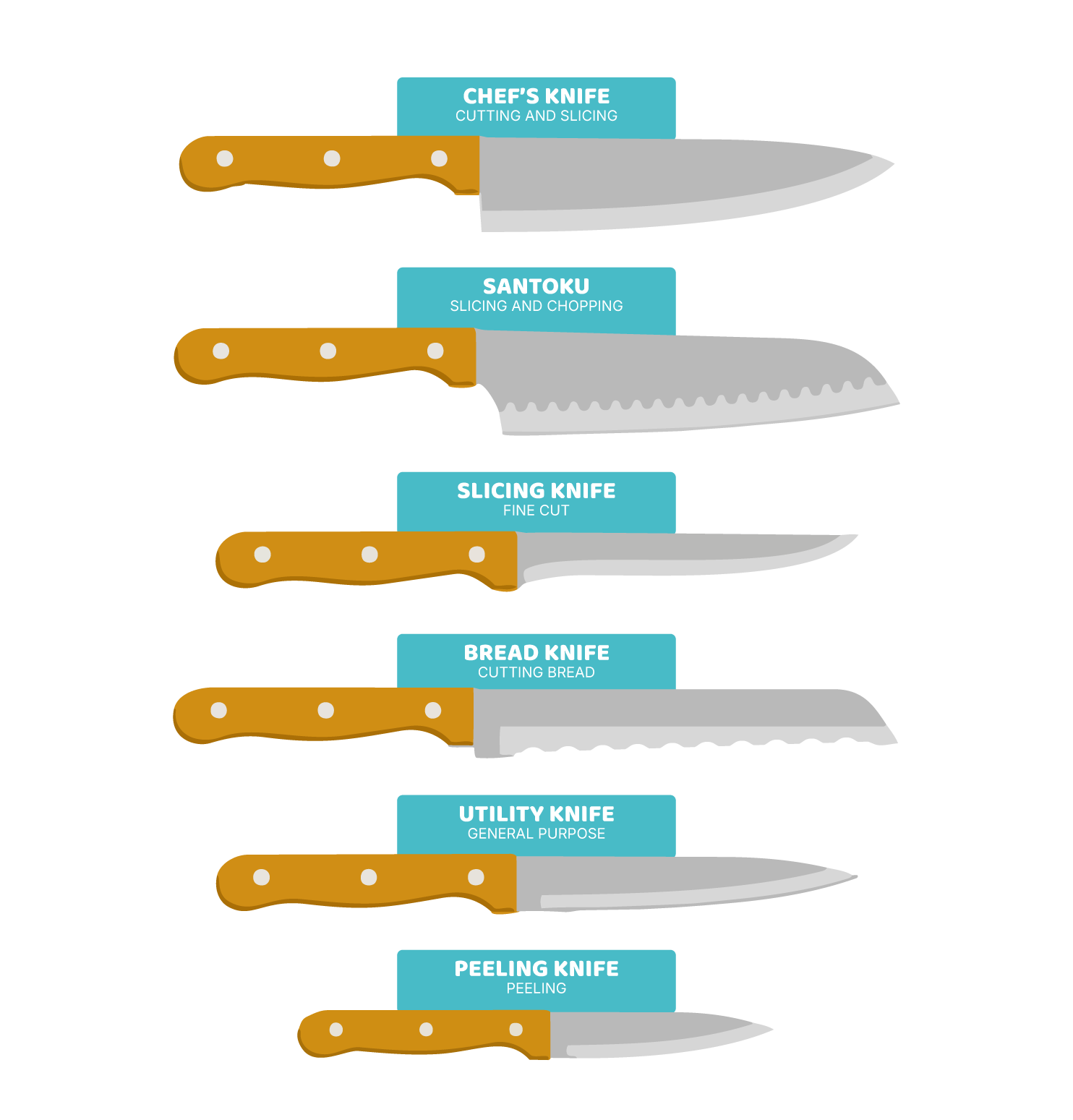
Knowing how to use knives is an important step towards becoming self-sufficient. Keeping the blades sharp, washing the knife immediately after use, always holding it by the handle and storing it in a suitable holder reduces the risk of accidents and cross-contamination. Each knife has a specific function: the filleting knife is thin and flexible for fish; the chef’s knife is the most versatile for cutting and chopping; the paring knife is handy for small cuts; the bread knife has a serrated blade, and the carving knife is ideal for cooked meats.
Colour-coded chopping boards help you stay safe: green for salads and washed fruit, brown for vegetables, red for raw meat, blue for raw fish, yellow for cooked food, white for bread and dairy products, and purple for gluten-free preparations. Using the correct colour significantly reduces the risk of cross-contamination.
Keeping utensils organised by function – chopping, mixing, cooking or cleaning – makes the kitchen faster, safer and more efficient. Measuring spoons, measuring jugs and scales should always be within easy reach, ensuring accuracy when following recipes.

Mise en place = smart kitchen
Before you switch on the hob, get everything ready: wash, chop, weigh and sort the ingredients. You’ll cook faster, more safely and with far less stress.
FOODWISELab challenge

To develop independence in the kitchen, applying the principles of food safety, organisation (mise en place) and scientific rigour when preparing a simple Mediterranean meal.