
Food security and responsible consumer choices
Food safety isn’t just about ‘washing your hands’ or ‘checking the use-by date’. Between the ages of 15 and 17, you start doing your own shopping, preparing simple meals, reheating food, eating out and even shopping online, so you need a more solid understanding of food safety.
This subsection focuses on how to choose safe food, how to avoid hidden risks and how to make responsible decisions both in the supermarket and at home.
Many risks can be avoided before food enters the home.
a) Assess freshness and visual quality
- fruit and vegetables: firm texture, natural colour, no mould spots
- fish: bright eyes, red gills, faint smell
- meat: consistent colour, no sour smell, packaging intact
- chilled products: constant temperature (<5 °C)
b) Packaging
Avoid products:
- with damaged packaging
- dented or rusty tins
- lids that make a popping sound when opened (indicating contamination)
- packaging with excessive condensation
c) Important dates
- Use-by date: safety; must not be exceeded
- Best before date: quality; may be consumed after this date if the product is in good condition
Even safe food can become unsafe if it is stored incorrectly.
Essential good practices
- keep the fridge at <5 °C
- freezes food quickly after purchase
- Keep raw meat separate from ready-to-eat food
- Store leftovers in clean, sealed containers and use them up within 2–3 days
- Never refreeze defrosted food
- Avoid defrosting at room temperature; use the fridge or microwave instead
Cross-contamination
This is the most common risk and the easiest to avoid:
- Do not chop vegetables on the same chopping board that has been used for raw meat
- wash your hands between tasks
- to use different cutlery for tasting and stirring food
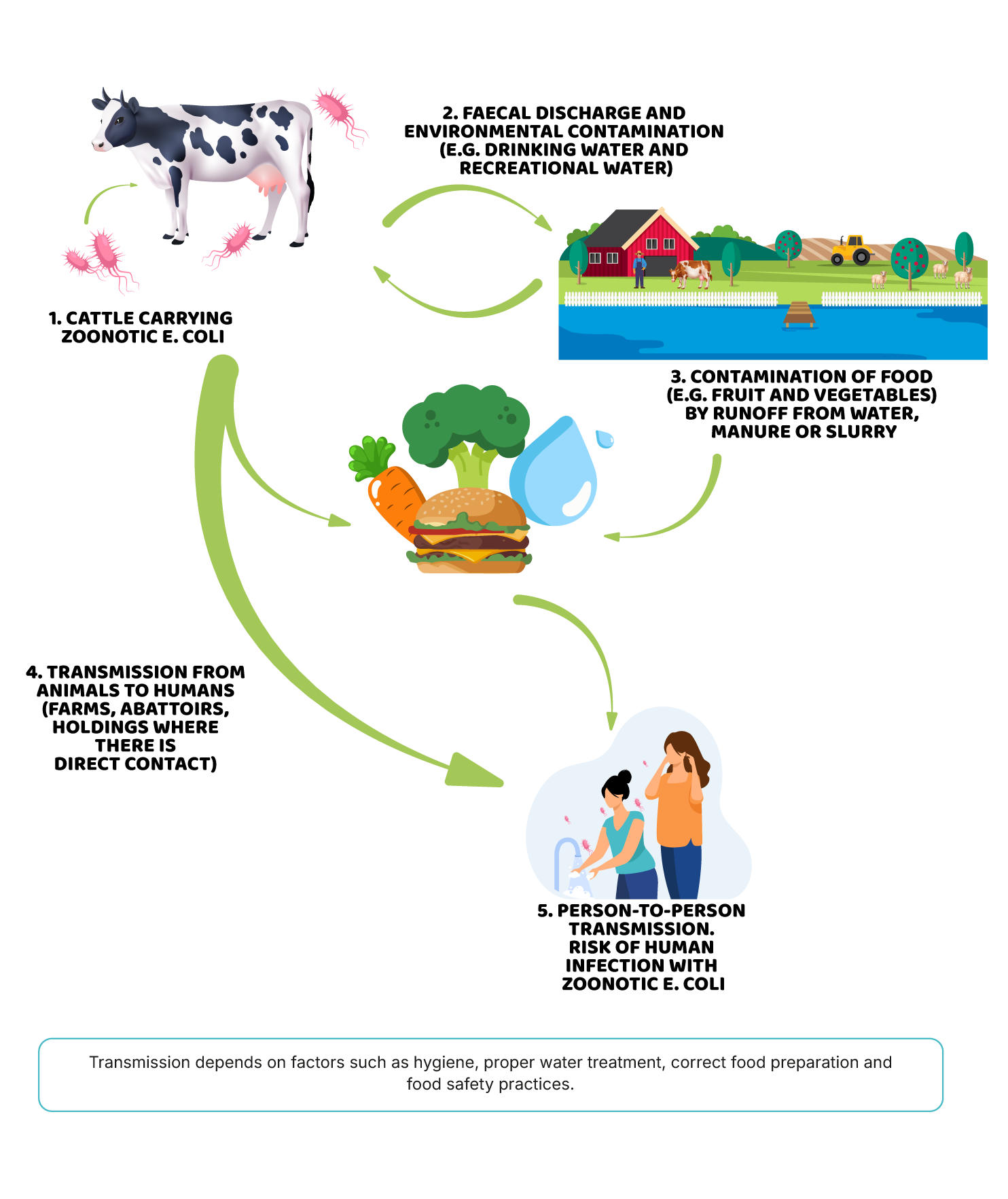
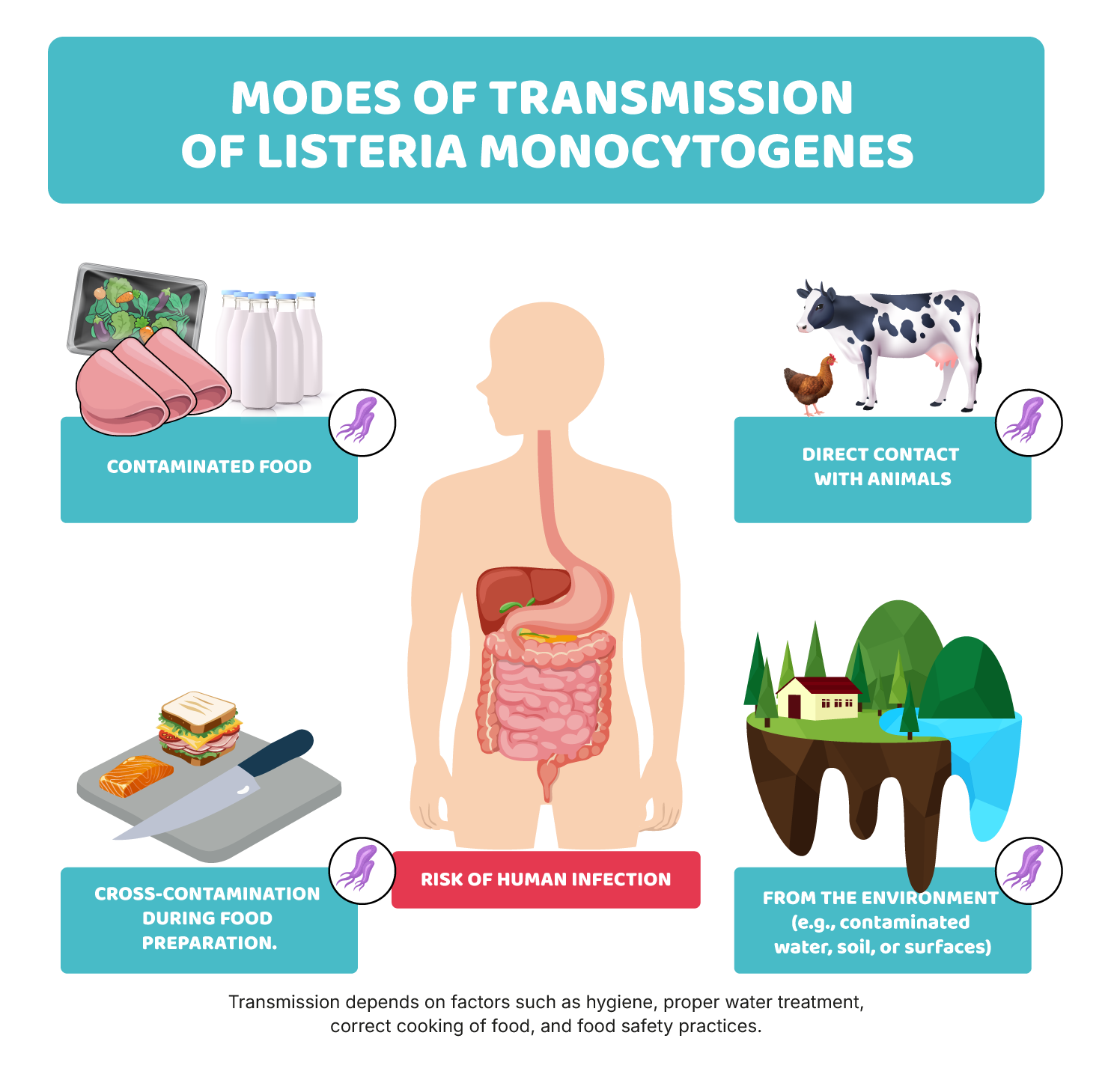
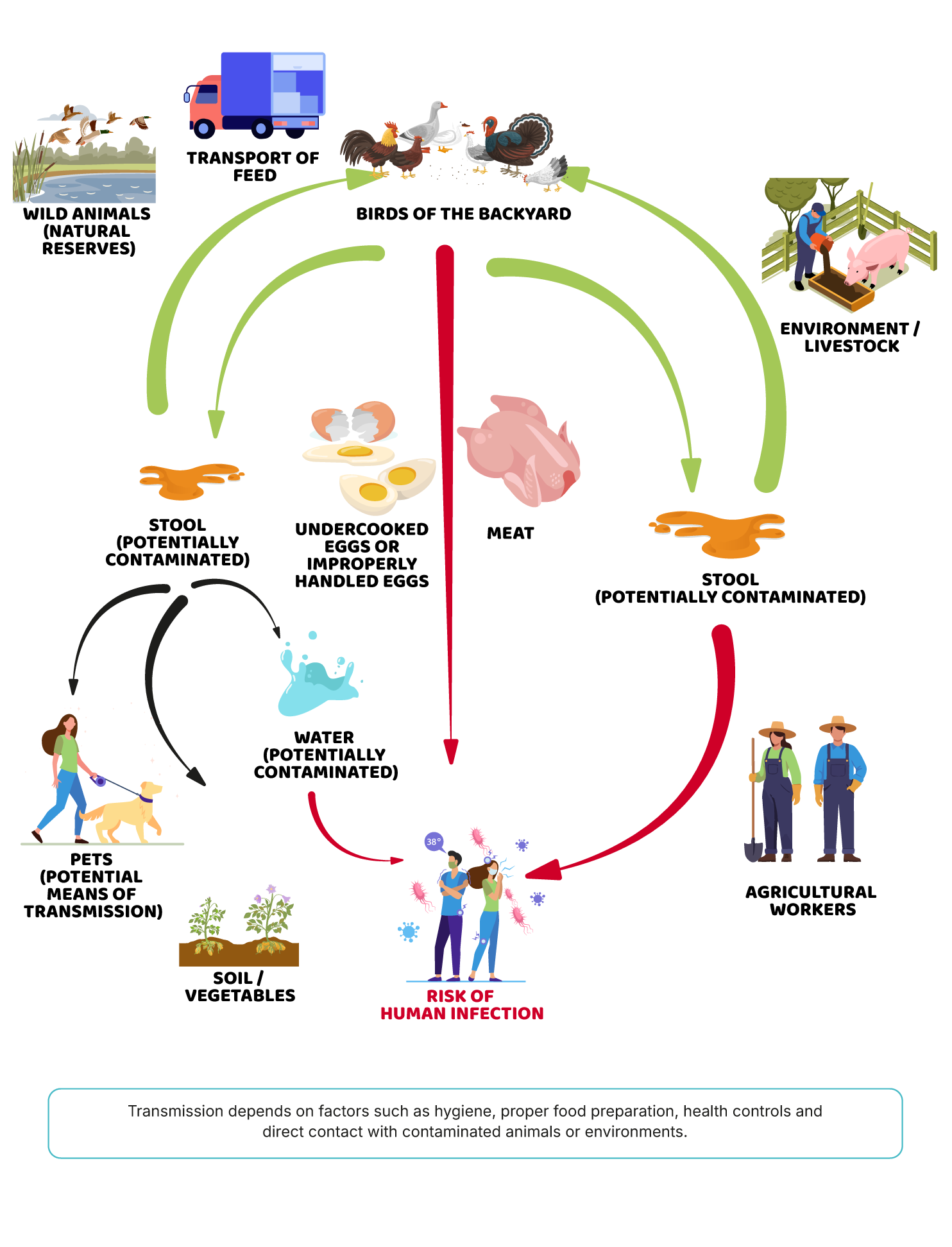
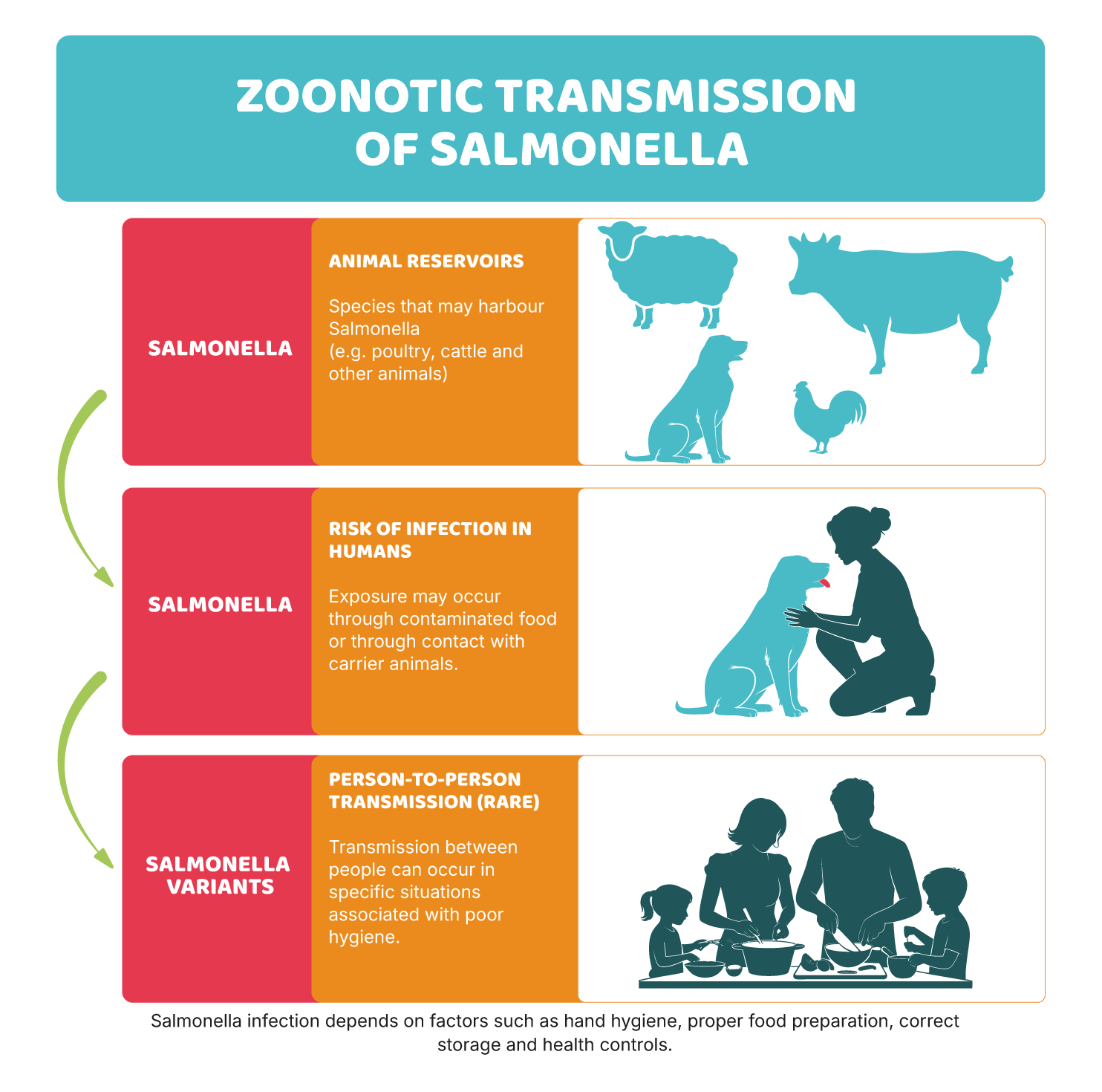
Most cases of food poisoning are caused by:
- Salmonella (eggs, poultry)
- Campylobacter (poultry)
- Listeria (fresh cheeses, cold meats, smoked foods)
- E. coli (undercooked meat, contaminated raw vegetables)
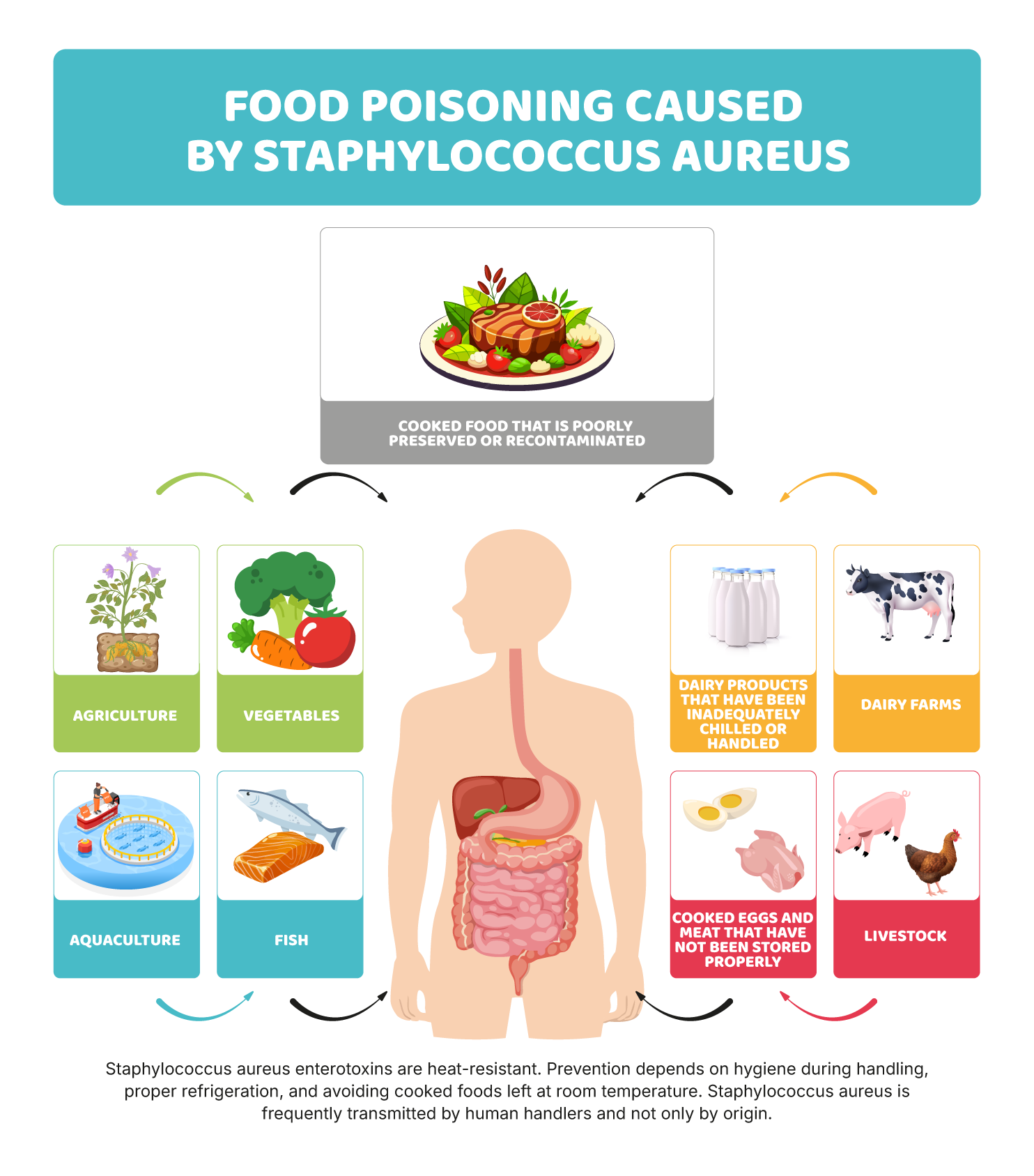
- Staphylococcus aureus (improper handling)
| Bacteria | Where it is found | Symptoms of food poisoning |
|---|---|---|
| Campylobacter | Raw or undercooked poultry (especially chicken), unpasteurised milk, untreated water | Diarrhoea (which may be bloody), cramp-like abdominal pain, fever, nausea and vomiting. |
| E. coli (e.g.: E. coli O157) | Undercooked minced meat (burgers), unpasteurised milk, contaminated water, contaminated raw vegetables | Undercooked minced meat (burgers), unpasteurised milk, contaminated water, contaminated raw vegetables (1) |
| Listeria monocytogenes | Soft and semi-soft cheeses, unpasteurised milk, chilled pâtés, ready-to-eat charcuterie products, long-life chilled foods | Flu-like symptoms: fever, muscle aches, nausea and diarrhoea. In pregnant women, it can lead to miscarriage, premature birth or a serious infection in the newborn; it can cause meningitis. |
| Salmonella | Raw or undercooked eggs, poultry, raw meat, unpasteurised milk, products containing raw egg | Fever, nausea, vomiting, abdominal pain and diarrhoea. |
| Staphylococcus aureus | On the skin, nose and throat of food handlers; contaminates food that is frequently handled and kept at room temperature (salads, sandwiches, cakes with cream, pastries) | Very rapid onset (2–6 hours) with severe nausea, repeated vomiting, abdominal pain and, sometimes, diarrhoea; usually without a fever. |
Almost all of them can be prevented by:
thorough cooking • proper refrigeration • strict hygiene
The consumption of ready meals and food ordered via apps has risen sharply amongst teenagers.
Things to bear in mind when ordering food out:
- transport time: risk if it exceeds 2 hours
- inappropriate packaging: contamination
- temperature: hot dishes should be served hot
- check the establishment’s reputation
- Allergen information (required by law)
Online shopping for fresh produce
- check that ‘cold chain’ conditions are maintained
- check whether food arrives damaged
- refrigerate immediately upon receipt
The role of teenagers in food security
If you’re aged 15–17, you can:
- prepare simple meals safely
- storing food properly
- recognise signs of deterioration
- to critically evaluate ready-to-eat products
- help the family to reduce waste
- make more responsible decisions when it comes to shopping and apps
Food security should not lead to more waste. There are strategies that take both sides into account:
- Meal planning: less risk of cross-contamination and food waste
- organise the fridge into zones (front: use up first)
- freeze food before it goes off
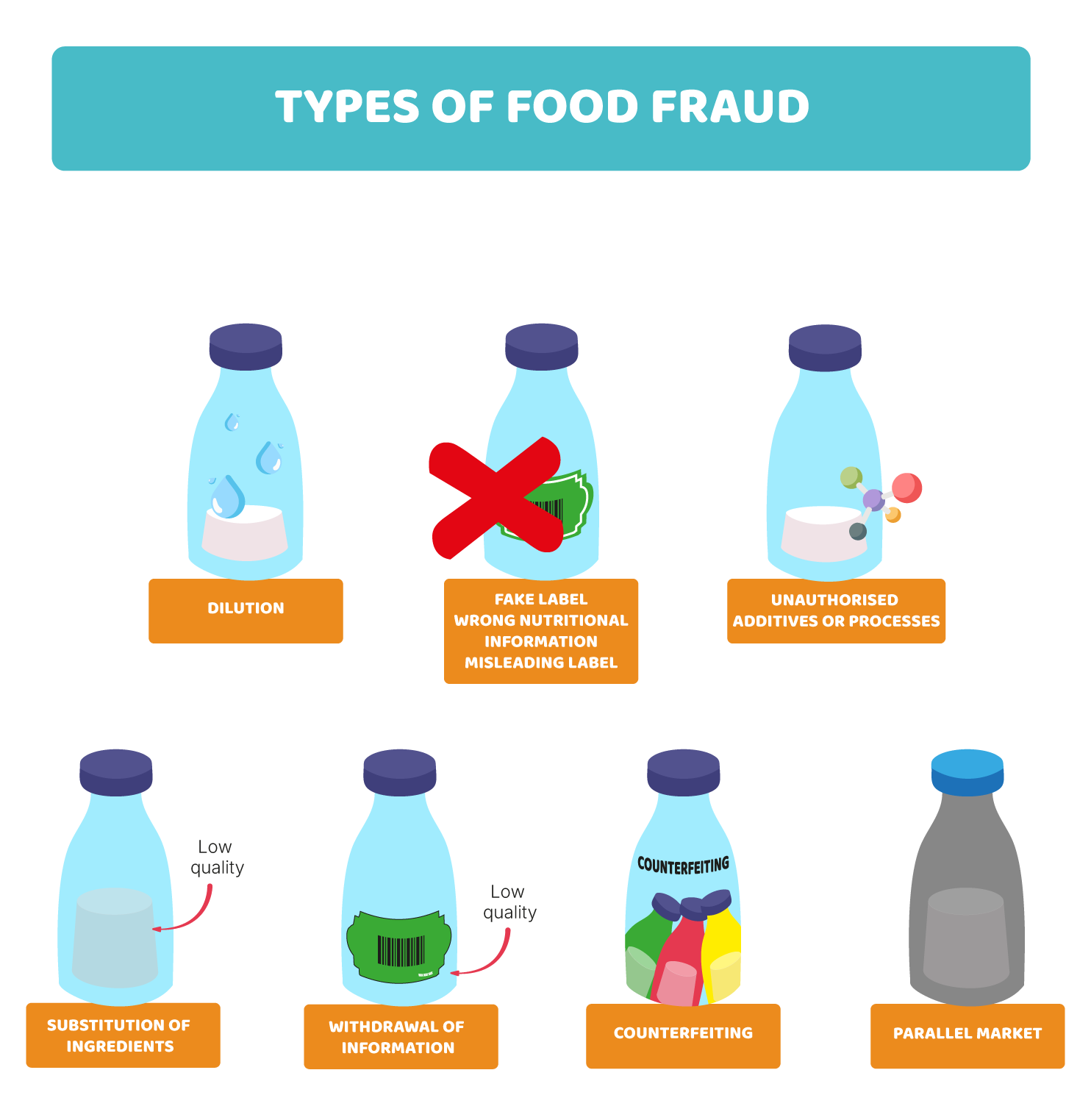
Food fraud: a real and growing risk
Food fraud is any practice that deceives the consumer for financial gain.
Real-life examples:
- olive oil diluted with cheap oils
- fish exchanged for less valuable species
- honey adulterated with syrups
- “cheese” which is a mixture of vegetable oils
How to protect yourself:
- buy from reliable sources
- be wary of prices that are too low
- prefer labels with certifications (PDO, PGI)
- read lists of ingredients and origins carefully

The 2–2–4 rule:
- 2 hours at room temperature: the risk begins
- 2 days in the fridge: use up leftovers
- Cooked food should be consumed within 4 days
It’s simple and saves you a lot of trouble.
FOODWISELab challenge

Learning how to organise the fridge properly, thereby improving food safety, hygiene and food management, and reducing waste.