Agricultural biodiversity
When we think of biodiversity, we picture forests, wild animals or coral reefs. But there is another type of biodiversity, less visible in everyday life, yet essential for ensuring food production: agricultural biodiversity, that is, the variety of plants, animals and micro-organisms that underpin food production.
At this age, it is possible to understand that agricultural diversity is not just about ‘having lots of different foods’: it is a necessary condition for ensuring climate resilience, food security and sustainability in a rapidly changing world.
More than 75 per cent of the world’s food crops depend, either wholly or in part, on pollinators such as bees, butterflies, flies and even bats. Without these animals, the production of fruit, vegetables and nuts would decline dramatically, jeopardising the availability and diversity of the food we consume every day.
The decline in pollinator populations threatens not only crop yields, but also food quality and the balance of ecosystems. Without sufficient pollination, many plants produce fewer fruits, or smaller or lower-quality fruits, affecting farmers, consumers and the entire food chain.
Protecting biodiversity, and pollinators in particular, is essential to ensuring future food production. Without these natural allies, much of agriculture as we know it would cease to be viable.


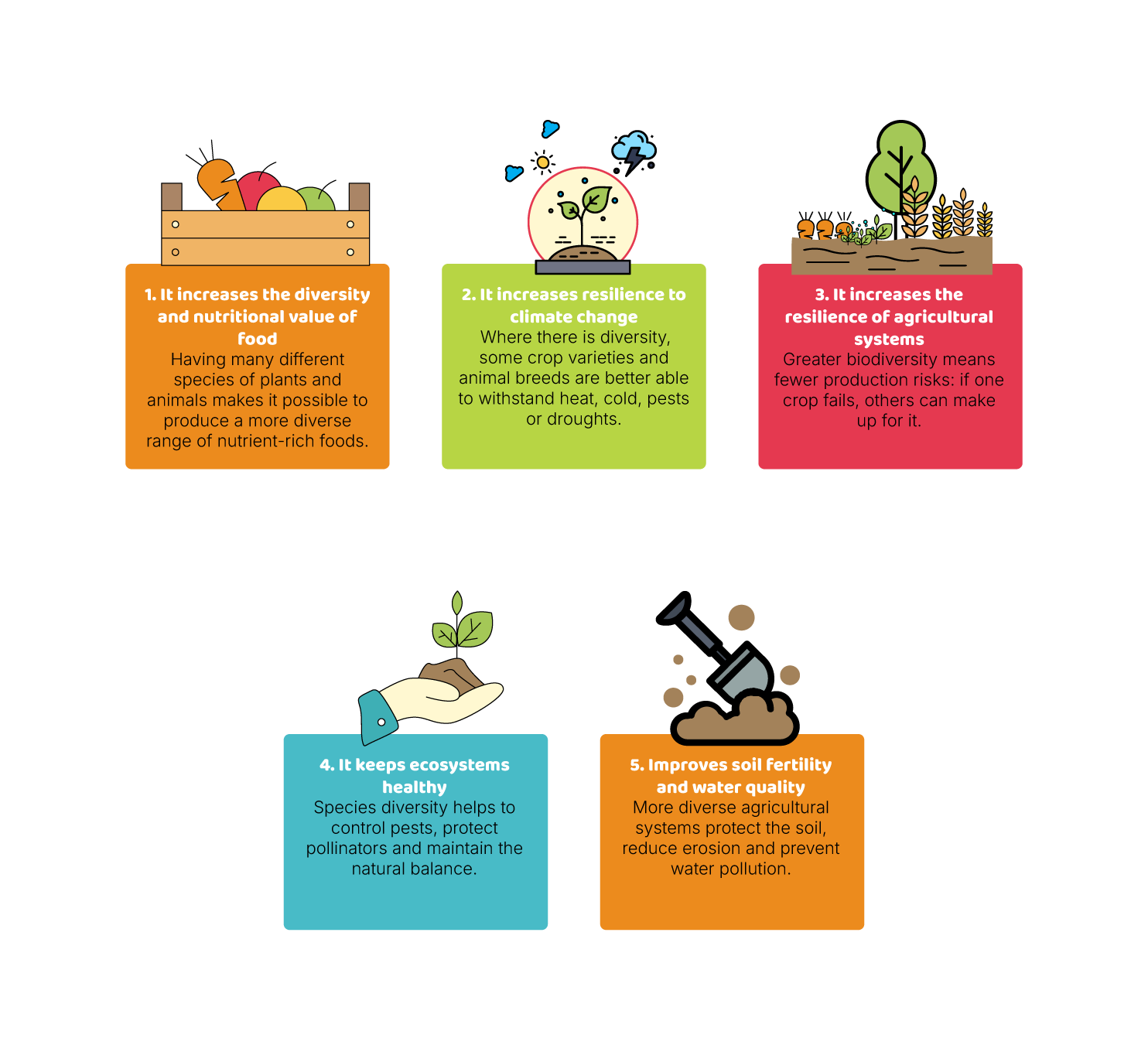
Biodiversity is essential for food because it ensures the stability, quality and continuity of the systems that produce what we eat. From the perspective of food security, diversity acts as a safety net: if one plant variety fails due to pests, diseases or drought, others may withstand these challenges. The greater the diversity, the lower the risk of production collapse.
It also contributes to the nutritional value of food. Different varieties of the same species, such as tomatoes, potatoes or apples, have distinct compositions, with varying amounts of vitamins, antioxidants, fibre or other beneficial compounds. Thus, agricultural diversity results in a richer and more balanced food supply.
Biodiversity is also essential for climate resilience. Species and varieties adapted to more extreme conditions enable production to be maintained even in the face of heatwaves, prolonged droughts, depleted soils or increased salinity. The better plants and animals are adapted to local conditions, the more resilient the food system is.
Finally, biodiversity underpins flavours, traditions and food cultures. Regional varieties, traditional seeds and native breeds represent a unique heritage that forms part of each region’s identity. Conserving this diversity also means conserving history, culture and ways of life.
Most of the world’s food supply is based on just a few species:
- wheat
- rice
- maize
- soya
Of the tens of thousands of edible plants, just four account for almost 60 per cent of global calories. Why? Because they are easy to store, process and transport.
The main threats include:
- intensive farming and monocultures
- excessive use of pesticides and fertilisers
- habitat destruction
- climate change
- replacement of traditional varieties with commercial hybrids
- pollinator decline

Climate resilience: the challenge of feeding the world in the future
Climate change is already having an impact on:
- crop productivity
- nutritional composition of foods (e.g. more CO₂, less protein in cereals)
- water availability
- distribution of pests and diseases
- global food security
Biodiversity is one of the most effective strategies for ensuring the resilience of food systems. The greater the variety of plants and species available, the greater the capacity to adapt to climate change, pests or adverse environmental conditions.
There are several examples that illustrate this importance. Old varieties of wheat, for example, are more drought-resistant than many modern varieties. Pulses such as chickpeas and lentils are able to maintain their yield even with little water, making them essential in situations of water scarcity. Similarly, native fruits, which are adapted to the soil and climate of each region, thrive better in local microclimates, withstanding variations in temperature or humidity that other species cannot tolerate as well.
Taken together, these characteristics demonstrate how agricultural diversity contributes to more stable food systems that are better equipped to face future challenges.
The role of the Mediterranean diet in protecting biodiversity
The Mediterranean diet is one of the most biodiverse in the world because it includes:
- a wide variety of vegetables and fruit
- a wide variety of pulses
- fresh aromatic herbs
- nuts
- different types of bread and cereals
- olive oil made from a variety of olive tree varieties
- fish and seafood of various local species
Following this dietary pattern helps to:
- to preserve traditional varieties
- support local producers
- reduce monocultures
- to promote sustainable agricultural practices
It is an excellent example of how culture and sustainability can go hand in hand.
The role of young people in protecting food biodiversity
Even if they do not work directly in agriculture, young people have an important role to play in protecting food biodiversity. The choices they make in their daily lives can help to preserve local varieties, support more sustainable farming practices and encourage more diverse food systems.
Small actions, such as choosing seasonal and local produce, already make a difference. Trying less common foods, such as black-eyed beans, small-grain beans or buckwheat, helps ensure these crops do not disappear. Valuing regional varieties and avoiding ultra-processed foods – which rely mainly on four global crops – also helps to increase the diversity of what is produced and consumed.
Other ways to support biodiversity include planting herbs or small home vegetable patches, choosing food from organic or regenerative farming, and favouring local markets and farmers’ markets.
Ultimately, every individual choice has an impact: it can increase or reduce biodiversity within the food system.

When buying fruit or vegetables, look out for regional or less common varieties.
Small decisions help to keep agricultural biodiversity alive and bring new flavours to your plate.
FOODWISELab challenge

Understand the importance of food biodiversity for nutrition, adaptation to climate change and the sustainability of food systems, by exploring the varieties actually available in your local area.