
Eating together: tradition, culture and the planet
Eating is more than just nourishing the body; it brings people, stories and places together.
At the table, we share much more than just food: we share time, conversation, emotions and traditions. In the Mediterranean Diet, eating together is a core value. It is a time to celebrate life, to give thanks for our food and to strengthen bonds between generations.
In many Mediterranean homes, the table is the heart of the family. It is there that stories are told, recipes are learnt and values are passed on. Sharing bread, tasting the new olive oil or savouring a soup made with seasonal vegetables are simple gestures that connect us to nature and to people. This conviviality, recognised by UNESCO as part of humanity’s cultural heritage, makes eating an act of identity and belonging.
But eating together isn’t just a tradition...
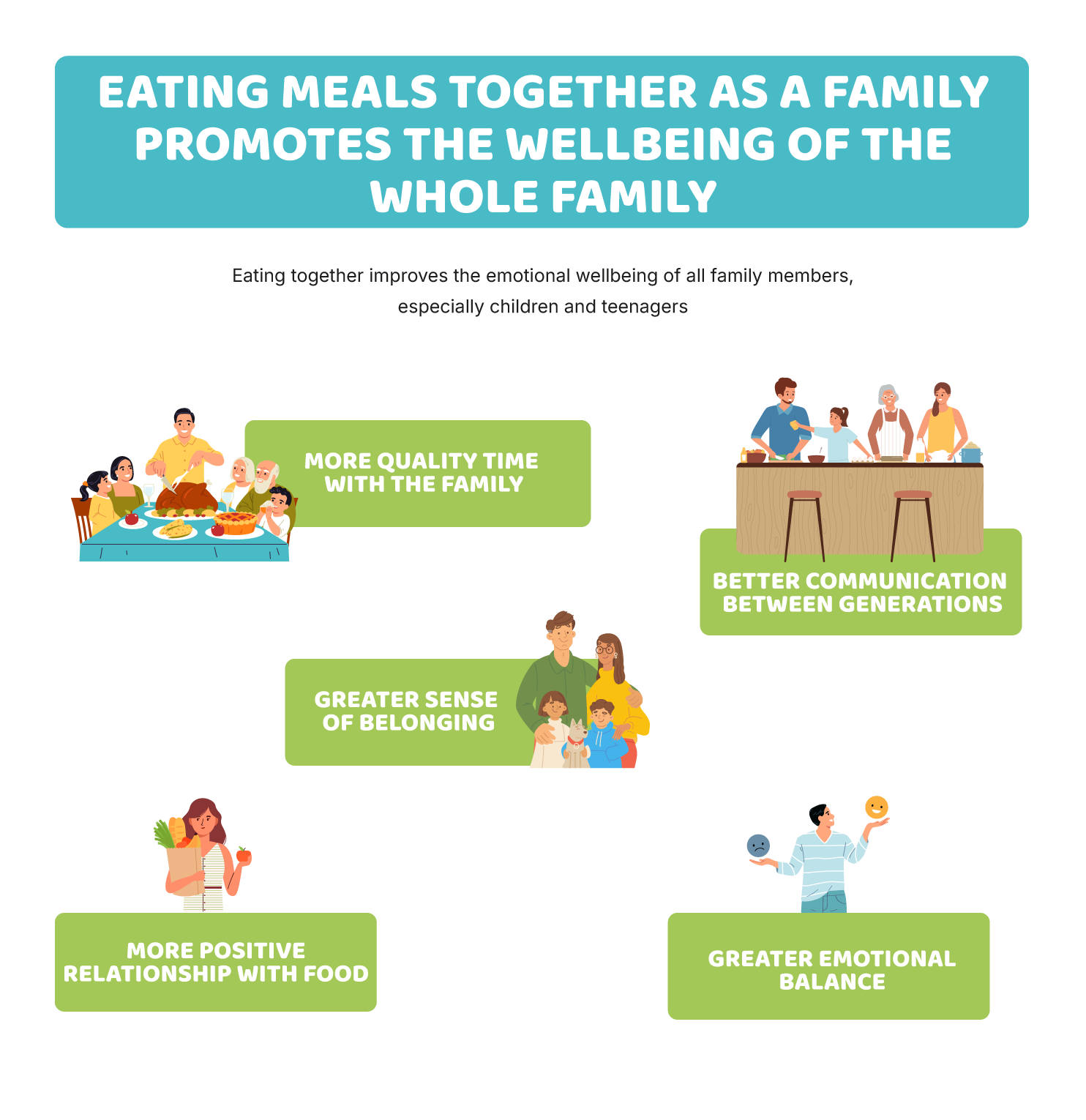
Studies show that teenagers who eat with their families several times a week have better eating habits, consume more fruit and vegetables, and eat less fast food and drink fewer fizzy drinks. They also enjoy greater emotional wellbeing and engage in fewer risky behaviours. When we sit down at the table with others, we eat better and feel more connected and at ease, and this is reflected in both body and mind.
Eating as a family isn’t just about sitting at the table. It also involves preparing and tidying the kitchen together: setting and clearing the table, storing leftovers in sealed containers, putting food in the fridge, and washing or putting away the crockery. Sharing these small tasks makes mealtimes fairer for everyone, avoids arguments about ‘who does what’ and helps keep food safe and in good condition. In this way, looking after the kitchen becomes another way of looking after one another.
AND ALSO LOOK AFTER THE PLANET
When we cook at home and share meals, we make better use of our food, avoid packaging and reduce waste. We plan our shopping carefully, value local and seasonal produce, and prioritise simple, balanced meals. The Mediterranean Diet shows us that eating well is both a healthy and sustainable choice.
And there’s something else: by eating mindfully, in good company and with gratitude, we learn to listen to our bodies and the environment.
Food literacy — knowing how to choose, prepare and eat — also involves understanding the meaning behind meals.
Eating together helps us recognise that food is more than just energy: it is culture, it is care, it is life shared.
FOODWISELab challenge

To value the act of eating together, recognising the importance of sharing, conversation and time spent at the table for well-being, our relationship with food and social bonds.