
Why does rice come from? Origin and importance
Rice was originally domesticated in South-East Asia several thousand years ago. Rice is one of the most important foods on the planet. More than half the world’s population eats rice every day, particularly in Asia, where the vast majority of the world’s rice (around 90 per cent) is produced and consumed.
Growing rice
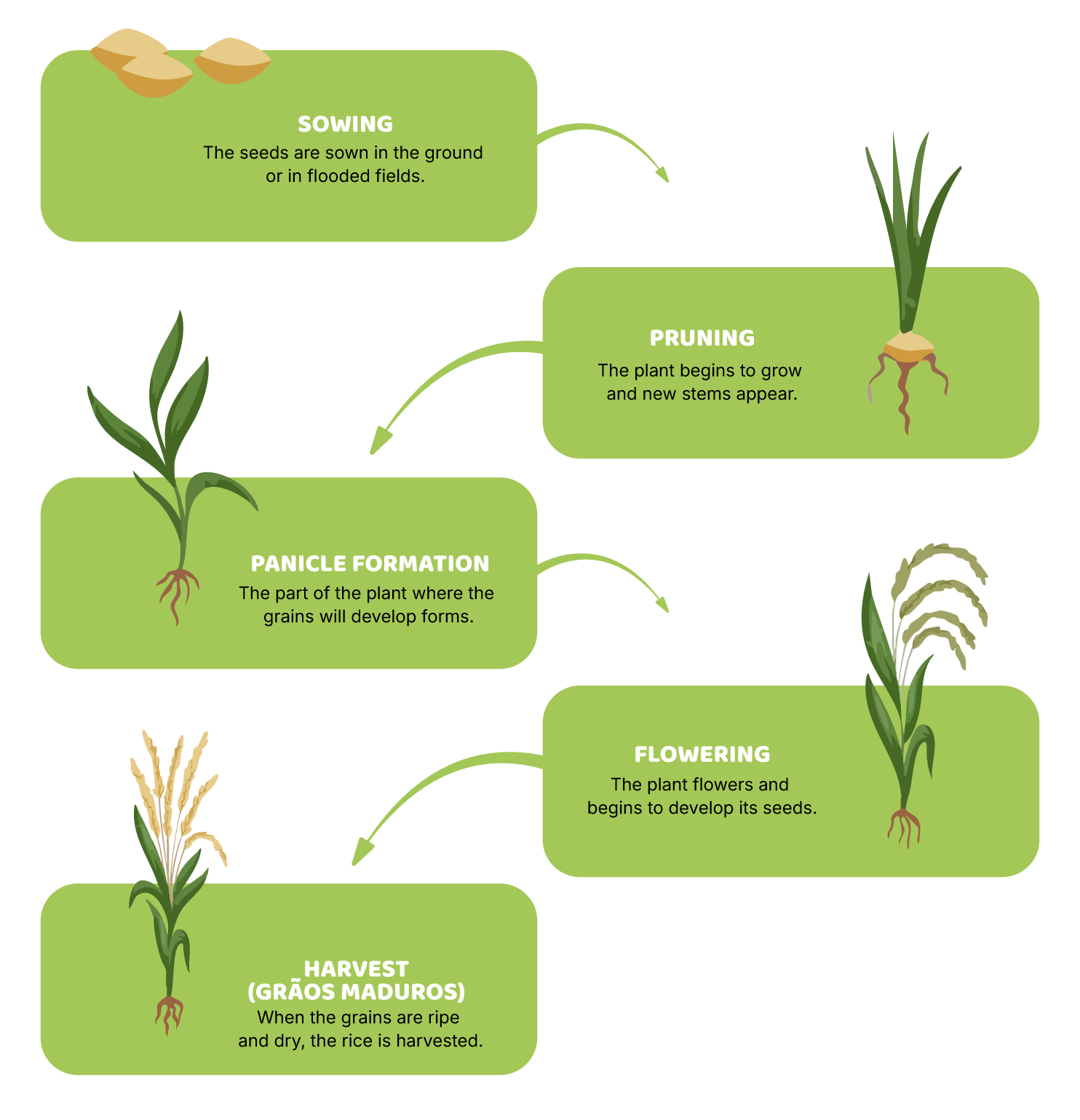
Rice grows best in warm, humid places. Its seeds are sown or transplanted into flooded fields called paddy fields. These fields have earthen banks that help to retain water and keep the soil moist whilst the plant is growing.
In many Asian countries, farmers first sow the seeds in a small nursery. When the plants reach the right size, they are transplanted to the rice paddies. In other regions, such as the United States or Australia, the seeds may be sown directly onto the fields by aeroplanes or mechanical seeders.
Farming methods according to water availability
- Irrigated rice, the most common variety, grows in fields that are flooded with water right up until harvest.
- Rainfed rice relies solely on rainfall and is more vulnerable to drought.
- Aerobic rice, a modern technique, is grown in moist soil but without standing water, thereby conserving water resources.
Rice
As the plants grow, the water protects them from weeds and pests. The leaves turn green and stand upright, and the stalk forms ears of rice with small flowers. Each flower produces a grain of rice. When the fields turn golden, the rice is ready to be harvested.
Harvesting
Harvesting can be done by hand on small family farms, or using machinery on large plantations. First, the water is drained from the fields and the stalks are cut and tied into bundles. The grains are then separated from the plant in a process called threshing.
Essential processing
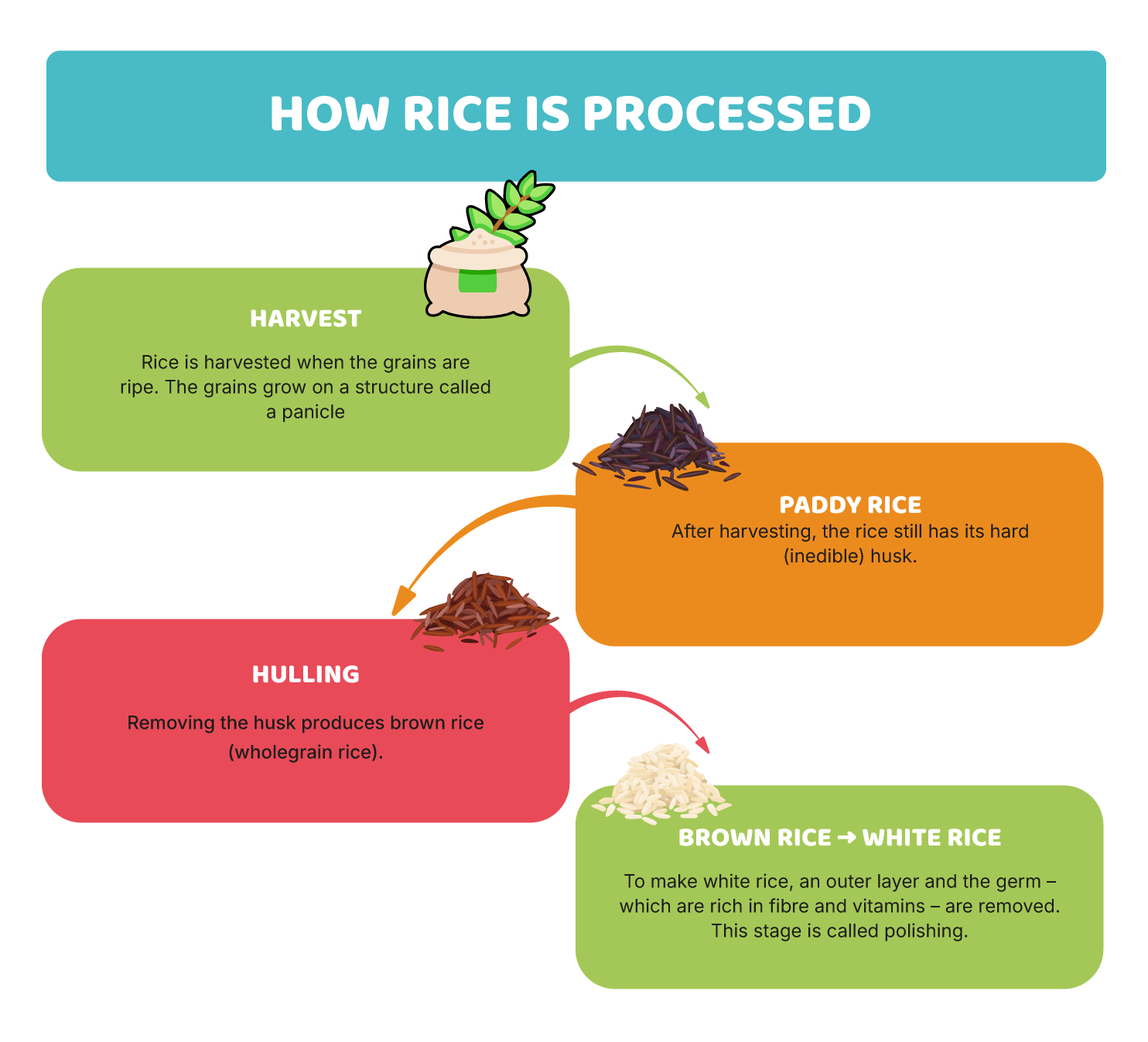
Rice grains have a hard husk that cannot be eaten. They are therefore milled to remove this husk.
- Brown rice retains a thin layer of bran and the germ, making it richer in fibre and nutrients.
- White rice is produced through further polishing; it loses its bran layer, becoming softer but less nutritious.
After milling, the rice is dried, cleaned and packaged. In some places, it is also artificially dried to ensure better quality and prevent the grains from breaking.
Once packed, the rice is transported by lorry or ship to supermarkets, local markets, restaurants and homes all over the world.
Types of rice
- Long-grain rice, with a light, fluffy texture, used in dishes such as basmati or plain white rice.
- Short-grain rice, which is stickier, ideal for sushi and desserts.
- Brown rice, which has a more intense flavour and a firm texture, is considered healthier.
Rice features in countless dishes, from Spanish paellas and Italian risottos to Asian curries and traditional Portuguese baked rice.
Sustainability and the future
With climate change and water scarcity, farmers are seeking new ways to grow rice that use fewer resources. Techniques such as Alternate Wetting and Drying (AWD), in which fields alternate between dry and flooded periods, and aerobic cultivation enable water savings without reducing yields. The development of varieties that are more resistant to heat and drought is also a priority to ensure that rice continues to feed the world sustainably.

A tip for planning your meals
When planning your meals, include rice in a balanced and sustainable way. Choose brown rice a few times a week – it’s more nutritious and keeps you feeling full for longer. Pair it with pulses, such as beans, chickpeas or lentils, and seasonal vegetables; this way, you’ll reduce your meat consumption, protect animals and help minimise the environmental impact of your diet.
FOODWISELAB CHALLENGE

To recognise the differences between white rice, brown rice and parboiled rice, and to understand how this choice can affect your energy levels throughout the day.