
Energy and Nutrients
Food is your main source of energy and nutrients. Nutrients are the substances your body uses to build and renew all its parts: muscles, bones, skin and organs. Every day, your body replaces old cells with new ones; some of the food you eat today will literally become ‘you’ tomorrow. Nutrients also provide the energy you need to think, move, study, play and take part in sport.
Your body needs energy for much more than just moving around or exercising. Even at rest, you use a large proportion of your daily energy to keep your brain active, regulate your body temperature, renew cells and sustain essential functions, such as breathing or keeping your heart beating. We call this energy your basal metabolic rate. If you add to this your day-to-day movements (walking, climbing stairs, playing), physical exercise and the digestion of food itself, you get your total energy expenditure.
During adolescence, the body grows faster than at any other stage after childhood. This means that energy and nutrient requirements increase to keep pace with physical growth, cognitive development and sexual maturation. Planning one’s diet at this stage is essential to ensure good health now and prevent illness in the future.
Daily energy requirements vary according to age, gender and level of physical activity. For 12–14-year-olds, on average, boys need between 2,440 and 3,130 kcal/day and girls between 2,245 and 2,720 kcal/day, assuming moderate to high levels of activity. Regular participation in sport or more intense physical activities may increase these requirements even further.

Carbohydrates should be the main source of energy, accounting for 45–60% of daily intake. It is important to prioritise complex carbohydrates, whole grains, pulses, fruit and vegetables, and to limit simple sugars to less than 10–15% of total energy intake, preferably below 5%, to reduce the risk of obesity, diabetes and tooth decay.
Fibre, found mainly in whole grains, fruit and vegetables, should amount to approximately 19 g/day (or 2 g/MJ), as it helps to regulate bowel movements, promotes a feeling of fullness and contributes to weight control.

Proteins are essential for muscle growth, cell renewal and the proper functioning of the immune system. They should account for 10–15% of daily energy intake, which is equivalent to around 0.9 g/kg of body weight in healthy adolescents.
In young people who take part in regular or intensive sport, requirements may increase to as much as 1.3–1.8 g/kg/day.
It is important to vary your sources of protein, including fish, lean meat, eggs, pulses and nuts.

Lipids should account for 20–35% of total energy intake, with a focus on unsaturated fats (olive oil, oily fish, nuts, seeds).
Limit saturated fats, ideally to less than 10% of total energy intake; for essential fats, aim for around 4% of energy from omega-6 (linoleic acid) and around 0.5% from omega-3 (alpha-linolenic acid).
This balance is essential for brain development, cardiovascular health and the regulation of inflammation.

As for micronutrients, some deserve special attention. Calcium, 1,150 mg per day, and vitamin D, 15 μg per day (600 IU), are crucial for bone growth and help prevent osteoporosis later in life. Iron is vital for oxygen transport, with recommended intakes of 10 mg per day for boys and 13 mg per day for girls, who are particularly vulnerable to anaemia. Zinc contributes to growth and sexual maturation, with a target of around 11 mg per day in a mixed diet; higher amounts may be required in diets very rich in phytates. Folate should reach 400 μg per day in dietary folate equivalents. Vitamin B12 should be between 3.5 and 4.0 μg per day. Potassium helps maintain fluid balance and muscle function, and an adequate intake of B-complex vitamins is essential for energy metabolism.
Food, Energy and Nutrients
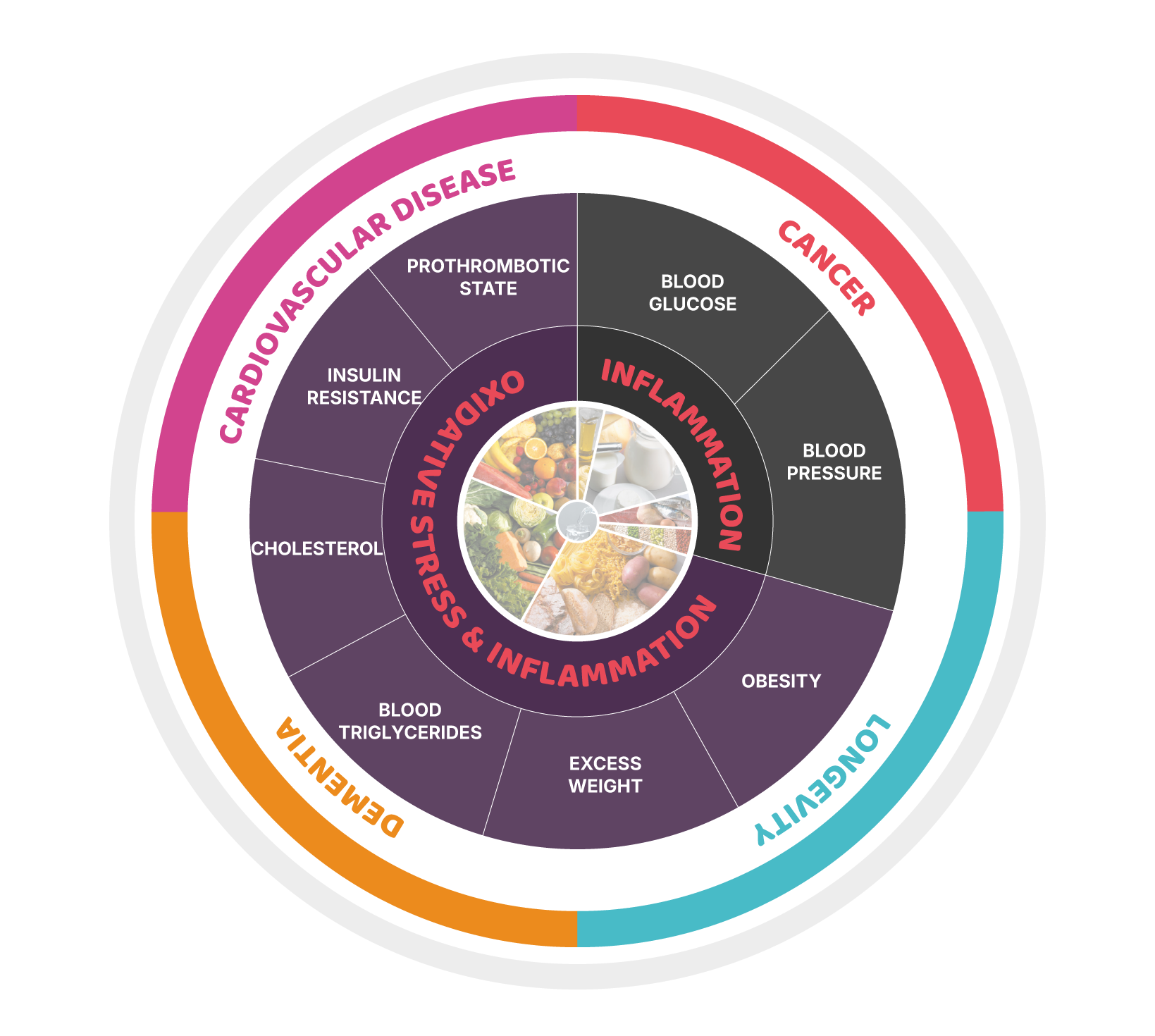
This diagram shows how the Mediterranean diet contributes to good health.
By reducing oxidative stress and inflammation, it improves risk factors such as blood glucose, blood pressure, triglycerides and excess weight.
These knock-on effects reduce the likelihood of cardiovascular disease, cancer and dementia, whilst increasing longevity and quality of life.
Ensuring a varied and balanced diet, rich in fruit, vegetables, whole grains, pulses, nuts, fish, lean meat and dairy products, is the best way to ensure that adolescents get the energy and nutrients they need. These eating habits not only support growth and wellbeing at this critical stage, but also reduce the risk of chronic diseases in adulthood, such as obesity, type 2 diabetes and cardiovascular disease.
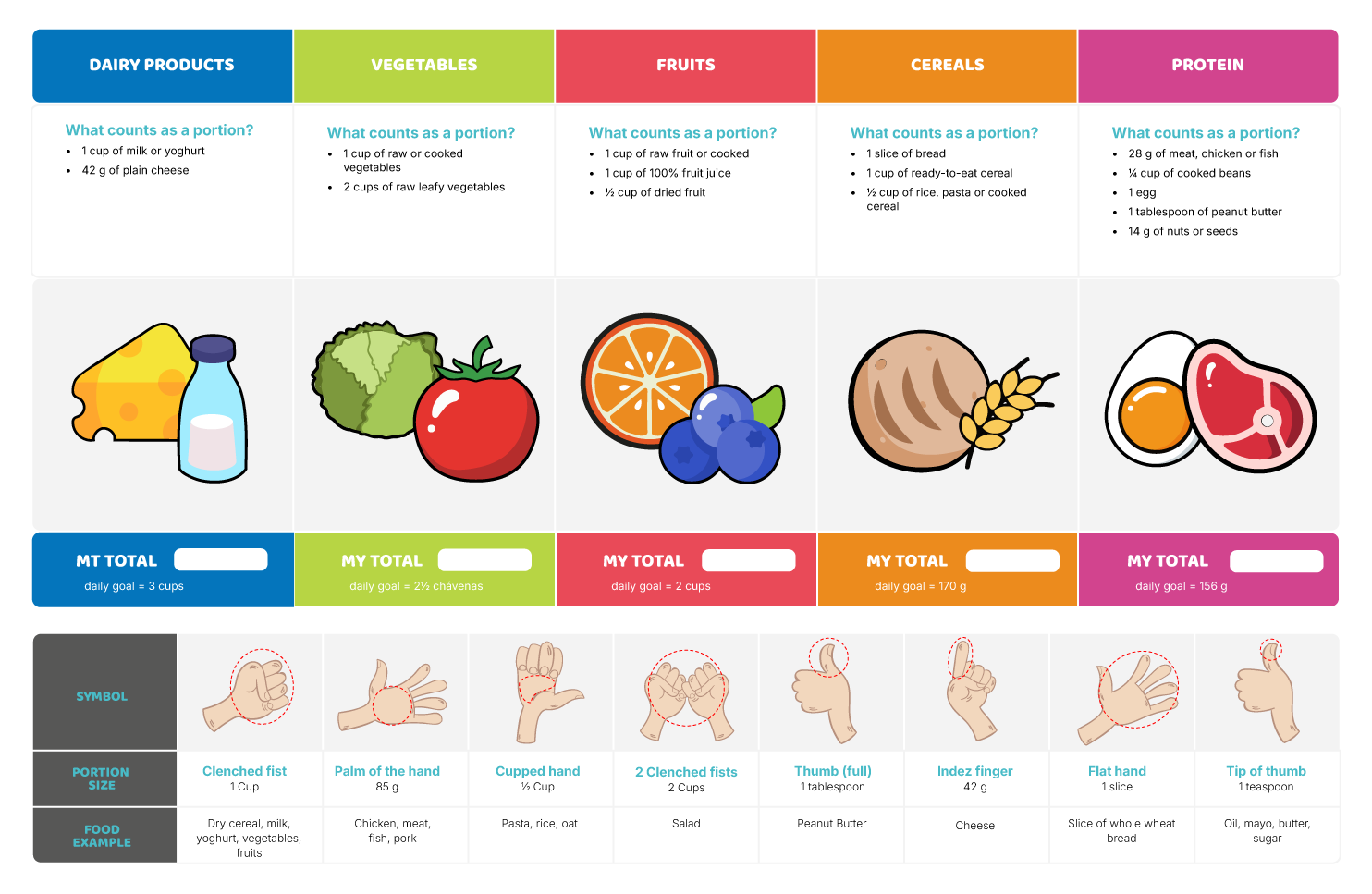
The tables set out the recommended nutritional requirements for adolescents, helping to explain the quantity and variety of nutrients essential for healthy growth, physical and mental wellbeing, and development during this stage of life. They serve as a practical guide to support balanced and informed dietary choices.
Now that you’ve had a look at what you usually eat, it’s time to take the next step: planning your week. This guide will help you organise your meals in a simple and practical way, ensuring you include all the food groups of the Mediterranean diet. That way, you’ll be able to eat better every day and do your bit for the planet too!
WHAT YOU EAT EVERY DAY HAS A DIRECT IMPACT ON YOUR HEALTH
BOTH NOW AND IN THE FUTURE
In Portugal, many teenagers are already overweight or obese, which increases the risk of conditions such as type 2 diabetes, heart problems and even some types of cancer. But the good news is that these conditions can be prevented through healthy eating choices and an active lifestyle.
Malnutrition does not just mean a lack of food. Overeating or choosing poor-quality foods can also be harmful to health. An excess of ultra-processed foods can lead to weight gain and obesity, whilst a lack of iron, calcium, vitamin D or folic acid can cause deficiencies that affect energy levels, growth and even academic performance.
Cardiovascular diseases: These are the leading cause of death worldwide, but up to 80 per cent of cases can be prevented. Eating too much saturated fat, salt and sugar increases the risk, whilst the Mediterranean diet – rich in olive oil, oily fish, fruit, vegetables, whole grains and nuts – protects the heart, improves circulation and reduces inflammation. This means a lower risk of a heart attack or stroke in the future and more energy in the present.
Obesity and diabetes: Being overweight occurs when there is an imbalance between the energy taken in (food) and the energy expended (physical activity). Obesity increases the risk of type 2 diabetes, high blood pressure, joint problems and even some types of cancer. On the other hand, a diet rich in fibre, fruit, vegetables, whole grains and pulses helps to control appetite, stabilise blood sugar levels and maintain a healthy weight.
Mental health: What you eat also affects your mood and concentration. Studies show that teenagers who follow dietary patterns such as the Mediterranean diet have fewer symptoms of anxiety and depression, sleep better and feel more satisfied with themselves. Nutrients such as omega-3 from fish, magnesium from nuts and folate from green leafy vegetables are essential for the brain.
Bone health and anaemia: During adolescence, the body builds up to 40 per cent of its lifetime bone mass. Consuming calcium, vitamin D and protein, alongside high-impact physical activity (such as running, jumping or playing football), strengthens bones and helps prevent osteoporosis later in life. In girls, there is also a risk of iron-deficiency anaemia, which can cause tiredness, reduce academic performance and increase susceptibility to infections. Combining iron-rich foods (meat, pulses, green leafy vegetables) with vitamin C helps to improve absorption.
Other dietary patterns: It is also possible to eat a healthy diet as a vegetarian, provided it is well-planned and varied, with particular attention paid to essential nutrients such as vitamin B12, vitamin D, calcium and iron.
Planning your diet means making conscious and varied choices that look after your heart, help you maintain a healthy weight, support your mental wellbeing, strengthen your bones and prevent deficiencies. What you choose to eat today not only affects how you feel right now, but also your future health.
Always include fibre-rich foods in your meals, such as fruit, vegetables, oats, wholemeal bread or wholemeal pasta.
Fibre keeps you feeling full for longer, prevents hunger pangs and helps your gut to function properly.
When choosing a snack, ask yourself: “Can I swap this for something with more fibre?”
Smart example:
Swap biscuits and fizzy drinks for fruit plus a handful of nuts, or wholemeal bread with cheese
That way, you’ll keep your energy levels steady so you can study, train and play!
FOODWISELab CHALLENGE

This record sheet is like a roadmap to help you look after your health through your diet. First, you’ll write down some details about yourself – your height, weight and physical activity – to get an idea of how your body is doing right now. Next, choose your goals: do you want to have more energy, feel more focused in class, manage your weight, or perhaps build stronger bones?
After that, you’ll look at the different food groups, the nutrients they provide and the benefits they offer, and you can choose what to include in your plan. Finally, you’ll plan your meals for the week, always linking your choice of food to the benefits it brings you.
The last part is for you to reflect: what are you going to change this week? Small choices, such as swapping fizzy drinks for water, or adding fruit to your snack, make a big difference to your health now and in the future.