
Learning to read labels
The label is the food’s map
Reading the label is like following a map: it helps you find out what you’re actually eating, understand where the product comes from, and make informed choices.
The label acts like the contents page of a book, describing what’s inside, whilst the front of the packaging is like an advert, designed to catch your eye.
Learning to read food labels is a way of protecting your health, avoiding marketing traps and reducing the environmental impact of your food choices.
EXPIRY DATE
The labels contain two important phrases:
“Consume up to…”
-
Used in highly perishable products, such as fresh meat or ready meals.
-
The food should not be eaten after the ‘best before’ date, even if it looks fine, as it may not be safe to eat.
-
It may be accompanied by instructions such as ‘keep in the fridge’.
-
If these instructions are not followed, the food may go off more quickly and increase the risk of illness.
“Best before…”
Used on foodstuffs that are expected to retain their quality until the date indicated.
After this date, the food may lose some of its quality (flavour, texture), but is generally still safe to eat provided it has been stored correctly and shows no signs of spoilage.
Consumers should check carefully before discarding food bearing this date, as much of it remains safe and suitable for consumption.
Tip: Before throwing anything away, take a look and have a sniff; if there are no signs of spoilage, many products can still be safely eaten – and avoiding food waste is a way of looking after the planet.
LIST OF INGREDIENTS
The ingredients are listed in descending order, with the first one being the one present in the greatest quantity. Reading this list is the most reliable way to find out what you’re actually buying, far more so than relying on marketing terms such as ‘natural’, ‘light’ or ‘high in fibre’.
Example: If sugar is listed right at the start, the product is sweet, even if it says ‘fat-free’ or ‘fitness’.
Reading the list helps you to:
- Avoid excessive amounts of sugar, fat and salt, which are linked to chronic diseases.
- Choose foods with short lists, made up of simple, familiar ingredients.
- Make more sustainable choices, because less processed products tend to use less energy and generate less waste.
Tip for critical reading:
Terms such as ‘corn syrup’, ‘partially hydrogenated vegetable fat’ or ‘natural flavourings’ may conceal ultra-processed ingredients.
These are what are known as ‘disguises’ for sugar and fat – different names that make the product sound more appealing, but do not make it any healthier.
Labels
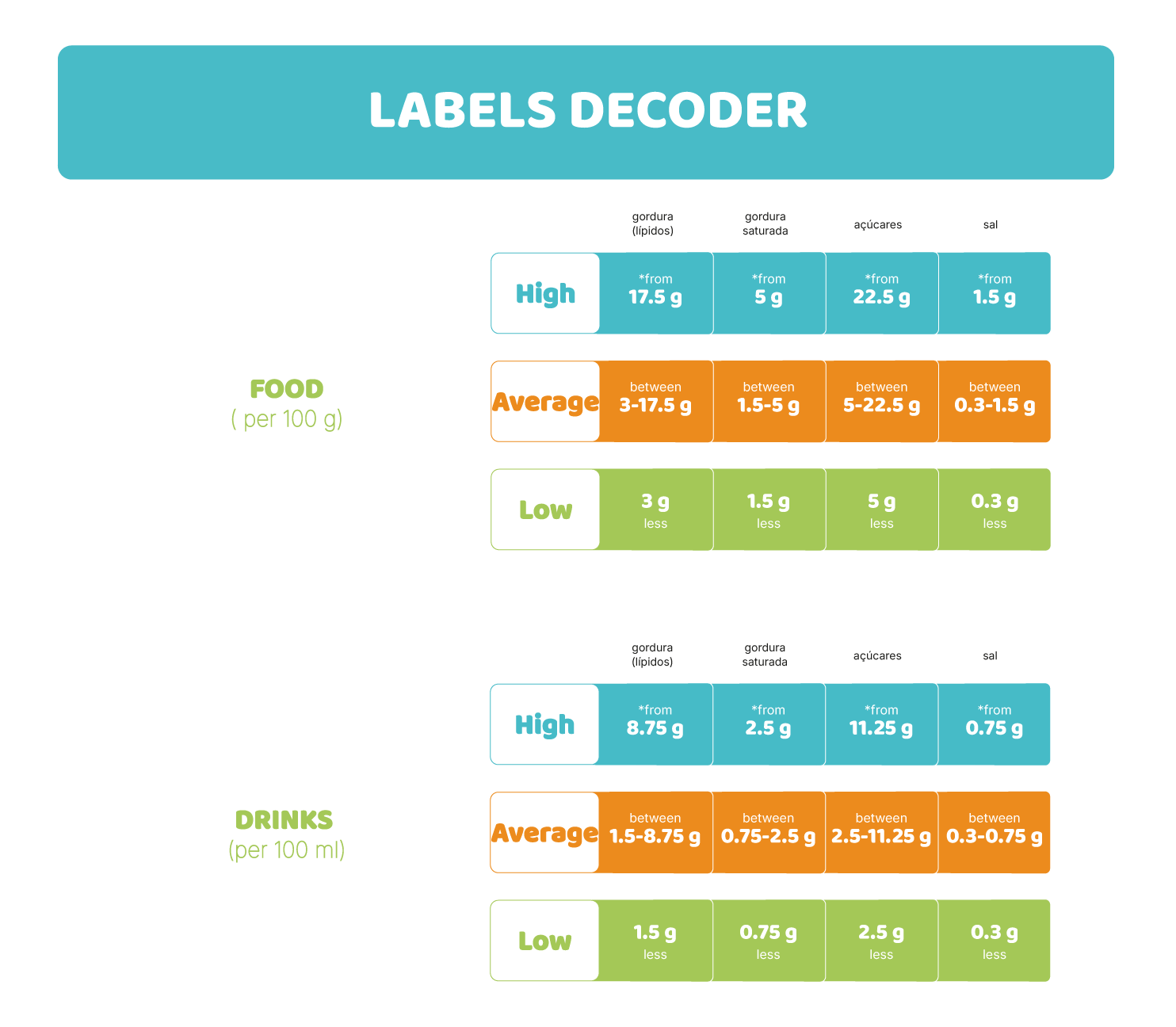
The nutrition facts table is the compass that guides you.
It shows the amounts of energy and nutrients per 100 g or per serving. To start with, just compare three figures between similar products:
- Sugars: the less, the better.
- Salt (sodium): choosing products with less salt helps to reduce the risk of high blood pressure.
- Total and saturated fat: choose those with lower levels and avoid products containing “partially hydrogenated vegetable fat”.
Many consumers focus solely on calories, but the source of those calories is just as important as the number itself.
Remember: “Without context, a number is just a number”.
Two hundred calories from natural yoghurt and two hundred calories from biscuits do not have the same effect on the body and may have different environmental impacts, depending on their origin and the extent to which they have been processed.
Tip: Products with less sugar, salt and fat tend to be less processed, but should be assessed by looking at the label as a whole.
Labels also tell stories – about the food’s journey, how it was produced and its environmental impact.
An informed consumer is an agent of change: reading the label carefully is an act of food citizenship.
Knowing where your food comes from helps you reduce your carbon footprint and promote a fairer relationship between producers, consumers and the planet.
Practical tip: If you’re in any doubt, compare two products and ask yourself:
“Which one has fewer artificial ingredients and less packaging?”
“Which one is produced closest to me?”
These answers will guide you towards healthier and more sustainable choices.
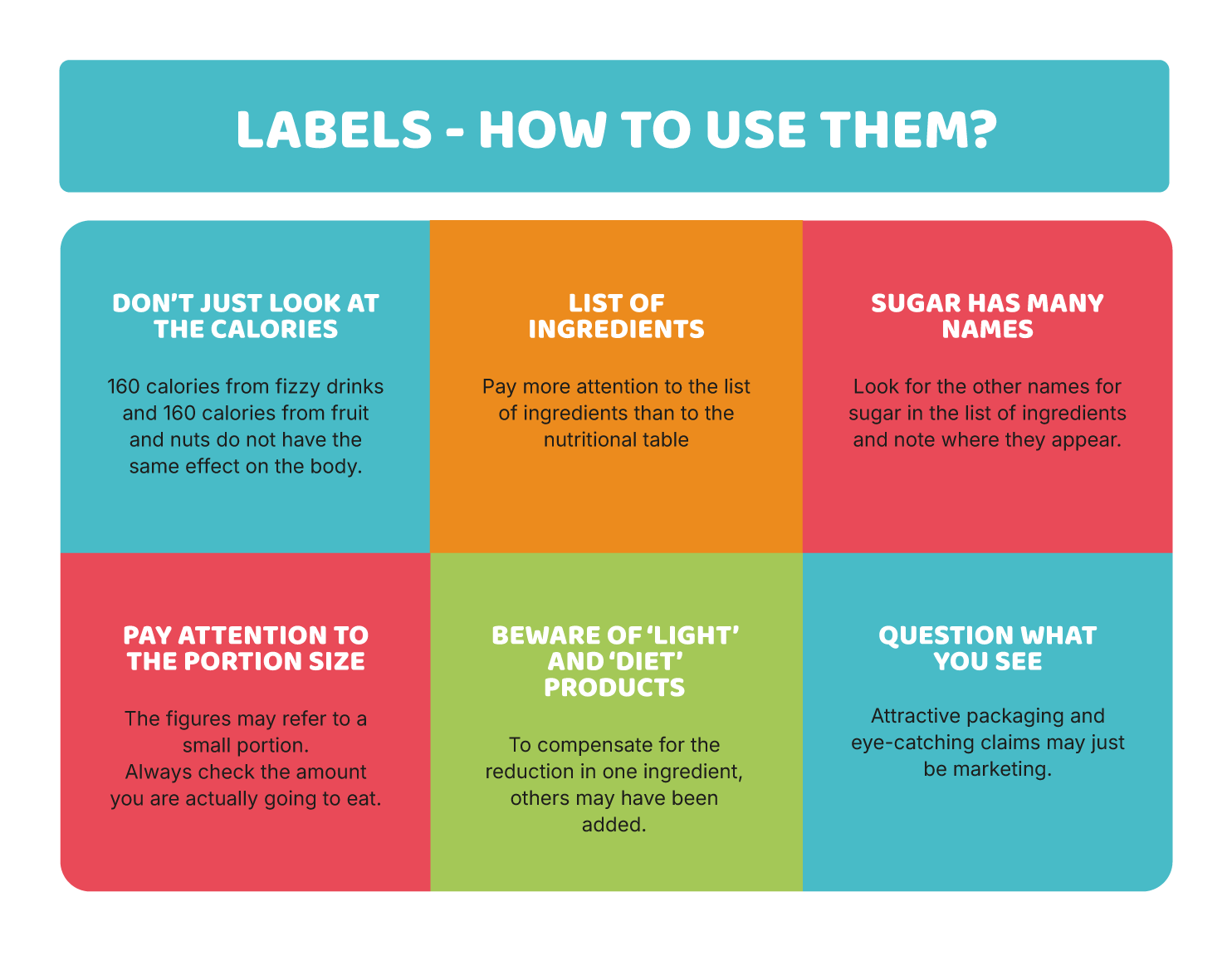

Terms such as ‘fat-free’, ‘high in fibre’ or ‘natural’ do not always mean what they seem to.
Many claims are marketing strategies: a ‘gluten-free’ product may contain twice as much sugar, and a ‘light’ product may compensate for the lack of fat with more additives.
Even environmental or health symbols should be read carefully.
Avoid falling for greenwashing, where a brand uses words such as ‘eco’, ‘natural’ or ‘green’ simply to appear sustainable.
Green tip: Choose local, seasonal produce with less packaging and plant-based ingredients. These tend to be more balanced and environmentally friendly.
HOW TO READ A LABEL
| Label section | What you should look for | What you should avoid |
|---|---|---|
| Ingredients | Fresco | Sugar, syrup, hydrogenated fat |
| Nutritional table | Low in salt, sugar and saturated fat | “Trans fats” or too much salt |
| Allegations | Reliable certifications (EU Organic, MSC) | Vague terms: “natural”, “eco”, “light” |
FOODWISElab Challenge

To develop skills in critical reading of food labels, distinguishing genuine nutritional information from marketing messages, in order to support healthier and more sustainable food choices.
LABELS PUT TO THE TEST: WHO’S THE INTRUDER?