
Where do fish, sellfish and other seafood come from?
The sea is one of the planet’s greatest sources of food. Fish, molluscs and crustaceans come from the oceans and rivers and have been part of the human diet for thousands of years. These foods provide high-quality protein, vitamins and minerals and healthy fats, such as omega-3, which help keep the heart and brain healthy.
Fishing and aquaculture
Fish, molluscs and crustaceans reach us in two main ways:
- Fishing, where animals are caught in their natural environment, in the sea, rivers or lakes;
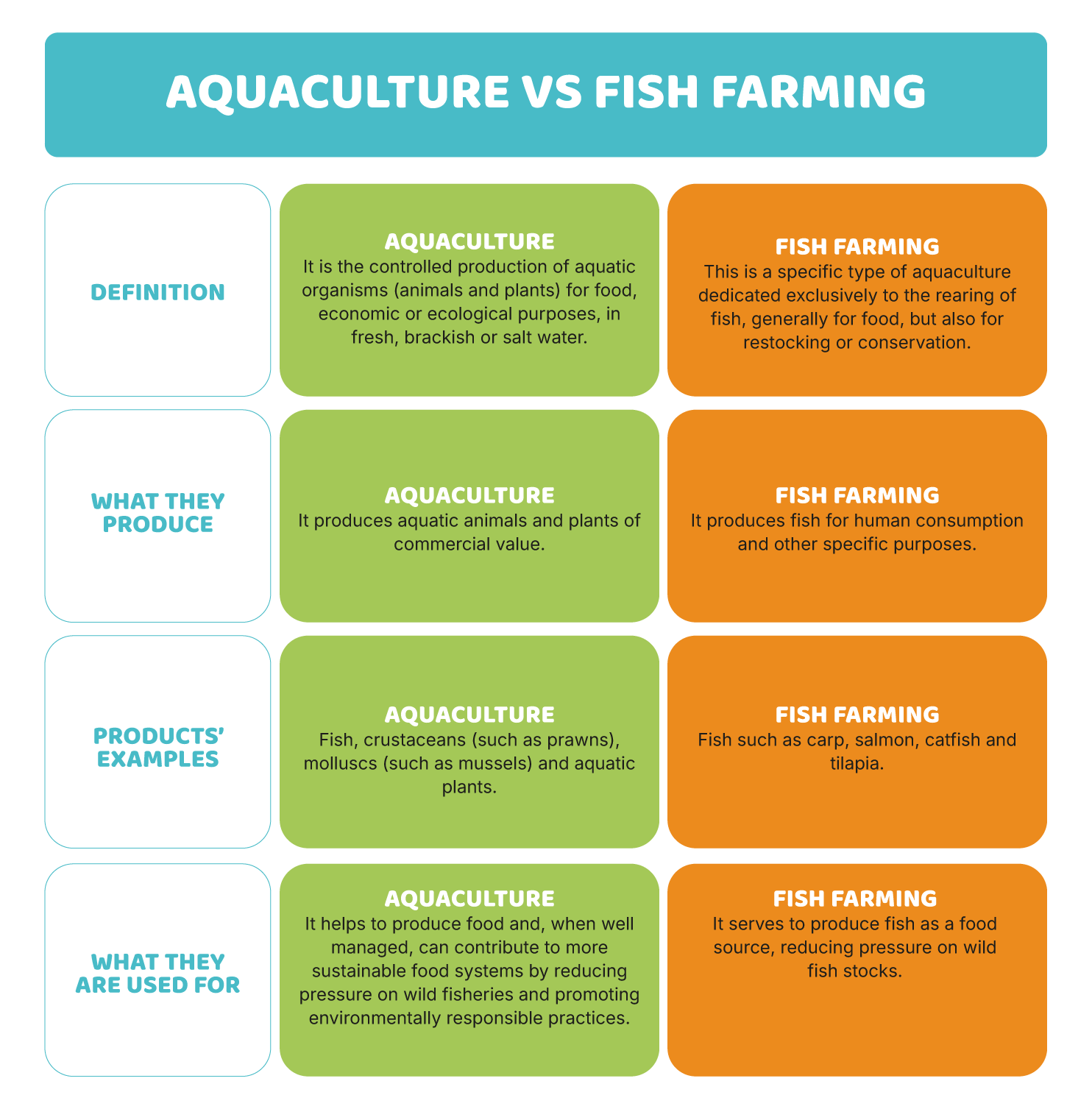
- Aquaculture, where organisms are raised by people in tanks, ponds or marine enclosures, rather like agriculture, but in water
In Portugal, both methods are important. Our country has a long tradition of artisanal fishing, particularly for species such as sardines, horse mackerel, octopus and cod, as well as modern aquaculture, which farms fish such as gilt-head seabream, sea bass and sole.
Fish, Sellfish and other seafood

- Fish stocks must be protected from overfishing so that their natural cycles are maintained and they can recover.
- To prevent overfishing, there are fishing quotas (limits on the quantity of certain species and sizes of fish that may be caught).
- If fewer fish are caught, those remaining in the ocean are more likely to reproduce and help stocks recover.
- The mesh size of fishing nets has been increased by law, ensuring that only larger fish are caught and smaller ones are able to escape.
- Fish must be caught using methods that do not damage habitats or increase by-catches of other species.
Molluscs include animals such as clams, cockles, mussels, squid and octopuses. Many live attached to rocks or buried in the sand and are gathered by hand or with small nets. Crustaceans, such as prawns, lobsters and crabs, are caught using traps or nets on the high seas.
Portugal is also known for its production of bivalves (such as clams and oysters) in clean, controlled coastal areas, such as the Ria Formosa and the Ria de Aveiro. These organisms help to filter the water and maintain the ecological balance, making mollusc aquaculture one of the most sustainable in the world.
From the sea to the plate
Once caught or harvested, fish, molluscs and crustaceans are chilled and transported to markets and distribution centers. At processing plants, they may be cleaned, filleted, frozen or tinned. Sardines, tuna and cod are some of the most commonly processed products in Portugal.
Quality and food safety controls are rigorous: each batch must indicate the species, origin and production method, and whether it was wild-caught or farmed, in accordance with European Union rules.
NUTRITIONAL VALUE
Fish and seafood are very nutritious foods. They are rich in easily digestible protein and contain little saturated fat. Oily fish, such as sardines, salmon, tuna and mackerel, are excellent sources of omega-3, fats that help reduce the risk of heart disease.
Shellfish and crustaceans are rich in iron, zinc, iodine, selenium and vitamin B12, nutrients that are essential for growth and the functioning of the nervous system.
According to Portuguese studies, fish has a very balanced nutritional profile and contains more healthy fatty acids (PUFAs) and less saturated fat than red meat.
SUSTAINABILITY AND THE FUTURE OF THE OCEANS
With rising consumption and climate change, protecting marine ecosystems is becoming increasingly important. Sustainable fishing, respect for spawning seasons and tackling marine pollution are essential to ensuring that fish remains a safe and healthy source of food.
Aquaculture has also evolved: it uses more natural feed, renewable energy and water recirculation systems that reduce environmental impact.

A tip for planning your meals
Include fish or seafood in your meals two to three times a week, alternating between oily and lean varieties. Choose sustainably sourced fish, recognised by labels such as ‘sustainable fishing’ or ‘responsible aquaculture’, and, wherever possible, fish from the Portuguese coast. In this way, you are protecting the sea, supporting local fishermen and looking after your health.
FOODWISELAB challenge

To understand the origin of fish, shellfish and other seafood products, distinguishing between fishing and aquaculture, and to consider making more informed and sustainable choices.
Where do seafood products come from?