
Where do potatoes come from? Origin and importance
The potato is one of the most widely consumed foods in the world and forms part of countless culinary traditions. After rice and wheat, it is one of the most important plant-based foods in the human diet.
Origin and history
The potato originates from the Andes mountains in South America, particularly in the regions that are now part of Peru and Bolivia. Thousands of years ago, the Andean peoples were already cultivating different varieties of this tuber and were aware of its nutritional properties. In the 16th century, European explorers brought the potato to Europe, where it adapted easily to cold, damp climates. Since then, it has become a staple food in many countries, including Portugal.
How potatoes grow
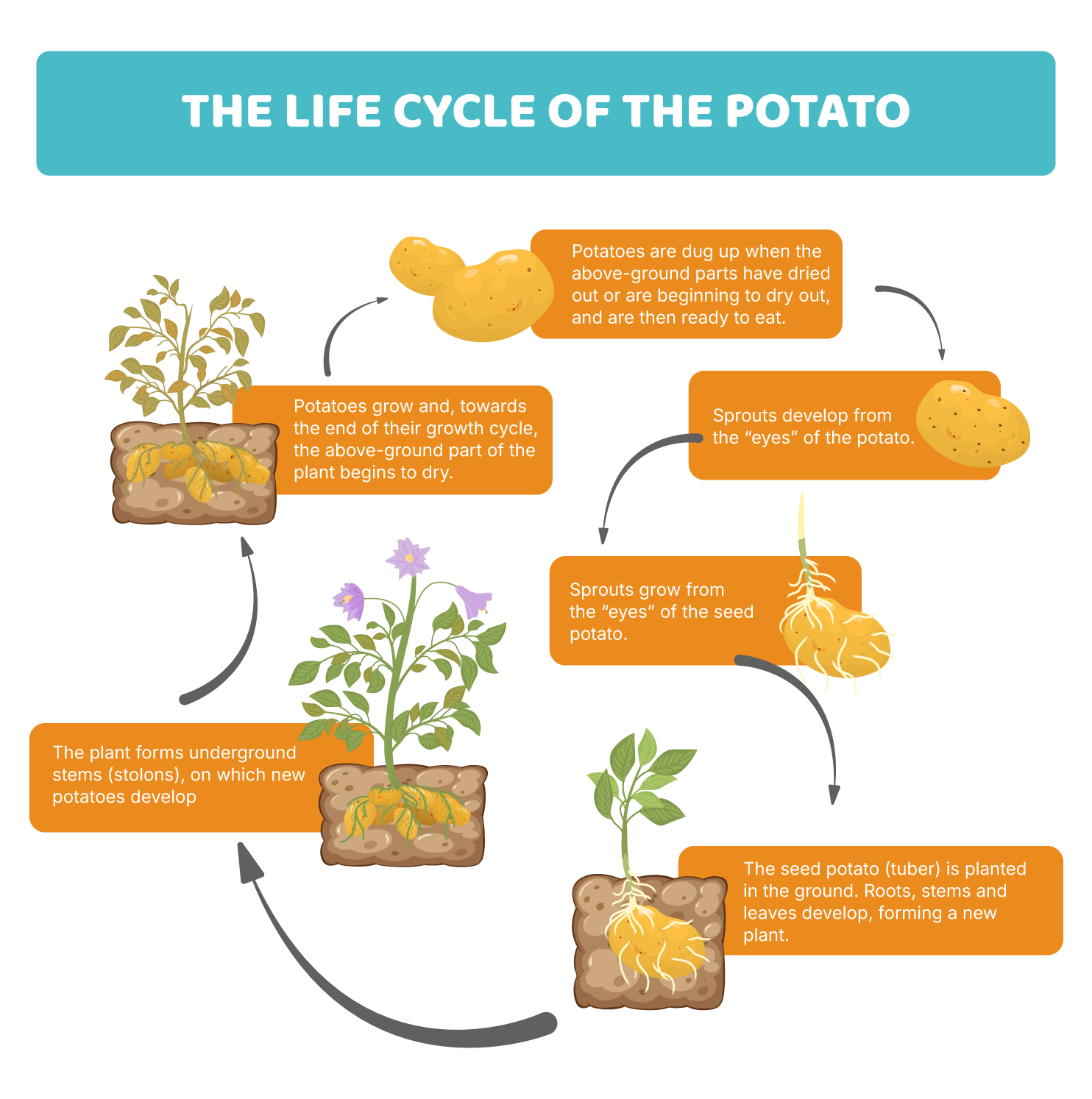
The potato is a plant that grows in the soil and forms tubers – underground stems in which nutrients, mainly starch, are stored. Each potato plant grows from a seed potato, a small tuber with sprouts, planted in the spring.
The plants develop green leaves above ground and roots underground. Stolons (underground stems) develop from the stem, and potatoes form at their tips. When the soil is loose and well-watered, the tubers grow larger and in greater numbers.
Potatoes
Potato cultivation is suited to different climates. In cold climates, such as northern Europe, they grow during the summer; in warmer regions, such as the Mediterranean, they are planted in winter or spring and harvested before the summer heat sets in.
Potatoes require moderate temperatures, sufficient water and plenty of sunlight.
When the leaves begin to wither and the soil becomes dry, this is a sign that the potatoes are ripe and ready for harvesting. This can be done by hand in small vegetable gardens, or using machinery on larger farms.
Sustainability and the future
Potatoes are a space- and water-efficient crop, capable of producing more food per hectare than almost any other crop. However, climate change and water scarcity call for new, more sustainable production methods, such as the use of drought-resistant varieties and agricultural practices that conserve water and preserve the soil.
Some farmers combine potato cultivation with that of other crops, such as maize or pulses, to make better use of soil nutrients and reduce their environmental impact.
From farm to fork
Once harvested, the potatoes are cleaned, sorted by size and quality, and stored in cool, dark places to prevent them from turning green – a sign of chlorophyll production and the formation of potentially toxic substances, such as solanine.
Potatoes can be eaten in many different ways: boiled, baked, grilled or mashed. They are an excellent source of complex carbohydrates, which provide a balanced source of energy, and they also contain vitamin C, potassium, magnesium and some fibre, particularly when eaten with their skins on.
There are countless varieties – white, red, purple or yellow potatoes – and each has its own characteristics that make it more suitable for frying, boiling or roasting. Coloured potatoes, which are rich in antioxidants such as anthocyanins, offer additional health benefits.

A tip for planning your meals
When planning your meals, opt for boiled or baked potatoes rather than chips, as they are healthier and retain their nutrients better. Combine them with seasonal vegetables and sources of plant-based protein, such as beans or peas, to reduce your meat consumption and support a more balanced and environmentally friendly diet. Whenever possible, choose local, seasonal potatoes – they’re fresher, have a smaller environmental footprint and help support local producers.
FOODWISELAB Challenge

Compare different ways of preparing potatoes and understand how they affect flavour, texture and satiety, thereby encouraging more balanced choices in everyday life.
Potatoes: Boiled, Baked or Fried?