
Food safety in the supermarket
Making the right choice is also a matter of hygiene and safety
Eating well is not just about choosing nutritious and sustainable foods; it is also about ensuring that food is safe, from the moment it is produced until it reaches your plate.
Food safety is essential for preventing foodborne illnesses, which remain a public health problem worldwide.
According to the World Health Organisation (WHO), millions of people fall ill every year from eating food contaminated with microorganisms such as Salmonella, E. coli or Listeria.
The good news is that most of these infections can be prevented by taking a few simple precautions at the supermarket and at home.
The cold chain is the system that keeps chilled and frozen food at the correct temperature during transport, storage and sale. When this chain is broken, bacteria can multiply rapidly, even before the food appears to have gone off.
Best practice in the supermarket:
Take a cool bag or insulated box to carry chilled and frozen food.
Buy these items at the end of your shopping trip, so that they spend as little time as possible out of the cold.
At home, put them straight into the fridge (≤ 4 °C) or the freezer (–18 °C).
Check the temperature of the display units in the supermarket: chilled items should feel cold to the touch and frozen items should show no signs of thawing.
Food stored for prolonged periods above 5 °C can quickly enter the danger zone (5–60 °C), where bacteria grow exponentially. Avoiding this zone is essential, both when shopping and at home.
Packaging is the first line of defence between food and the environment.
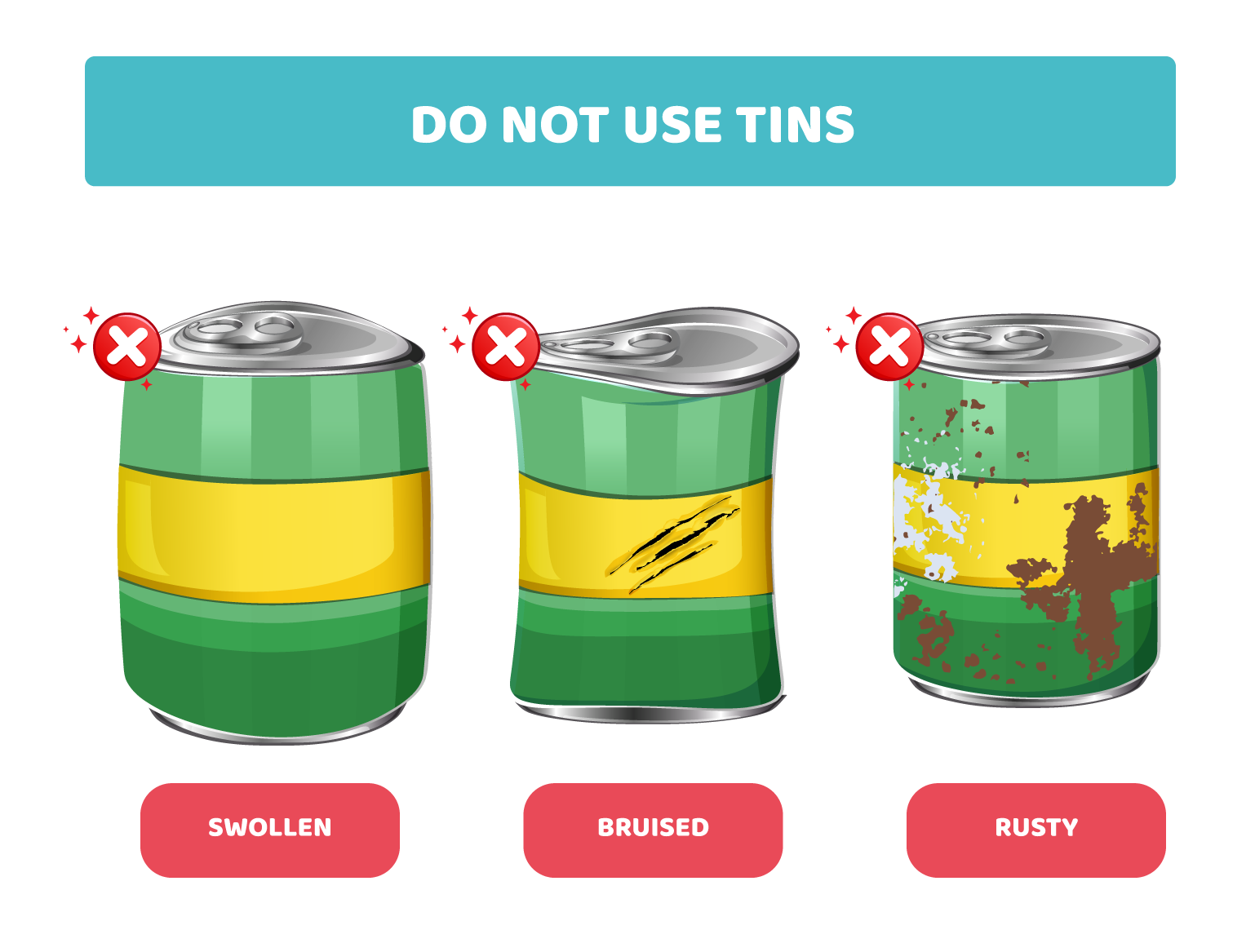
Rusty, dented or bulging tins may indicate a risk of contamination by Clostridium botulinum.
Packages of cereals, rice or flour must be dry and undamaged, with no signs of damp, insects or tears.
Yoghurts and dairy products must not have their lids raised or an unusual smell, as these are signs of microbial spoilage.
Tip: Avoid products with torn labels, illegible printing or liquid leaking from the packaging.
Making a good choice starts with careful observation and confidence in the condition of the product.
Studies emphasise that the integrity of the packaging is essential not only to prevent infections, but also to avoid chemical contamination arising from materials that are damaged or exposed to heat and light.
Cross-contamination occurs when microorganisms from raw food are transferred to other ready-to-eat foods, such as fruit, bread or cheese.
When out shopping, it’s essential to organise your trolley and bags:
- Raw food (meat, fish, eggs) in individual, tightly sealed bags.
- Ready-to-eat food (bread, fruit, cheese) on top, so that it does not come into contact with liquids.
- Cleaning and hygiene products should always be kept away from food.
Organisation tip: Place raw and heavy food at the bottom and more delicate and ready-to-eat food at the top.
This way, you avoid crushing items and reduce the risk of invisible contamination.
Remember: Every consumer is part of the food safety chain; it all starts with you.
Personal and household hygiene
Food security remains a domestic issue.
When you get back from the supermarket:
- Wash your hands thoroughly with soap and water before putting your shopping away.
- Avoid placing bags brought in from outside on the worktops where you prepare food.
- Clean the fridge regularly using a mild solution (e.g. water and vinegar).
- Check for food that has passed its use-by date.
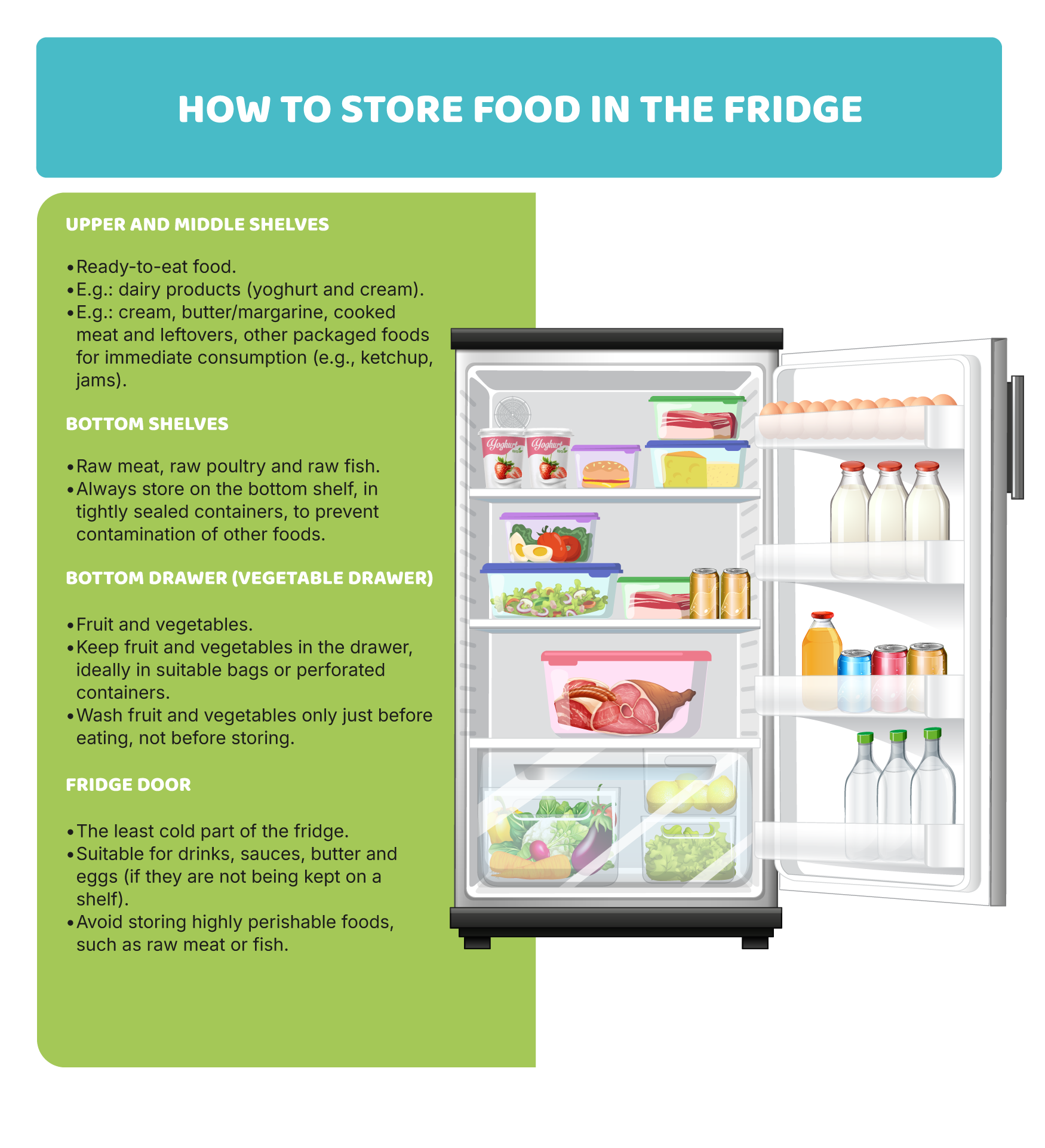
- Keep food covered and separate: raw food on the lower shelves and ready-to-eat food on the upper shelves.
Did you know that… Hands are the main vehicle for microbial contamination.
Proper handwashing can reduce the risk of foodborne infections by up to 50%, particularly those caused by E. coli and Salmonella.
Furthermore, environments with high humidity and mild temperatures encourage the growth of bacteria. Keeping the fridge tidy and clean is one of the simplest and most effective ways to prevent contamination.
FOOD SECURITY AND SUSTAINABILITY
Ensuring food security also means protecting the environment.
When you store food properly and avoid waste, you are reducing the environmental impact associated with food production and transport.
A clean and tidy fridge uses less energy, and well-stored food lasts longer, which means less waste and fewer emissions associated with food waste.
Green tip: Organise your fridge according to the principle “first in, first out” (FIFO – first in, first out). That way, you’ll use up the oldest food first and avoid unnecessary waste.
FOOD HAZARD ZONE
| Temperature | Situation | Risk |
|---|---|---|
| 0–4 °C | Safe cooling | Bacteria hardly multiply at all |
| 5–60 °C | Danger zone | Bacteria multiply rapidly |
| > 70 °C | Safe cooking | Most bacteria are eliminated |

Shopping for food safely — what to do and what to avoid
DO…
- monitors the personal hygiene standards of staff who handle and serve food, particularly the procedures used when handling raw and cooked food
- checks that the chilled and frozen food display units are operating at the correct temperatures and are not overloaded
- Buy chilled and frozen food last and pack them together, preferably in a cool bag
- Take the chilled and frozen products home and store them properly as soon as possible
- Keep raw food, fruit and vegetables separate from cooked and ready-to-eat food
DON'T…
- Do not buy tins or food packaging that are damaged or have already been opened
- Do not buy products from counters where raw and cooked food are displayed or stored together
- Do not buy products that have already passed their ‘use by’ or ‘best before’ date
- Don’t delay in storing chilled and frozen food properly; store it quickly and correctly
FOODWISElab challenge

Understanding how the way a shopping trolley is organised affects food security, food quality, waste reduction, and the protection of health and the planet.
The smart trolley: Where should you put each item?