
Fruits and vegetables
What is
Fruit and vegetables provide a daily source of high-quality nutritional energy, fibre and many micronutrients. In the Mediterranean diet, they make up half the plate, dressed with olive oil and combined with cereals (preferably wholegrain) and pulses.
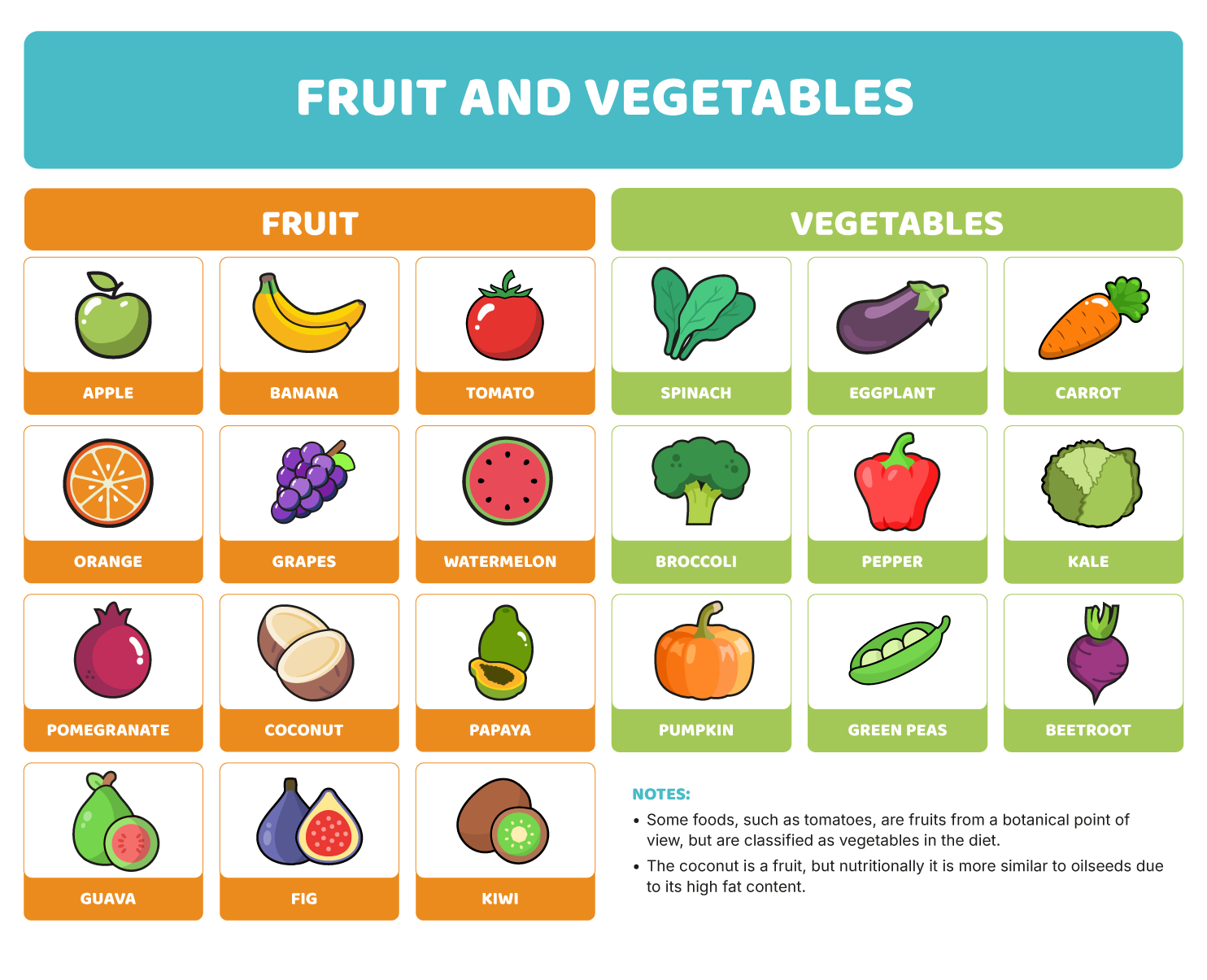
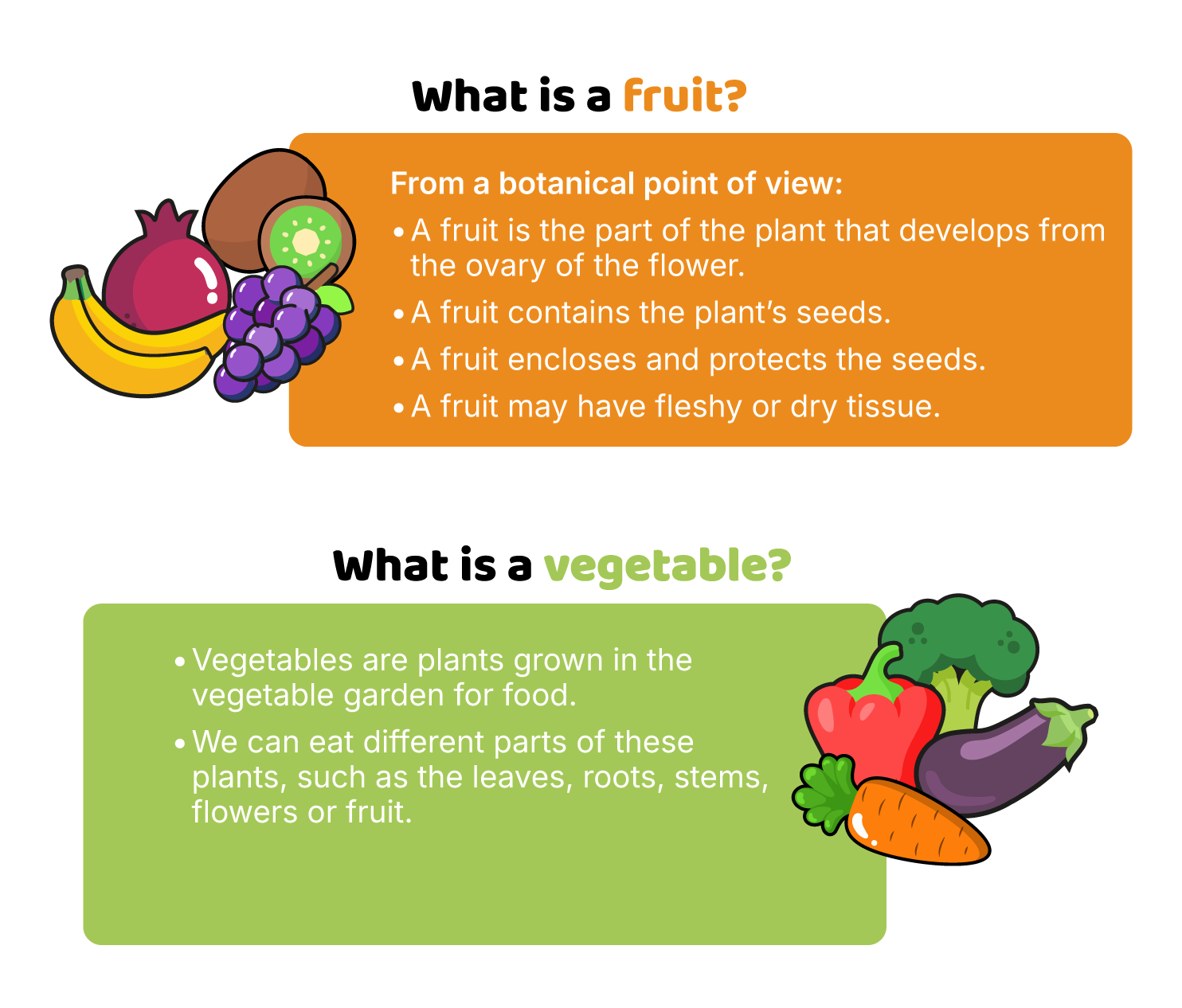
Fruit: the edible parts of plants, usually resulting from the flower and associated with reproduction (e.g. apples, pears, citrus fruits, bananas, red berries).
Vegetables: leaves (lettuce, cabbage), stalks (celery), flowers (broccoli), vegetable fruits (tomatoes, peppers, courgettes), roots (carrots, turnips) and green pulses (peas, fresh broad beans, eaten as vegetables).
Note: potatoes and other tubers have their own section; here we focus on non-starchy vegetables.
International guidelines recommend at least 400 g/day (around 5 portions) for teenagers. Variety is just as important as reaching the recommended amount.
Different colours mean different nutrients:
- Dark green (spinach, kale): folate and iron.
- Red/purple (tomatoes, red berries): lycopene and anthocyanins.
- Orange (carrot, pumpkin): carotenoids.
- White vegetables (leeks, cauliflower): protective sulphur compounds.
This variety increases your intake of fibre and phytochemicals.
Reference amounts (12–14 years)
Aim for a total of 5 portions per day (e.g. 3 portions of vegetables + 2 portions of fruit).
Examples of 1 portion ~80 g: 1 medium piece of fruit; 1 bowl of raw salad (approx. 2 handfuls); ½ cup of cooked vegetables; 1 large tomato.
Adjust according to your appetite and activity level.
Practical examples for planning
- Breakfast: natural yoghurt with seasonal fruit and oats; or a slice of mixed-grain toast with crushed tomatoes and olive oil.
- Snacks: a piece of fruit with nuts; or carrot and cucumber sticks with hummus.
- Lunch/dinner:
- Salad (half a plate) with lettuce, tomato and carrot + wholemeal pasta with black-eyed beans and tuna.
- Salad (half a plate) with lettuce, tomato and carrot + wholemeal pasta with black-eyed beans and tuna.
- Vegetable soup every day as a starter – a simple way to ensure you get one portion.
Weekly plan
- When shopping, choose 2 staple vegetables (e.g. kale and carrots) and 1 piece of fruit each day.
- Set aside 30–40 minutes on a Sunday to wash, chop and pack 2–3 boxes of ready-to-use vegetables.
CONSERVATION AND SAFETY
- Wash fruit and vegetables before eating them (not before storing them).
- Fridge (0–5 °C): leafy vegetables, cabbages, broccoli, red berries.
- Fruit bowl: bananas, citrus fruits, tomatoes (for better flavour).
- Frozen foods are your friends: when properly blanched and frozen, they preserve nutrients and reduce waste.
- Leftovers: cool quickly and store in the fridge (≤ 24 hours for salads with dressings; soups/stews 2–3 days).
Zero WASTE
- Use stalks (broccoli, cabbage) in soups or stir-fries; grated carrot peel in rice; very ripe fruit in smoothies or quick jams.
- Set aside a ‘fridge-cleaning day’ in your weekly schedule. Reducing food waste conserves natural resources and cuts emissions throughout the food chain.
In 2022, the EU harvested around 59.8 million tonnes of vegetables; the most commonly produced were tomatoes, onions and carrots.
Portugal is a major fruit producer in the European Union.
Only some European teenagers manage to eat 5 portions a day – all the more reason to plan ahead.
It uses olive oil as the main fat, with herbs and garlic/onion for flavour, and less salt.
FOODWISELAB Challenge

To plan and monitor daily intake of fruit and vegetables, emphasising the importance of achieving 5 portions a day in a balanced and practical way.
5 PORTIONS A DAY: A 3-DAY PLAN