
Where do pulses come from?
Legumes are plants that produce seeds inside pods. They have been part of the human diet for thousands of years because they are easy to grow, thrive in many countries and keep for a long time after being harvested. In Portugal, it is common to find chickpeas, beans, lentils, peas and broad beans, both in traditional dishes and in everyday meals.
How do legumes grow?
The seeds are planted in the soil and, with water and sunshine, they grow into small plants. Flowers grow on the stems, which then produce pods. The seeds develop inside the pods; these are what we eat. Legume plants have a special characteristic: they are able to ‘capture’ nitrogen from the air through bacteria in their roots and enrich the soil. That is why they are so important in sustainable agriculture.
From farm to fork
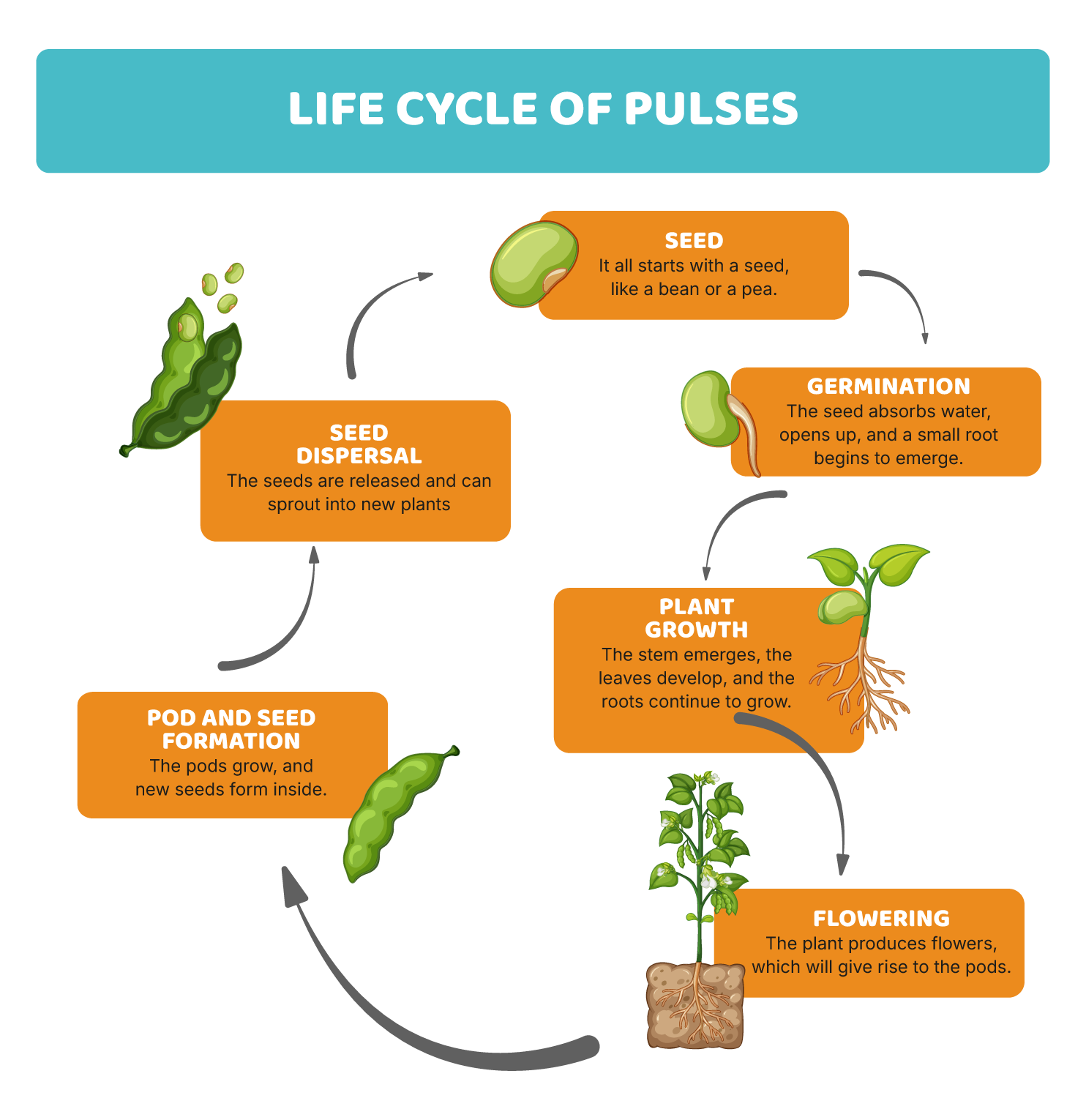
Once harvested, pulses can take different paths:
- Dried foods: are packaged after being dehydrated. They have a long shelf life and are good value, but need to be soaked and cooked.
- Tinned: these are already cooked. Just open the tin, rinse them under running water, and they’re ready to use.
- Frozen: they retain their nutrients and are great for soups or stir-fries.
On the plate, they can be turned into soups, salads, stews, spreads such as hummus or side dishes to accompany main courses. They are very nutritious because they contain plant-based protein, fibre, B vitamins, iron, magnesium and slow-release energy.
Sustainability and the future
Pulses are considered ‘foods of the future’ because:
- they use less water than many other crops
- enrich the soil rather than deplete it
- reduce the need for fertilisers
- have a low environmental footprint
- they are affordable and easy to store
For all these reasons, the United Nations believes that increasing the consumption of pulses is essential to protect the planet and ensure food for all in the future.

A tip for planning your meals
Include pulses in at least two meals a week. It doesn’t have to be complicated:
Add grains to a salad, use beans in a pasta dish, add lentils to soup, or make hummus to spread on bread.
They’re economical, nutritious and keep you feeling full for longer!
FOODWISELAB Challenge

To encourage the regular inclusion of pulses in the weekly diet, in a simple, practical way that is in line with the Mediterranean diet.