
Potatoes and other root vegetables
What is
Potatoes and other root vegetables (such as sweet potatoes, yams or cassava) are an affordable and versatile source of energy. When you combine them with vegetables, pulses, fish, eggs or poultry, and use olive oil as your main source of fat, they fit into the Mediterranean diet and help you put together balanced meals.
THE POTATO
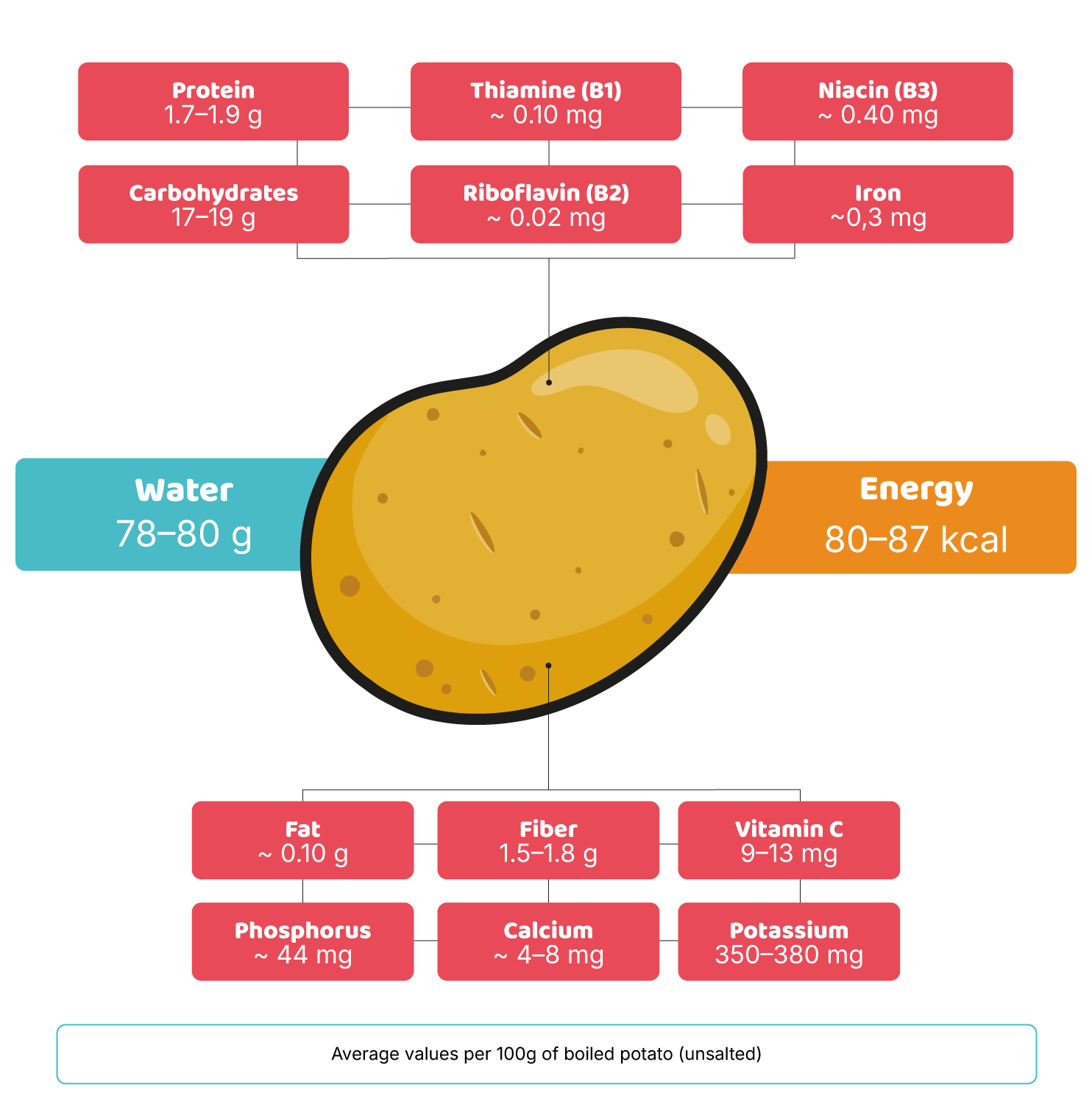
- Potato (Solanum tuberosum): this is a tuber, that is, an underground stem in which the plant stores reserves. It is grown in many parts of the world and thrives best in mild temperatures. In the field, it needs sufficient water and does not like extremes (neither too little nor too much).
- Other “starchy tubers and roots”: sweet potato (root), yam (tuber) and cassava (root). They serve similar purposes, providing starch and energy, and go well with pulses and vegetables.
- Despite their botanical differences, they are all used as a starchy energy source.
Inside the potato
- Peel: protects and contributes to total fibre
- Flesh: rich in starch (the tuber’s ‘energy’).
- Nutrients: provides vitamin C, B vitamins and potassium; there are colourful varieties containing antioxidant compounds (polyphenols, carotenoids).
Why include
Root vegetables are an affordable source of complex carbohydrates and micronutrients. In the Mediterranean diet, they serve as a staple source of energy, replacing or alternating with cereals, and are always accompanied by vegetables and pulses. They also contribute to global food security as they are productive, nutritious and versatile.
HOW TO PLAN
Practical examples for planning
- Snack or light meal
- Rustic mashed potato with peas and a hard-boiled egg + tomato and cucumber salad.
- Roasted sweet potatoes (halves) with natural yoghurt, sautéed chickpeas and parsley.
- Lunch/Dinner
- Bowl of boiled diced potatoes + black-eyed beans + broccoli + red onion + olive oil and lemon.
- One-pot dish: a stew with potatoes, carrots, peas and tuna.
- Easy oven dish: potato wedges with skin on, carrots and courgettes; serve with yoghurt and herbs.
- Bowl of boiled diced potatoes + black-eyed beans + broccoli + red onion + olive oil and lemon.
- Zero waste
- Leftover boiled potatoes: tortilla with spinach;
- Leftovers from the roast: cold salad with beans and vegetables;
- Thoroughly washed peel: roasted to make peel crisps (always remove any green parts).
- Always remove any green patches, as these indicate the presence of solanine, a toxic compound.
Reference amounts (12–14 years)
At each main meal, include 1 to 2 portions of ‘root vegetables and similar’, adjusting the amount to suit your activity level and appetite. As a simple guide:
- 1 portion ≈ 1 medium potato (125–150 g), boiled; or ½ cup (125 mL) of boiled potato cubes; or 3 tablespoons of mashed potato.
The portion sizes are approximate and may not be exactly the same.
Safety and conservation
- Storage: in perforated boxes or a cloth bag, in a cool, dry and dark place (a well-ventilated pantry). Avoid direct light to prevent them from turning green. If stored in very cold conditions for a long time, they may become sweeter; use the ones that have been stored the longest first.
- After cooking: cool quickly and store in the fridge; eat by the following day, reheating thoroughly.
Plan ahead to save time
On Sunday, cook about 1 kg of potatoes in their skins (boiled or steamed).
- Day 1: warm potato salad with black-eyed beans and spinach.
- Day 2: potato tortilla with sautéed vegetables.
- Day 3: soup with diced potatoes and kale.
Make a note in the Weekly Plan of when you cook the base ingredients and when you reuse them – this reduces journeys and waste.
- In the field, potatoes have shallow roots, which is why they are sensitive to a lack of water; careful planning of irrigation helps to maintain the quality of the tuber.
- When stored, table potatoes keep best in a cool, stable environment to minimise sprouting and the build-up of excess sugars; light and heat are not ideal conditions for storage.
- Globally, potatoes are affordable and can contribute to food security as they are both productive and nutritious.
FOODWISELAB CHALLENGE

To promote meal planning, making the most of food and reducing waste, by showing how a simple base can be used to create a variety of different meals throughout the week.
ONE STAPLE, THREE MEALS: POTATOES