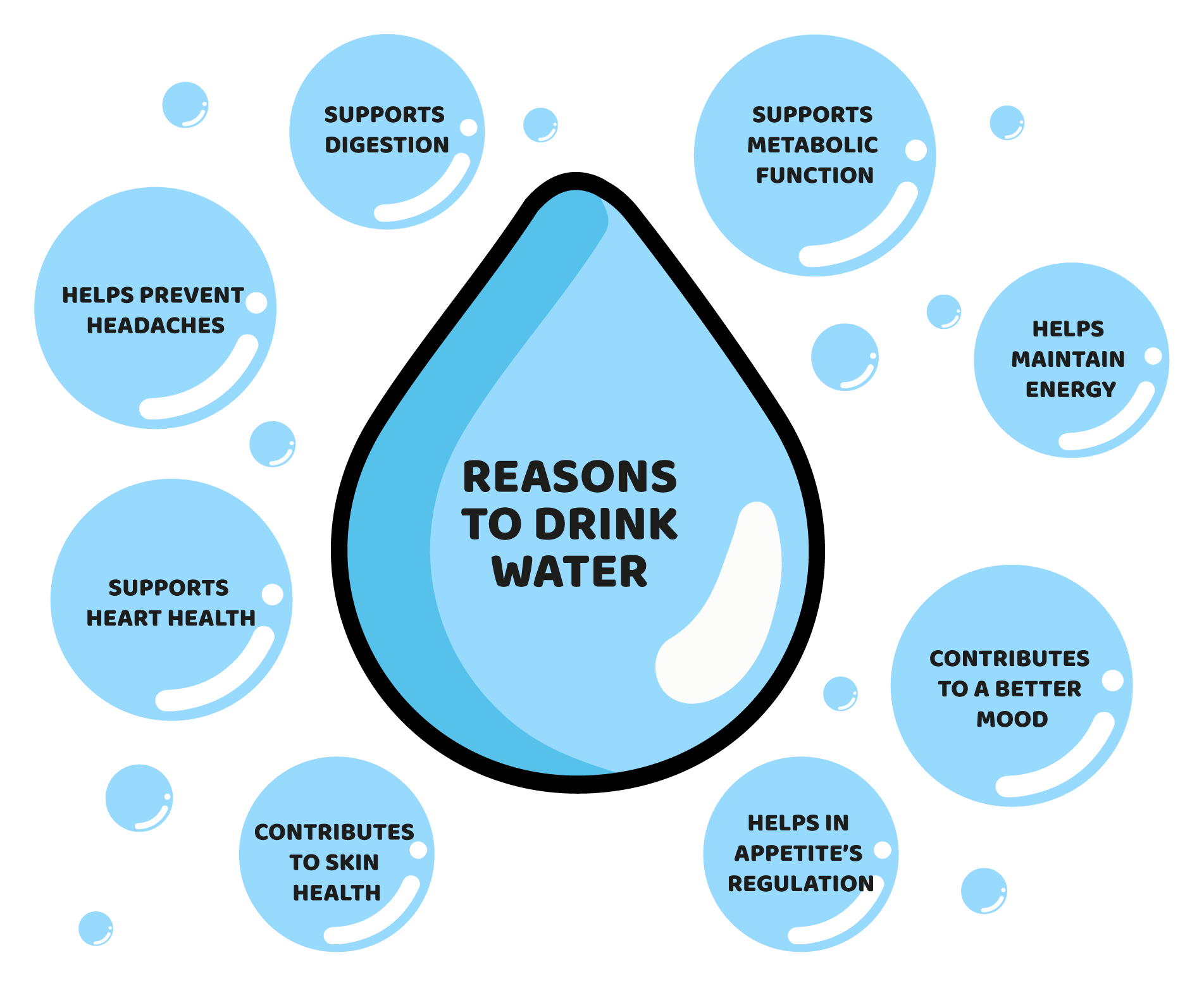
The Superpower of water
When planning what you eat and drink throughout the day, remember that your body is made up mostly of water – about two-thirds. We cannot live without water. It keeps our joints working properly, protects our eyes, aids digestion, helps eliminate waste and maintains a stable body temperature. As we are constantly losing water – whether through urine, sweat or our skin – it is essential to replenish these losses every day.
Why it is so important to drink water
Studies show that dehydration is common among children and teenagers, even among those who do not play sport.
- Among young athletes, 81% of the studies found signs of dehydration.
- Among non-athletes, the percentage was 69%.
A lack of knowledge about proper hydration is one of the factors contributing to this problem. Furthermore, thirst is not a reliable indicator, particularly in active young people. Dehydration, even mild dehydration, can affect health, concentration and physical performance.
Where does the water we need come from?
- Around 20% of our daily water intake comes from food: soups, yoghurts, fruit and vegetables.
- Around 80% comes from drinks: water, milk, juices and others.
Water Balance in the Human Body
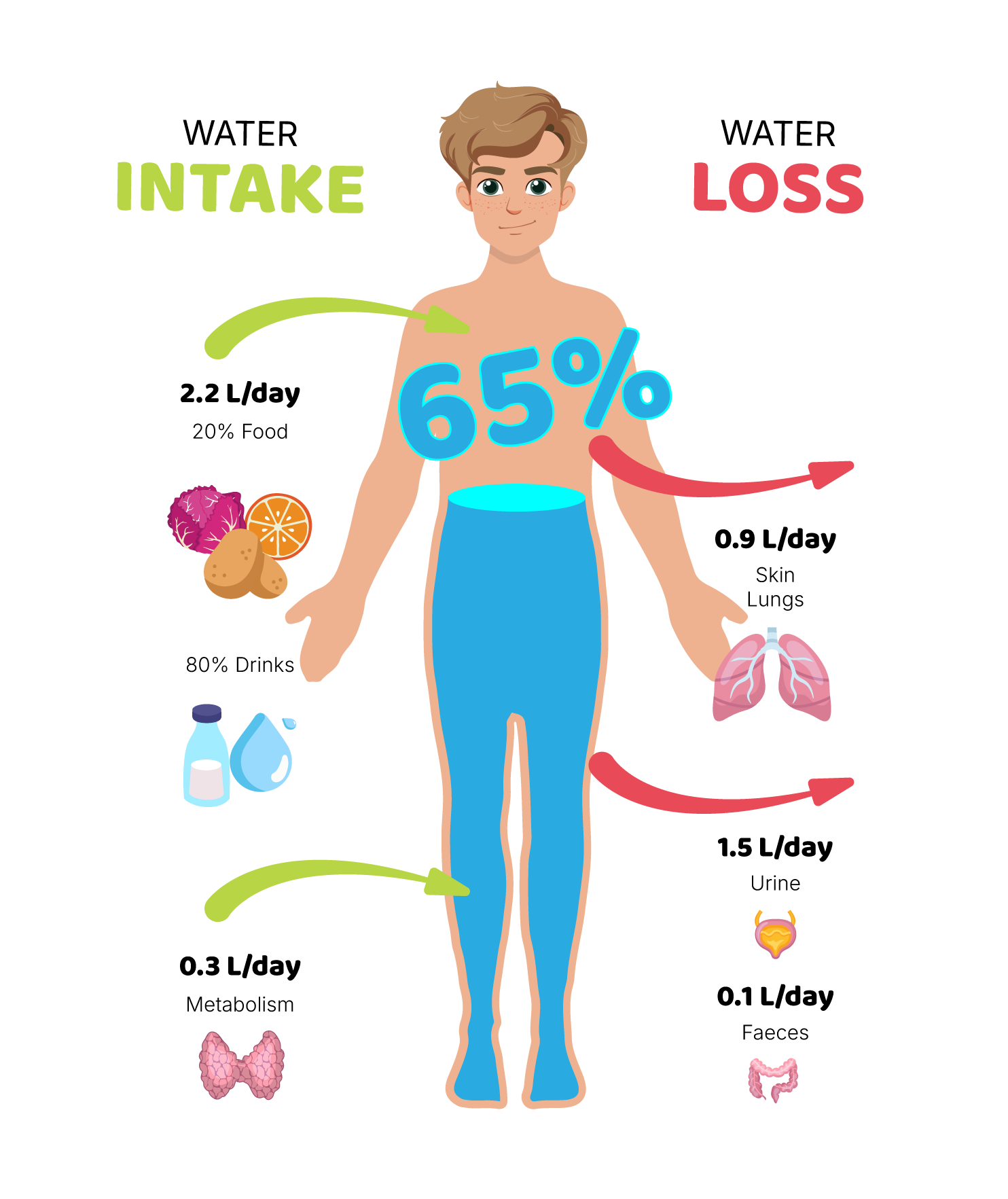
This diagram shows the daily balance between water gain and loss in the human body.
It highlights the main sources of intake, such as food, drink and the body’s own metabolism, as well as the ways in which the body loses water, through the skin, lungs, urine and stools. Maintaining this balance is essential for the proper functioning of all the body’s systems.
How much should we drink?
Requirements vary depending on age, weight, physical activity and ambient temperature. On average:
- 6 to 8 glasses* of fluids a day for teenagers, and more on hot days or when engaging in vigorous physical activity.
- Always take into account all sources of water (food and drink).
- In some cases, basing fluid intake on body weight is more accurate, as people with a higher body mass require more water.
*glass size (200–250 mL)
- Water: hydrates without calories and without damaging your teeth.
- Milk: as well as water, it provides protein, B vitamins and calcium.
- 100% fruit/vegetable juice or smoothie: contains water, vitamins and minerals, but also free sugars; limit to 150 mL per day. Interestingly, some studies show that moderate consumption of 100% juice is associated with better hydration and a higher-quality diet.
- Vegetables: regular consumption of vegetables is also linked to better hydration.
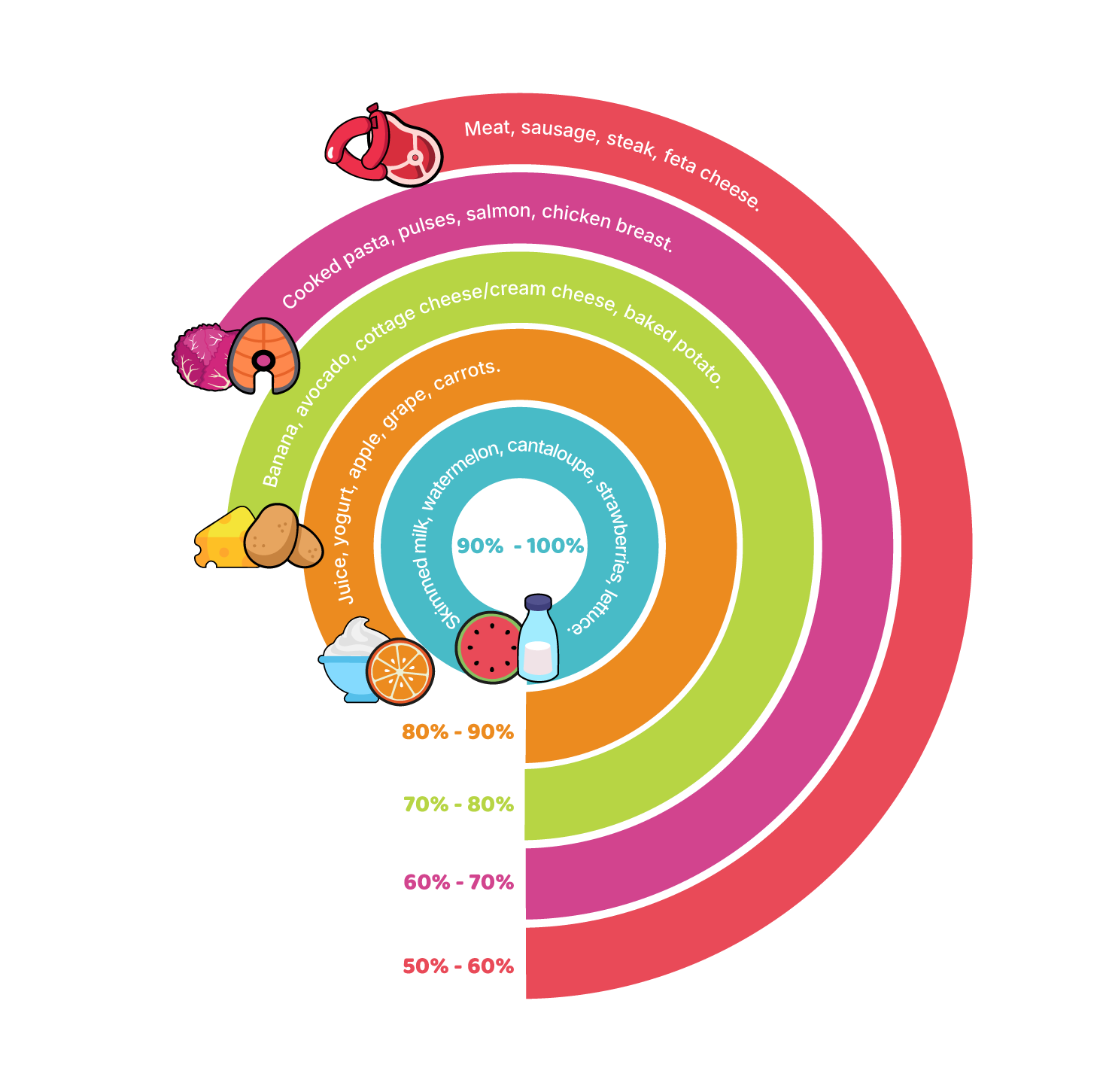
This chart shows the approximate percentage of water present in different foods and drinks. Knowing the water content of foods helps us to understand how they contribute to our daily hydration, complementing our fluid intake from drinks.
Groups at greatest risk of dehydration
- Active children and teenagers: they lose more water through sweating and often do not realise they need to drink.
- Older people: they feel less thirsty.
- People exposed to intense heat: water loss increases in hot weather or during physical exercise.
Hydration and a healthy weight
In adolescents, higher levels of fluid intake and fluid balance are associated with:
- Lower Body Mass Index (BMI)
- Lower body fat percentage
- Smaller waist circumference
- Higher proportion of water in the body
This suggests that staying well-hydrated can help prevent being overweight and obesity.
Strategies for improving hydration
- Foods and drinks with a high water content: include fresh fruit, vegetables, soups and milk throughout the day.
- Drink regularly: don’t wait until you’re thirsty, especially before and during physical activity.
- Hydration education: involving pupils, teachers, parents and coaches in strategies that emphasise the importance of adequate fluid intake.
- Individual adjustment: adjust fluid intake according to age, gender, weight and activity level.

The Mediterranean diet naturally promotes good hydration:
- A high intake of fresh fruit and vegetables, which are rich in water.
- Inclusion of soups and stews containing vegetables and pulses.
- Water as the main drink with meals.
- Moderate consumption of milk and dairy products.
Staying properly hydrated throughout the day
This poster provides simple, practical guidance on maintaining healthy hydration throughout the day. It shows different types of drinks, how they contribute to your fluid intake, and recommendations on how often they should be consumed.
It also includes information on the benefits and limitations of each option, helping you to make more balanced choices for your health and wellbeing.

Start the day with a glass of water.
Always take a bottle of water with you to school or training.
Limit sugary and energy drinks; they do not help you stay hydrated in a healthy way.
On hot days or when you’re training, drink before, during and after your session.
FOODWISELab CHALLENGE
Assessing and planning your fluid intake

Staying well-hydrated is essential for your wellbeing and for your body to function properly. These tracking sheets help you to assess and plan your fluid intake, combining water and other healthy drinks, as well as foods with a high water content.
The first allows you to record everything you drink and eat that contains water over a two-day period, helping you to work out whether you can reach the target of 6 to 8 glasses a day (each glass is 200–250 mL). The second is a weekly calendar to help you plan your fluid intake, encouraging variety and consistency throughout the day.