
The journey of food, the digestive tract and digestion
Why digest?
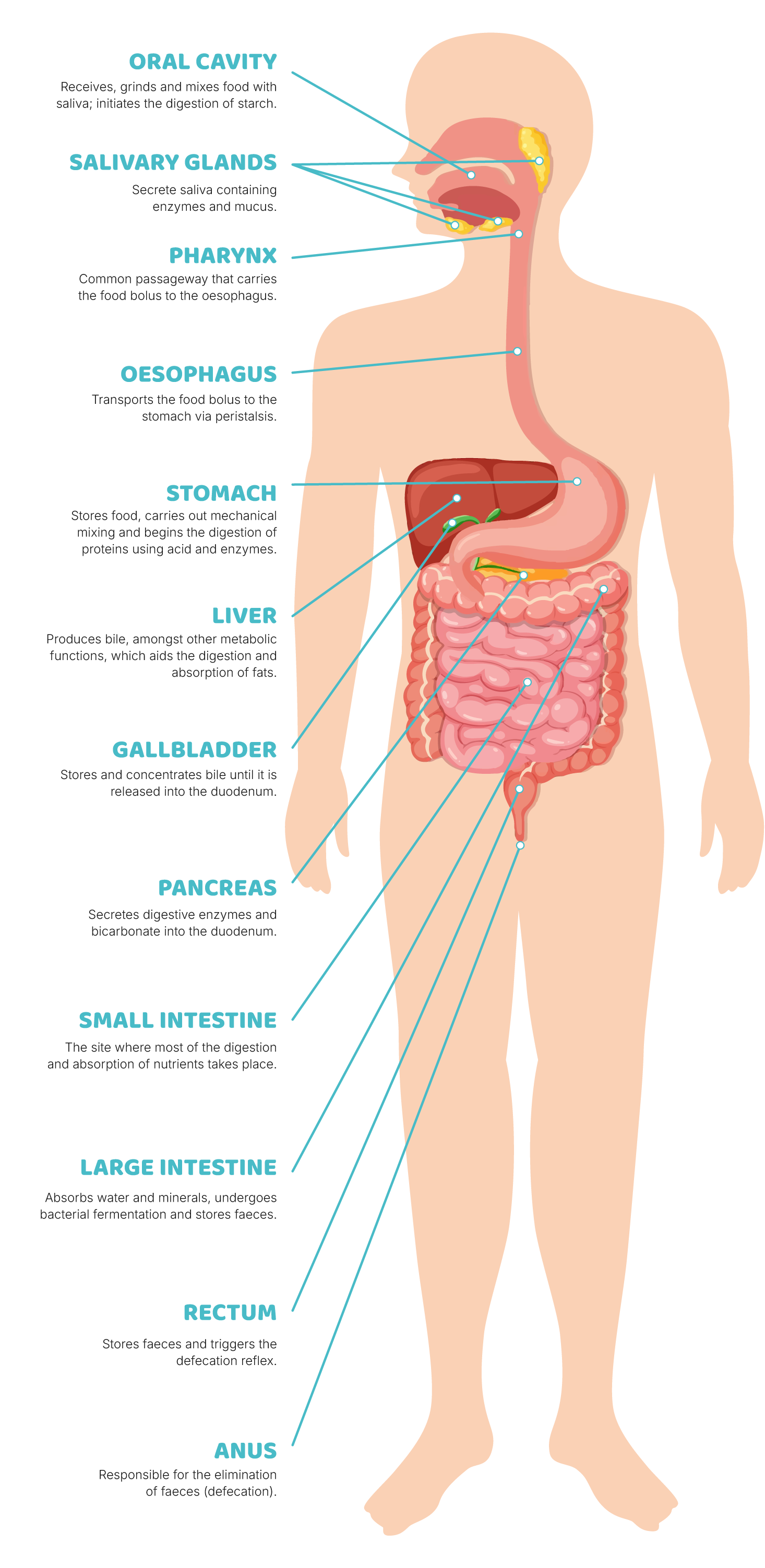
Food enters the body in large pieces and as complex mixtures. Digestion breaks these molecules down into smaller units, such as glucose, amino acids and fatty acids, which are then able to pass through the intestinal wall and enter the bloodstream. The process comprises five stages: ingestion, digestion, peristalsis, absorption and elimination.
The Journey of Food
Mouth
This is where it all begins. The teeth grind the food, the tongue pushes it along, and saliva moistens it and releases salivary amylase, an enzyme that begins the digestion of starch. Chewing thoroughly aids digestion and promotes a feeling of fullness.
Pharynx
When swallowing, the soft palate closes off the passage to the nose and the epiglottis closes the entrance to the trachea. The bolus enters the pharynx and travels down into the oesophagus. This coordination prevents “food from going down the wrong way”.
Oesophagus
It does not digest; it transports. This movement is called peristalsis: muscular waves that push the bolus down into the stomach. A ring of muscle, the lower oesophageal sphincter, opens to allow passage and closes to prevent the acidic contents of the stomach from flowing back up.
Stomach
It stores, mixes and initiates the digestion of proteins. It produces gastric secretions containing pepsin and hydrochloric acid, which create a very acidic pH of around 2. This environment helps to destroy microorganisms in food and to activate enzymes. The partially digested food is called chyme and is gradually released into the small intestine.
Small intestine
This is where digestion ends and most of the absorption takes place. It receives pancreatic juices containing enzymes for carbohydrates, proteins and fats, as well as bile from the liver and gallbladder, which emulsifies the fats so that the enzymes can work more effectively. The wall has villi and microvilli which greatly increase the surface area, acting like a ‘brush’, facilitating the passage of nutrients into the blood and the lymphatic vessels.
Organs That Help
- The liver produces bile, stores and processes nutrients, helps to detoxify substances and regulates cholesterol. Bile is stored in the gallbladder until it is released into the intestine.
- The pancreas releases digestive enzymes and bicarbonate to neutralise the acidity of the chyme. It also produces insulin, a hormone that helps regulate blood glucose levels.
Large intestine
It absorbs water and some vitamins produced by the gut microbiota, compacts waste and forms stools. The gut microbiota feeds mainly on fibre that we cannot digest. Drinking water and eating fibre helps to regulate bowel movements.
How what you eat affects digestion
- Fibre, found in fruit, vegetables and pulses, adds bulk to stools, nourishes the gut microbiota and helps prevent constipation.
- Water is essential for producing saliva, dissolving nutrients and maintaining regular bowel movements.
- Fats, particularly when consumed in excess, slow down digestion. Bile helps to break down fat into tiny droplets so that the enzymes can act on it.
- Lactose, the sugar found in milk, requires the enzyme lactase. Without sufficient lactase, lactose intolerance may develop, causing flatulence and discomfort.
“Did you know that…”
- The stomach mixes the food through muscular contractions and normally empties it into the small intestine over a period of 2 to 6 hours, in small portions.
- The villi in the small intestine mean that the absorption area is enormous, comparable to the area of a tennis court.
Common minor problems: what to do
- Heartburn and acid reflux occur when acid rises from the stomach into the oesophagus. Eating smaller portions, avoiding very fatty meals and waiting a while before going to bed can help. Speak to a healthcare professional if this happens frequently.
- Diarrhoea can be caused by infections or anxiety; it usually clears up with hydration and rest. If it persists or there are signs of dehydration, seek help.
- Constipation improves with more water, fibre and regular physical activity.
Connections with your everyday life
- Chew slowly, put your cutlery down between mouthfuls, and recognise the signs of hunger and fullness.
- Vary the colours on your plate and aim for 5 portions of fruit andvegetables per day.
- Drink water throughout the day, especially when you’re exercising.
When using this information to plan your meals
The way you digest what you eat affects your energy levels, how comfortable you feel and how well you perform throughout the day. When planning your meals, bear this in mind:
- School routine: include wholegrain carbohydrates, protein and vegetables in your main meals; make sure you have 5 portions of fruit and vegetables throughout the day; and take water with you to drink regularly.
- Before training, 1 to 3 hours beforehand, opt for a meal that is easy to digest, containing carbohydrates and some protein; avoid meals that are very high in fat or fibre immediately before physical activity, so that your stomach can empty comfortably
- After training, over the next two hours, replenish your energy with carbohydrates, aid muscle recovery with protein, and drink water to replace what you’ve lost.
- On busy mornings, breakfast should be easy to eat and balanced, for example, yoghurt and fruit with porridge, bread with cheese and a piece of fruit; avoid sugary drinks.
- Night-time and sleep: have dinner 2 to 3 hours before going to bed; avoid very large portions and too much fat at the end of the day; if you suffer from acid reflux, opt for lighter meals and eat slowly.
- Sensitive tummy: on days when you have diarrhoea, focus on staying hydrated and eating soft foods; on days when you’re constipated, increase your intake of water and fibre, fruit, vegetables and pulses, adjust your fibre intake gradually and stay physically active.
- Menstruation: girls should make sure they eat foods rich in iron and vitamin C – such as beans, lentils, meat, fish, eggs and citrus fruits – and stay well hydrated.
- When taking antibiotics, protect your gut by choosing balanced meals and safe fermented foods, such as yoghurt and kefir, and plenty of fruit and vegetables. If you have any doubts, speak to a healthcare professional.
- Food intolerances or allergies: plan safe alternatives that retain their nutritional value – for example, fortified drinks and yoghurts if you don’t drink milk, and gluten-free bread if necessary. Read the labels carefully.
- Focus and study, stick to a regular routine, avoid going for long periods without eating, drink water throughout the day, choose healthy snacks such as fruit, nuts, yoghurt and wholemeal bread.
If you experience any recurring discomfort, speak to your family and a healthcare professional.
Chew your food thoroughly to help your digestion!
When you chew slowly, you help your saliva to start breaking down the starch whilst it’s still in your mouth. This means your stomach has less work to do and you feel full more quickly, which even helps to prevent you from overeating. You can also put your cutlery down between mouthfuls to slow down.
Remember: digestion starts right in the mouth!
FOODWISELab CHALLENGE

Understand the journey food takes through your body and realise how each stage of digestion contributes to your health and wellbeing.