
Potato processing
The potato is one of the most versatile and widely consumed foods in the world. Rich in starch, with a moderate fiber content, and a source of potassium and vitamin C, it can be used fresh or processed into many different products, ranging from instant mashed potato and crisps to starch and potato flour. The processing helps to reduce waste, extend shelf life and create value-added products.
Initial stages: from harvest to preparation
After harvesting, the potatoes are sorted and washed; whether they are peeled depends on the type of product to be produced.
- Damaged or defective potatoes are sorted out.
- The rest are sent for industrial processing, where they can be cut, bleached, dried or fried, depending on the desired end product.
Dried potatoes
Drying is one of the oldest and most effective methods of preserving potatoes.
The potatoes are peeled, sliced, cut into sticks or cubes, then blanched (immersed in hot water to deactivate enzymes) and dried in hot-air ovens until the moisture content is generally below 10 per cent, depending on the end product.
The final product can be processed into:
- Potato flakes, used to make instant mashed potato;
- Potato powder, used in soups, pasta, bread and sauces;
- Dried diced potatoes, used mainly in dehydrated soups; the by-products can be used as animal feed.
Dehydration increases shelf life and reduces waste during periods of overproduction.
Potatoes
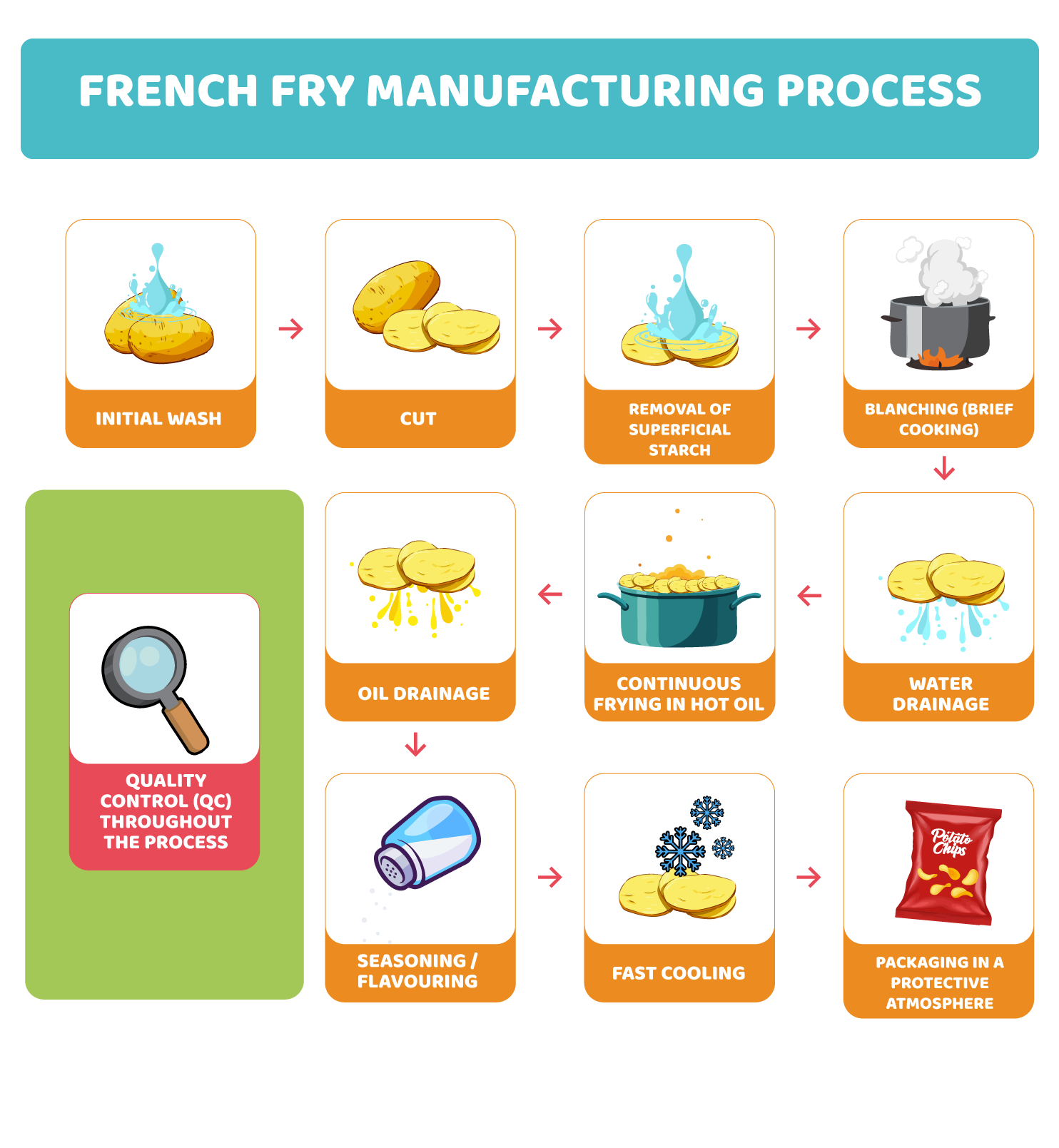
Crispies are the most popular processed food.
The process involves several stages:
- Washing and peel;
- Cut into thin slices (for crisps) or sticks (for chips);
- Immersion in cold water or antioxidant solutions to reduce enzymatic browning
- Blanching: the potatoes are boiled briefly to even out their colour;
- Dry and fry in hot oil, at around 160–180 °C, until golden and crispy;
- Draining and seasoning, before being packaged in a modified atmosphere to preserve the flavour and texture
Potatoes with a high starch content and low reducing sugar content are the most suitable, as they tend to absorb less oil when processed correctly and remain crispy.
Production of potato starch and potato flour
Potato starch is extracted from fresh potatoes that have been crushed and pressed.
- The juice released is filtered and centrifuged, separating the starch from the remaining liquid.
- The starch is then dried and ground into a fine powder.
This product is used in the food industry to thicken sauces and soups, and also in the production of paper, textiles and bioplastics.
Potato flour, obtained by drying and grinding cooked or dehydrated potatoes, is used in gluten-free products and in pasta.
SUSTAINABILITY AND THE CIRCULAR ECONOMY
During processing, nothing is wasted:
- The peels and scraps are used as animal feed or organic fertiliser;
- Processing water is treated and reused;
- Residual starch can be used to produce biogas for energy.
These practices form part of the circular economy, which transforms waste into new resources.
FROZEN, PRE-COOKED POTATOES
Most of the potatoes used in restaurants and supermarkets are turned into frozen chips.
Once cut, they are pre-fried, rapidly cooled and frozen at -18 °C. They therefore reach the consumer ready to be finished off at home or in a restaurant.
Other products and innovation
As well as crisps and dried potatoes, the industry has developed other products:
- Preserved baby potatoes, boiled and vacuum-packed;
- Extruded snacks and instant purées;
- Fermented potato, used to a limited extent in some drinks and baked goods;
- Biofilms and biodegradable packaging made from potato starch.
Technological innovation is making it possible to reduce oil consumption, increase energy efficiency and make use of all by-products, thereby making production more sustainable.

A tip for planning your meals
Prefer boiled, baked or plain mashed potatoes, and avoid eating too many shop-bought crisps.
Opt for local and seasonal produce, and try new ways of cooking them, such as in cold salads or vegetable stews.
This way, you’ll get the most out of this food and contribute to a healthier and more sustainable diet.
FOODWISELAB challenge

Understand how the potato is transformed from a fresh food into the various products you consume, distinguishing between simple processes and more intensive processes and reflecting on the impact of these transformations on health.
From the ground to the plate: How are potatoes processed?