
Matter cycles and water, carbon, nitrogen and phosphosrus
Why they matter
Soils are not merely the ‘support’ for plants; they play a central role in the oxygen, water, carbon and nutrient cycles. They store more carbon than the atmosphere and vegetation combined, regulate infiltration and water quality, and provide nutrients for crops. When the soil is alive, containing organic matter and active microorganisms, these cycles function more effectively, food productivity and quality increase, and the climate is more stable.
Organic matter: the driving force behind recycling
Plant and animal remains decompose and release nutrients that are returned to the system, whilst at the same time retaining carbon and water in the soil. Micro-organisms, fungi, earthworms and many other living organisms carry out this invisible recycling process, which sustains food production and helps to regulate the climate.
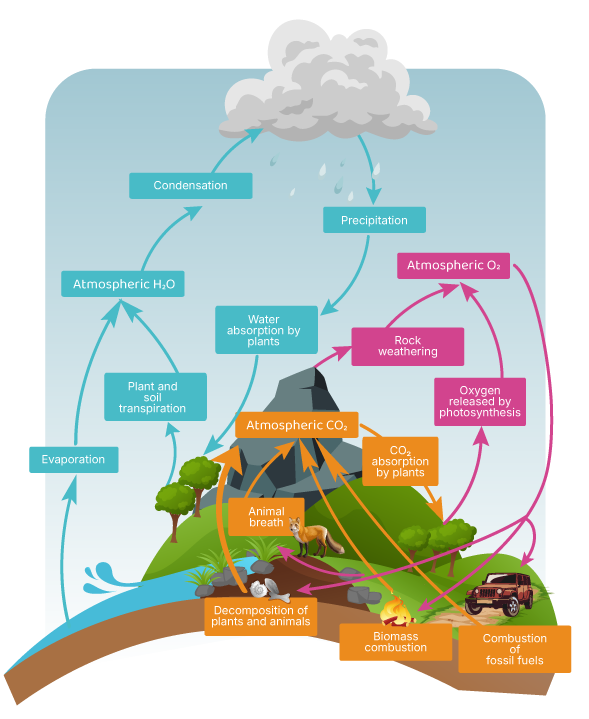
THE OXYGEN CYCLE
Atmospheric oxygen is replenished mainly through photosynthesis and consumed through respiration and decomposition. In water, dissolved O₂ levels can fall when there is an excess of nutrients (eutrophication), affecting fish and our food supply. Managing nutrients and soil helps to keep this cycle in balance.
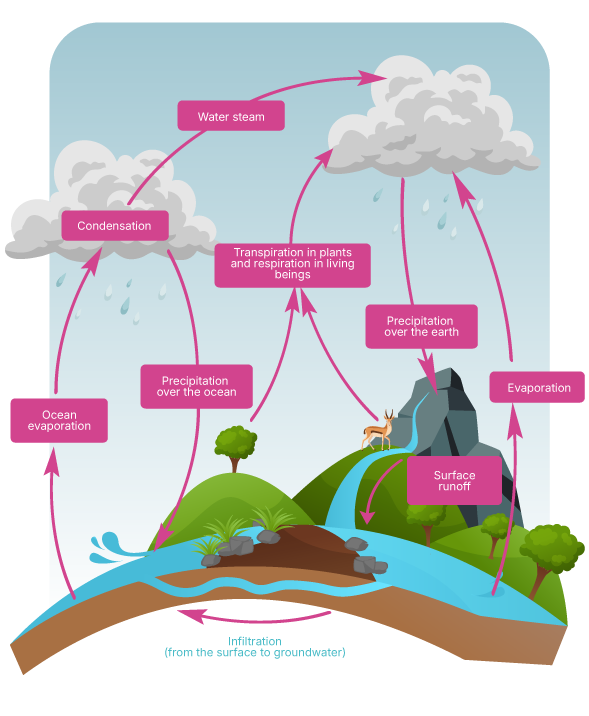
THE WATER CYCLE
In healthy soils, water seeps in and is stored; the soil acts as a natural filter that reduces flooding, prevents erosion and keeps water available for plants. In degraded soils, water runs off quickly, washing away nutrients and polluting rivers and lakes.
THE CARBON CYCLE
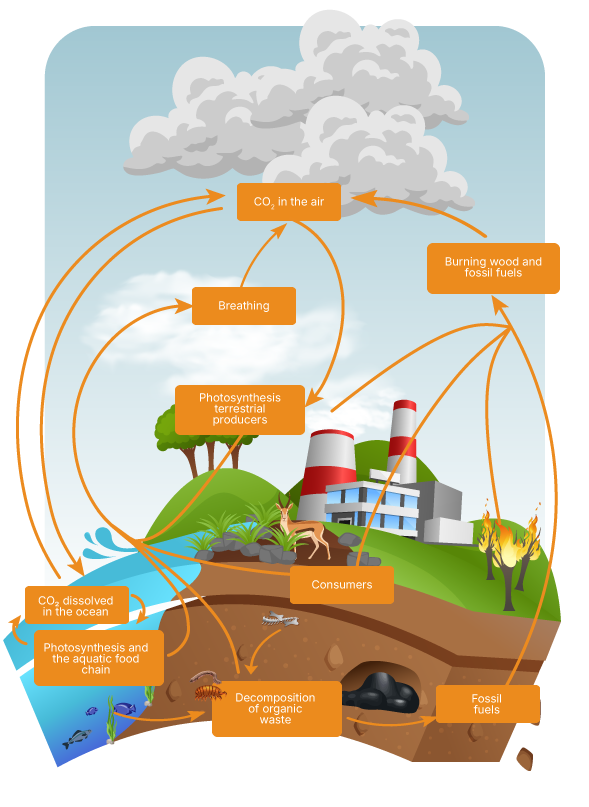
Plants sequester CO₂ through photosynthesis. Respiration and decomposition release carbon back into the air and water. Well-managed soils act as carbon sinks, help to mitigate climate change and maintain fertility. When soil degrades, it releases CO₂ and loses its structure and productivity.
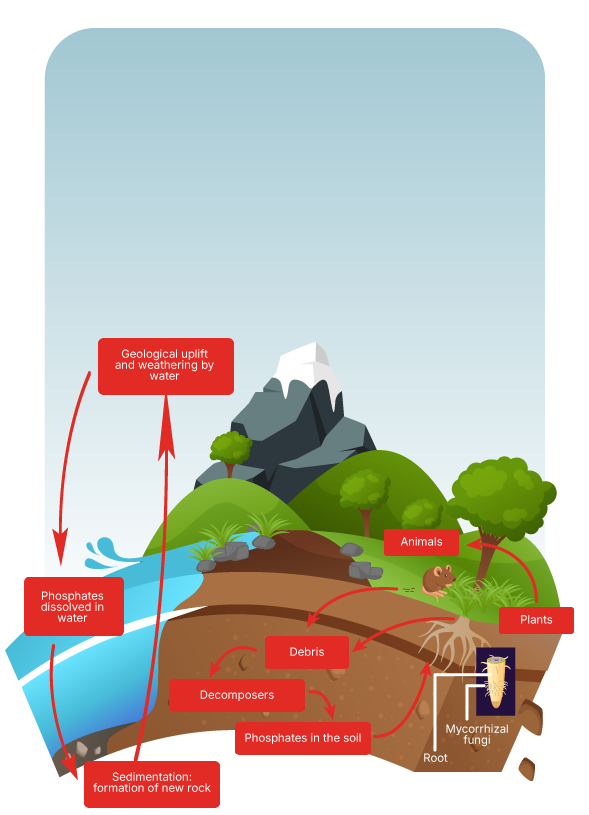
Phosphorus has no significant gaseous phase; it circulates between rocks, soil, water and living organisms. It is often the limiting nutrient for plant growth. In excess in aquatic environments, it can cause eutrophication, algal blooms and a drop in oxygen levels. Mycorrhizae help plants to absorb phosphorus from the soil, which is why a living soil improves nutrition without the need for excessive fertiliser.
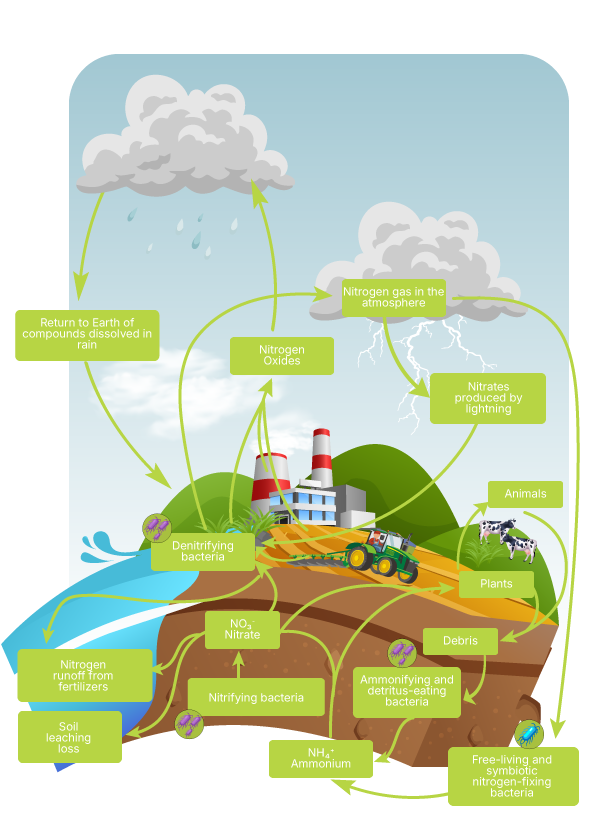
Much of the nitrogen in the air exists as N₂, a form that plants cannot use. The soil contains microorganisms that carry out:
- Nitrogen fixation: N₂ is converted into ammonia and ammonium
- Nitrification: ammonium is converted into nitrites and nitrates
- Assimilation: plants absorb ammonium and nitrates
- Ammonification, organic matter is converted back into ammonium
- Denitrification, nitrates are converted back to N₂
Pulses such as beans, chickpeas and peas form symbiosis with bacteria in their roots that fix nitrogen, enrich the soil and reduce the need for synthetic fertilisers.
SOIL ECOSYSTEM SERVICES
Living soils contribute to food production, water regulation, carbon sequestration, fertility, biodiversity and even cultural value, as they shape landscapes and agricultural practices.

Plan your meals to keep your cycles balanced
By eating seasonal and locally sourced food, you reduce the cold chain and transport distances, and protect the water cycle and the climate.
By eating pulses several times a week, you improve the nitrogen cycle and support crop rotations that enrich the soil.
Variety on your plate, just like in crop rotation, maintains fertility and biodiversity.
By avoiding waste and ensuring that organic waste is composted, you return nutrients to the soil and close the cycles.
Choose farming practices that look after the soil, such as cover crops, compost, agroforestry and balanced nutrient management, to prevent eutrophication and pollution.
FOODWISELAB CHALLENGE

To analyse an everyday meal in the context of natural cycles (water, carbon, nitrogen and phosphorus) and understand how small changes can make it more sustainable and beneficial to the soil and ecosystems.