
The origins of cereals: origin and importance
Cereals are the edible seeds (grains) of plants belonging to the grass family. Among the best known are wheat, maize, barley, oats, rye and rice. They are one of the main sources of energy for human and animal consumption, as they contain carbohydrates, proteins, vitamins and minerals. Worldwide, wheat and rice currently account for more than half of global cereal production.
Cultivation and harvesting
Cereals are grown in almost every region of the world, adapting to different climates and soil types.
- Wheat and barley grow well in temperate climates and are grown in countries such as Portugal, France and Canada.
- Maize prefers warm climates and is widely grown in the Americas and southern Europe.
- Oats and rye are better suited to cold weather.
After sowing, the plants grow rapidly and form ears, in which the grains develop. When the fields turn golden, it is time for the harvest, which can be carried out by hand or using combine harvesters that cut, thresh and separate the grain from the straw.
Cereals
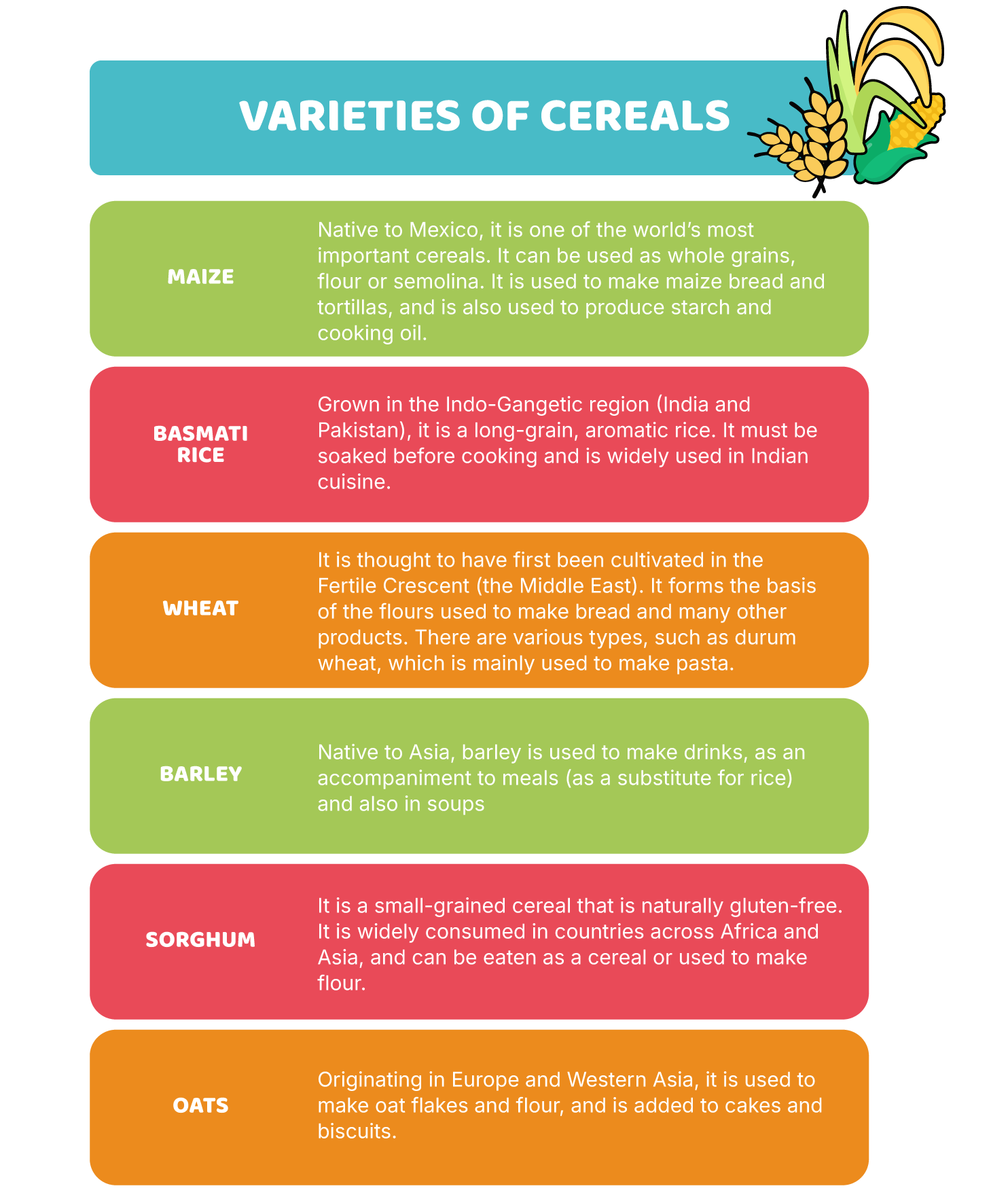
After harvesting, the grains are cleaned and dried to prevent the growth of mould. This is followed by milling, which separates the three main parts of the grain:
- bran, which is rich in fibre;
- the germ, which contains vitamins and healthy fats;
- the endosperm, consisting mainly of starch.
When the grain is ground in its entirety, wholemeal flour is produced, which is more nutritious. If the bran and germ are removed, white flour is produced, which has a lower – though not zero – content of fibre and micronutrients. These products can be used to make bread, pasta, biscuits, porridge and breakfast cereals, which are produced by mixing and processing flours from different cereals.
Sustainability and innovation
Cereal production faces significant environmental challenges. Intensive farming can cause soil erosion, loss of biodiversity and greenhouse gas emissions. As a result, many farmers are adopting more sustainable practices, such as crop rotation, efficient water use and the cultivation of rain-fed cereals, which rely solely on rainfall.
In the food industry, there is also a growing effort to reduce energy and water consumption and to reuse by-products, such as bran and germ, to enrich new food products.

A tip for planning your meals
When planning your meals, choose wholegrain foods wherever possible, such as wholemeal bread or pasta, oat flakes or brown rice. These foods provide more fibre and energy in a balanced way, helping your body to function better. Reducing your intake of high-sugar products and opting for local, seasonal grains not only benefits your health, but also helps protect the environment and animal welfare by reducing the need for intensive farming.
FOODWISELAB Challenge

To understand the difference between wholemeal cereals and refined cereals and to recognise the impact of this choice on health and wellbeing.